Fresh Paneer

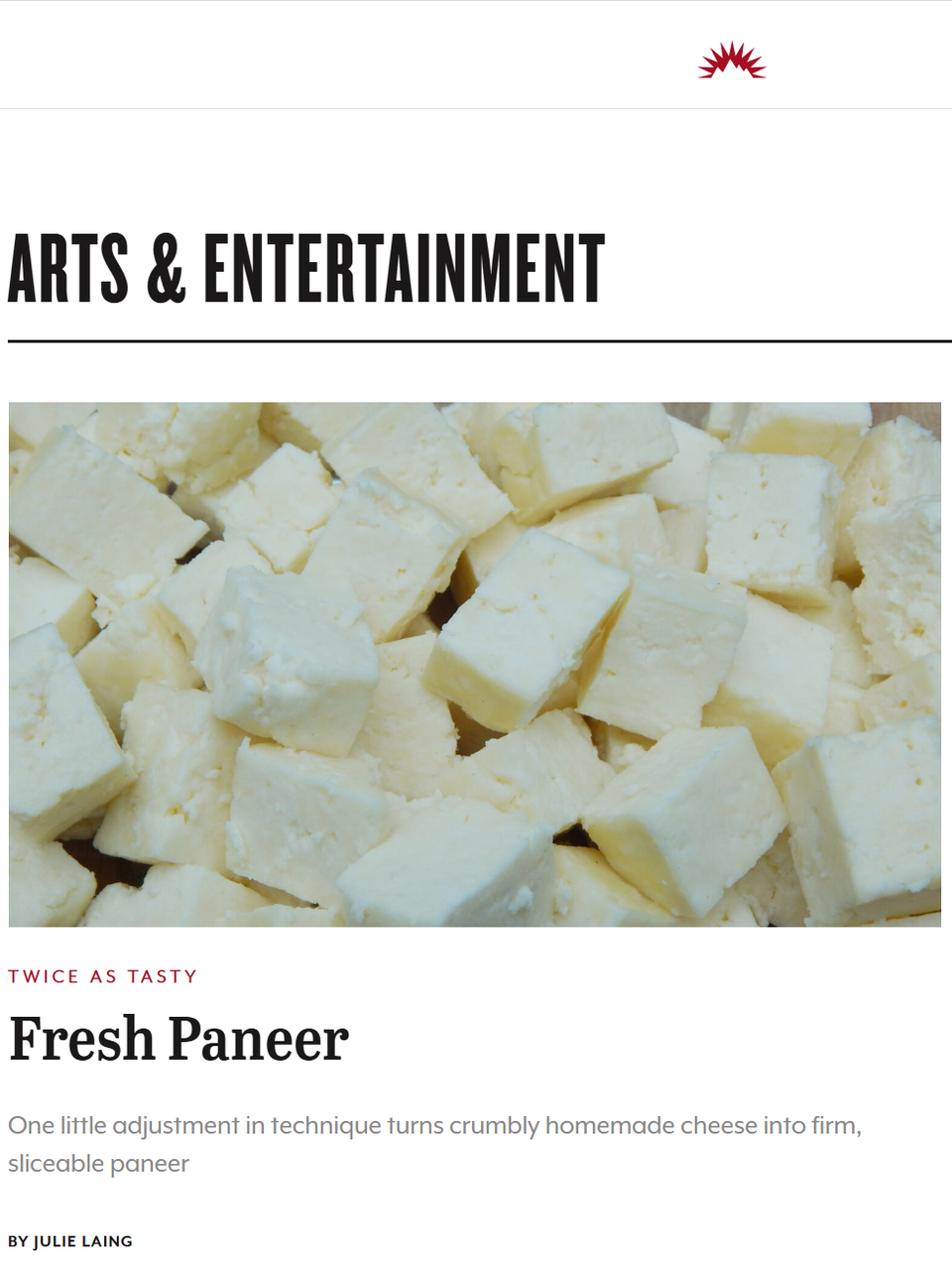
Many cheeses are far more closely related than I’d imagined before I started to make them at home. Press farmer’s cheese, and you create paneer. Learn more at TwiceasTasty.com.
Before I started to make cheese at home, I saw each type I’d ever tasted as distinct. They were all cheeses, just like snap beans, carrots, and cabbage are all vegetables, but they seemed as dissimilar.

I learned that many cheeses are far more closely related than I’d imagined. A small change in ingredient, time, or technique was enough to earn them a new name. Replace goat’s milk with cow’s milk, and chèvre becomes fromage blanc. Fresh neufchâtel resembles American cream cheese but if ripened develops the soft rind and earthier flavor intended by its French creators. Press farmer’s cheese, or my preferred Lemon Cheese variation, and you create paneer.

As I explain this week in my Twice as Tasty column for the Flathead Beacon, pressing freshly made farmer’s cheese instead of hanging it releases more whey, so it becomes firm enough to cube and fry like tofu. I substitute paneer into many recipes that call for bite-size morsels of chicken or other meat, because it doesn’t melt when heated. Toss it into Mixed Vegetable Stir-Fry, grill and stuff it into tacos, or use it more traditionally in tikka masala, the recipe I’ll share in next week’s column.
Learn to make Fresh Paneer

How To Make Cheese, Step by Step

For the Old Farmer’s Almanac website, I created a basic cheese making guide and a recipe with step-by-step photos for Farmer’s Cheese. Learn more at TwiceasTasty.com.
I’m excited to share my first pieces for The Old Farmer’s Almanac website—all about cheese! I created a basic cheese making guide to help beginners make their first cheese and experienced cheese makers learn some of the history and details about the process. It includes a recipe for a classic cheese from pioneer days: Farmer’s Cheese. You’ll also find that recipe in a separate post that includes step-by-step photos of the process.

I’m just as excited that by creating these pieces for Almanac.com, the editors have added more recipes to their website for making cheese and other dairy products. The website’s collection now includes recipes for homemade ricotta, yogurt, and butter. I have another piece in the works for their website, too.
Learn how to make cheese, step-by-step

Making Better Yogurt and Cheese

Making new styles of cheese has taught me a few tricks that apply to my homemade standards. Learn about making better yogurt and cheese at TwiceasTasty.com.
Each April, the recipes on Twice as Tasty focus on making cheese and other dairy products at home. Between the information on the blog and the workshops I’ve been teaching to everyone from adults to kids, the pool of home cheesemakers has been growing steadily all year.

As I wrote last year, yogurt was my first homemade dairy product. It’s still the milk-based product I make most often, partly because it’s so easy and partly because it’s so versatile that I eat it all the time. This also means I’m constantly finding new ways to improve my yogurt-making skills.

I’ve also been playing with variations on acid-based cheeses and delving into new cheese styles and dairy products. Some of these will be the focus of blog posts in the coming month. But these styles have also taught me a few tricks that apply to my homemade standards. So before I offer you new recipes, here are some things I’ve learned in the past year about making yogurt and cheese.
Read more about making better yogurt and cheese

Pizza

People may forever debate whether pizza is Italian, but there can be no doubt that it is American. One poll last year reported that “For Americans, pizza lands in the number one spot as the ultimate comfort food.” But if you were to ask, “What is pizza?” you’d get as many answers as respondents.

This, to my mind, is a good thing. It’s what makes pizza so popular. It’s also what makes pizza so easy and affordable to create from scratch at home. You don’t need a specific recipe with exact ingredients. You don’t even need a ratio with proportions of various toppings. All you need is some dough, a couple handfuls of garnishes, and a way to cook it. If you have a sourdough starter, the dough is in the bag—or should I say, jar.
Learn to make Sourdough Pizza Dough and Thin-Crust Pizza