Flavorful Reductions

Cooking a quick sauce or glaze in the same pan as your main ingredient soaks up concentrated flavor. Learn more at TwiceasTasty.com.
As I wrap up my month of cookware testing, I’ve been stretching the limits of nonstick pans by using some of my favorite flavor-building techniques: browning, reducing, and glazing. Stainless steel and cast iron are the more typical materials for these techniques, because some of the point is to suck up the caramelized bits that stick to the pan—those bits that nonstick surfaces are designed to eliminate. But there’s a difference between burned-on food and fond, the caramelized particles left after browning. Even a good nonstick pan generates some of these intensely flavored bits.

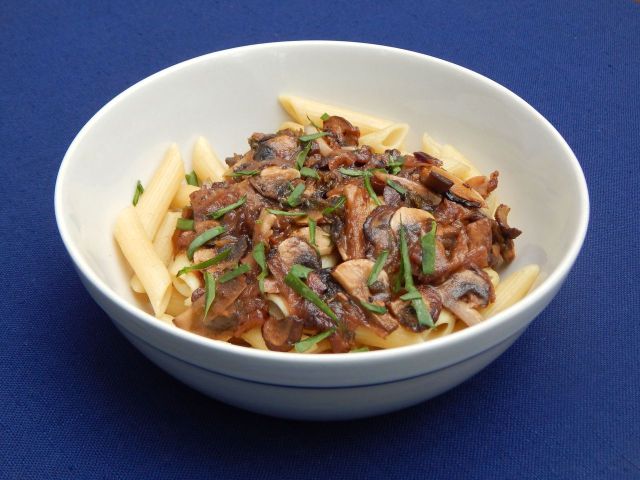
It made sense to me to test these techniques in nonstick pans, since I never create them using the standard base ingredient: browned meat. By cooking a quick sauce or glaze in the same pan as your main ingredient, you can soak up that concentrated flavor—whether you started with meat, shrimp, mushrooms, or root vegetables. It really is all about the flavor.
Learn to make flavorful reductions and Mushroom Pan Sauce

Cooking Grains

Most grains want a fun, flavorful addition, whether it’s stirred in or piled on top. Learn more at TwiceasTasty.com.
Eggs may be the ideal test food for skillets, but grains put saucepans through their paces. Starchy foods like rice, oats, pearly barley, and pasta always tend to get sticky, but everything from type of pot to temperature to water-to-grain ratio can also make them stick or even burn onto the cooking pot. This can leave you not just with a gummy meal but also with a gummy mess to clean up.

So as I’m testing cookware this month, I’m cooking lots of grains. All of them want a fun, flavorful addition, whether it’s stirred in or piled on top, like this week’s new recipe.
Learn about cooking grains and Curried Sweet Potato and Mango

Cooking Eggs

To put it simply: Testing cookware by cooking eggs is fun. Get cooked egg recipes at TwiceasTasty.com.
I have to admit that I’m one of those people who holds onto cookware way too long. After pots are scratched, warped, and showing their age by letting even the simplest foods adhere to their surface, I continue to use them. Replacing cookware, especially a high-quality set, is expensive. So I’ve been excited to set out on a quest for the perfect cookware.

Eggs in many forms are ideal test recipes. They can be delicate yet prone to burning or sticking. They cook quickly, so they’re speedy, easy meals. This time of year, the chickens are laying prolifically. Most egg dishes don’t require a recipe, and many styles can be created just by cracking a fresh egg into a hot pan. But some call for a bit of technique, including endless variations on omelets.
Learn to make A Three-Egg Omelet and other cooked eggs

Home-Smoked Cheese

Upgrade mass-market cheese with a simple trick: smoke it. Get smoking recipes at TwiceasTasty.com.
Did you make cheese with me this month? Maybe you couldn’t find the time or didn’t track down the supplies. Maybe you’re nervous about making that first batch without my personal help. Or maybe, like me, you eat way too much cheese to rely solely on a homemade supply. That last reason is why I began upgrading mass-market cheese with a simple trick: smoke it.

Home-smoked cheese can easily start with a store-bought block that’s affordable but one-dimensional in flavor. I typically buy store-brand cheese or even giant deli loaves for smoking. It takes just a couple of hours with minimal involvement to impress family and friends. I smoke many types of cheese (usually pairing them with pickles, of course) to serve at parties, gift at holidays, and keep in constant supply in the fridge.
Learn to make Cold-Smoked Cheese and other foods

Ricotta: Fresh and Aged

Enjoy ricotta fresh, or salt and age it to take the flavor to a new level. Get ricotta recipes at TwiceasTasty.com.
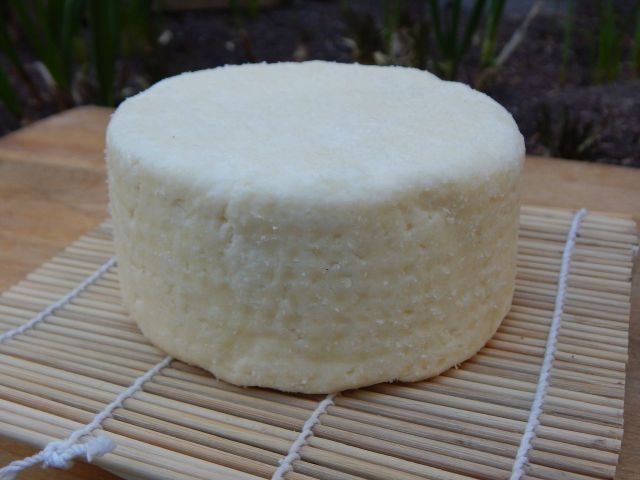
Ricotta didn’t interest me as a homemade cheese until I spotted an aged, salted version in Karen Solomon’s Jam It, Pickle It, Cure It. She described its texture and saltiness as resembling Romano but less complex. That, I thought, is a cheese I could love. Homemade Romano is a cultured cheese that is repeatedly molded, pressed, brined, and salted before it is aged 8–12 months. So a substitute that takes less than an hour of hands-on time and is ready in a week or so seemed perfect.

This aged cheese starts with ricotta made entirely from fresh milk. If you already make Lemon Cheese, the ricotta recipe will look familiar: it’s essentially the same cheese, although I tend to drain it for less time so that it’s soft and moist. Like the lemon version, it can be eaten fresh. I often make a double batch of ricotta, setting aside half to enjoy straightaway and aging the other half into the Romano replacement.

The only ingredient difference between Whole-Milk Ricotta and Lemon Cheese is the acid used to separate the curds from the whey. The ricotta recipe uses citric acid, a powder with a sour, neutral flavor rather than a lemony one. It’s usually easier to find than the cheese cultures in last week’s post; if you can’t buy it from a local natural-foods store, you can order it online from the sources I provided for cheese cultures.
Learn to make Whole-Milk Ricotta and Ricotta Salata

Soft Cheeses

Learn to make soft cheeses, and you have so many choices. Get soft cheese recipes at TwiceasTasty.com.
I’ve always loved the tang of goat cheese, or chèvre. Unfortunately, goat milk is hard to find in my area. Local stores tend to carry one ultrapasteurized brand or a powdered version—neither of which works for cheese. Regulations for selling milk directly to individuals are so strict, convoluted, and enforced that it feels like a black market. I occasionally trade with friends who are milking goats (and have momma and babies willing to share), but mostly I gave up on making soft cheese.

That changed when I took a chance on fromage blanc. I’d written off this cow’s milk cheese as too mild for my tastes. But it has a surprising amount of tang and flavor. Best of all, the technique for soft cheeses really does work across milk types—cow or goat, reduced fat or whole milk or cream. It can be soft and spreadable or drained until it crumbles. It can be shaped or molded, and it absorbs flavors like herbs, zests, and spices. Learn to make soft cheeses, and you have so many choices. You can do it!
Learn to make Homemade Fromage Blanc and other soft cheeses

Steamed Buns

Homemade steamed buns make you wait, but your first bite is worth it. Get dumpling recipes at TwiceasTasty.com.
In the realm of stuffed foods, Chinese steamed buns seem like the crown jewels. They’re made with a yeast dough, rather than the comparatively simpler flour-and-water wraps for Scratch-Made Pot Stickers, which means more waiting time. The steaming may require tools you don’t yet have in your kitchen—or some improvisation. And you’ll have the nicest buns if you master yet another rolling and pleating technique.

But the first time you bite into a homemade steamed bun, you’ll know it was worth it. The magic that happens with some basic ingredients, time, and care will keep you practicing until you’ve perfected your technique. As with all homemade dumplings, there are some shortcuts. But most of these stretch out the work rather than shortening the timeframe. It’s best to approach steamed yeast buns with a relaxed schedule and mindset.
Learn to make Scratch-Made Steamed Buns with homemade fillings

Pierogi

You say pot sticker, I say pierogi: It can be all one dough. Get dumpling recipes at TwiceasTasty.com.
When I traveled in Eastern Europe and lived in Russia, I ate a lot of pierogi but never learned to make them. Some were homemade—my favorites came from Russian women who carried pots of them from their kitchen to meet the train as we rode the Trans-Siberian Railway from Moscow to Vladivostok. Plus, commercially packaged frozen pierogi were as widespread in Eastern Europe as frozen pizza is in the United States, and they could be dropped in boiling water for a quick meal.

Once I returned to the States, I tried many variations on pierogi dough, attempting to recreate those mild yet somehow tasty dumplings. Available dough recipes varied widely on both ingredients (egg, milk, butter, sour cream, even cream cheese) and ratios. But once I mastered homemade pot stickers, I realized I’d strayed too far from the frugal kitchens that prepared my favorite pierogi. So now I use the same dough for both types of dumplings; how I prep that dough, fill it, and cook the dumplings determines whether they’re labeled pot stickers or pierogi.
Learn to make Scratch-Made Pierogi with homemade fillings

Pot Stickers

Tasty pot stickers can be hard to find but make a fun project at home. Get dumpling recipes at TwiceasTasty.com.
I fell for pot stickers as a kid. For special occasions, we’d meet my Uncle Sunny and Aunt Ginny in Portland, Oregon, at their favorite Chinese restaurant. My uncle was one of those people who made friends at his frequented haunts; he and the restaurant’s owners probably swapped their favorite spicy mustard recipes. As a kid, it amazed me that the staff knew to bring my sister a Shirley Temple, my mom fiery eggplant, and me vegetable pot stickers.

Vegetarian pot stickers can be hard to come by even in cities; the standard fillings lean toward pork. In northwest Montana, they’re nonexistent. Luckily, a local friend with Chinese roots loves to cook and share her creations, and I treasure invites to her kitchen. For a pot sticker gathering, we mix up batch after batch of dough and filling, just eyeballing the ratios, and many hands form it all into neat—or not so neat—edible packets. It’s a bit like making pie crust with Grandma Tiny: this recipe, which I make at home, is my best version of those recipe-free evenings with a practiced guide.
Learn to make Scratch-Made Pot Stickers with homemade fillings

Fermenting Grains and Beans

Lessons learned in my dosa-making adventures led to a recipe for beginners living in cold climates. Learn more at TwiceasTasty.com.
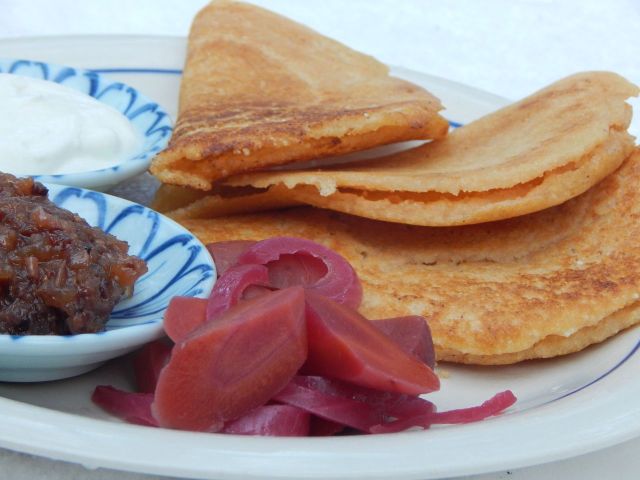
When it’s midwinter and the fermentation bug hits you, where do you turn? The logical choice to expand beyond sourdough and cheese, and the perfect pairing with this month’s Indian-Inspired Sweet-and-Sour Potatoes and Indian-Inspired Shrimp in Yogurt, seemed to be dosas. But these thin, crisp rice-and-bean pancakes offered as many challenges as advantages in my Northern Rocky Mountain kitchen.

So what I offer this week are the lessons I learned as I began my dosa-making adventures, with big nods to fermentation expert Sandor Katz and writer and cook Chandra Padmanabhan. These lessons led to an Indian-inspired dosa recipe ideal for beginners living in cold climates, with plenty of ways to creep closer to the traditional texture and flavor as you become more confident in your dosa-making skills.
Learn to ferment grains and beans and make Red Lentil and Basmati Dosas