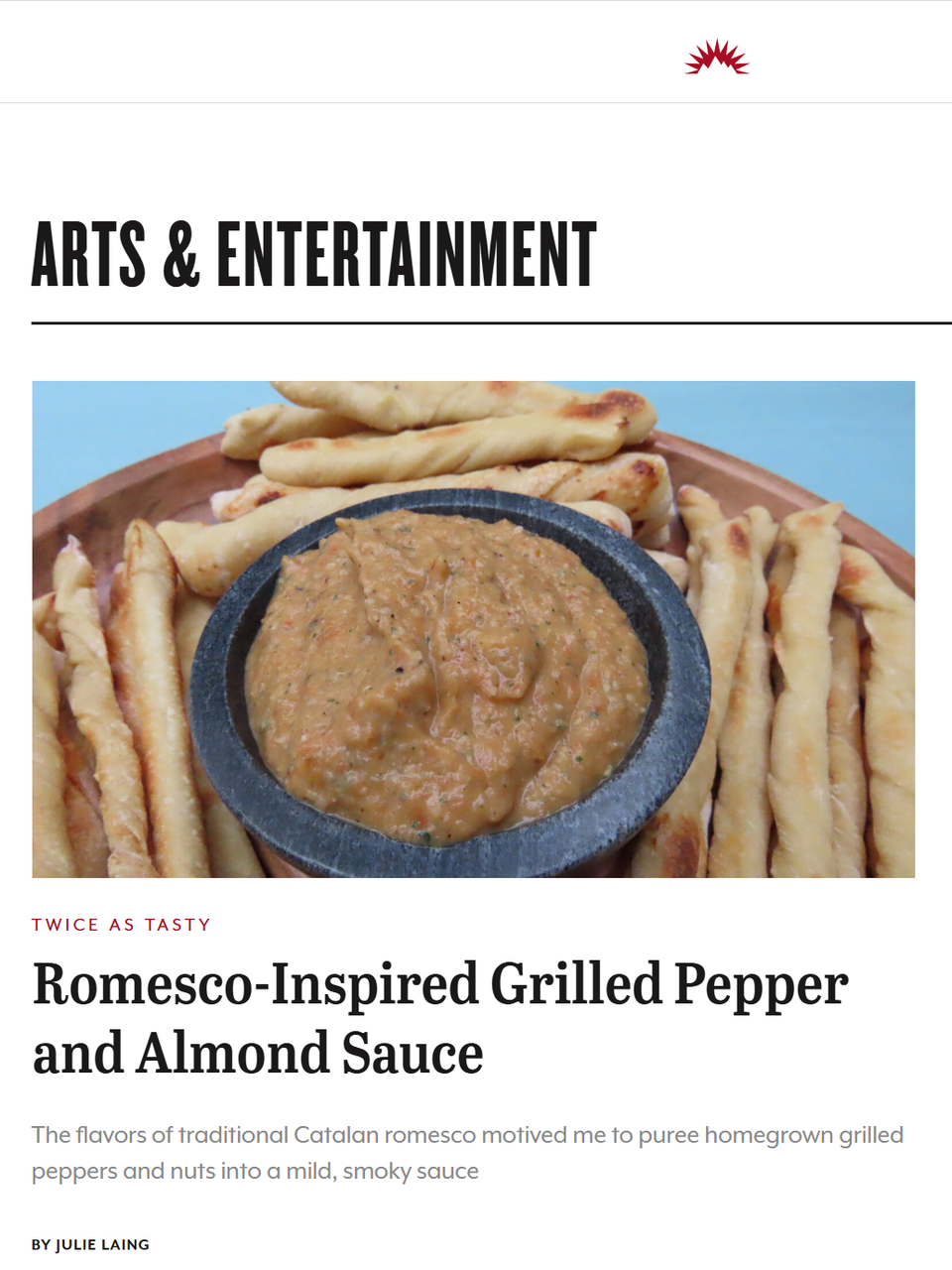
Romesco-Inspired Grilled Pepper and Almond Sauce

Sweet pepper sauces deserve as much attention as tomato ones—and are just as versatile. Learn more at TwiceasTasty.com.
Tomato sauce comes in so many variations that it’s easy to overlook equally delicious sauces that feature another nightshade: sweet peppers. I offer one version of a sweet pepper sauce this week in my Twice as Tasty column for the Flathead Beacon. I also explain why my recipe is merely inspired by romesco, which in Catalonia traditionally consists of mainly tomatoes and garlic underscored by mild ñora peppers but has been misrepresented as a roasted red pepper sauce by many American recipes.

Whatever you call them, sweet pepper sauces deserve as much attention as tomato ones—and are just as versatile. I’ve written about different ways to roast peppers for Taste of Home, but I typically make sauces with Grilled Sweet Peppers. The recipe in this week’s column includes nuts like romesco, and I typically make it in small batches to eat fresh. My Grilled Sweet Pepper Sauce recipe lacks nuts and garlic and freezes beautifully for quick meals all year.
Learn to make Romesco-Inspired Grilled Pepper and Almond Sauce
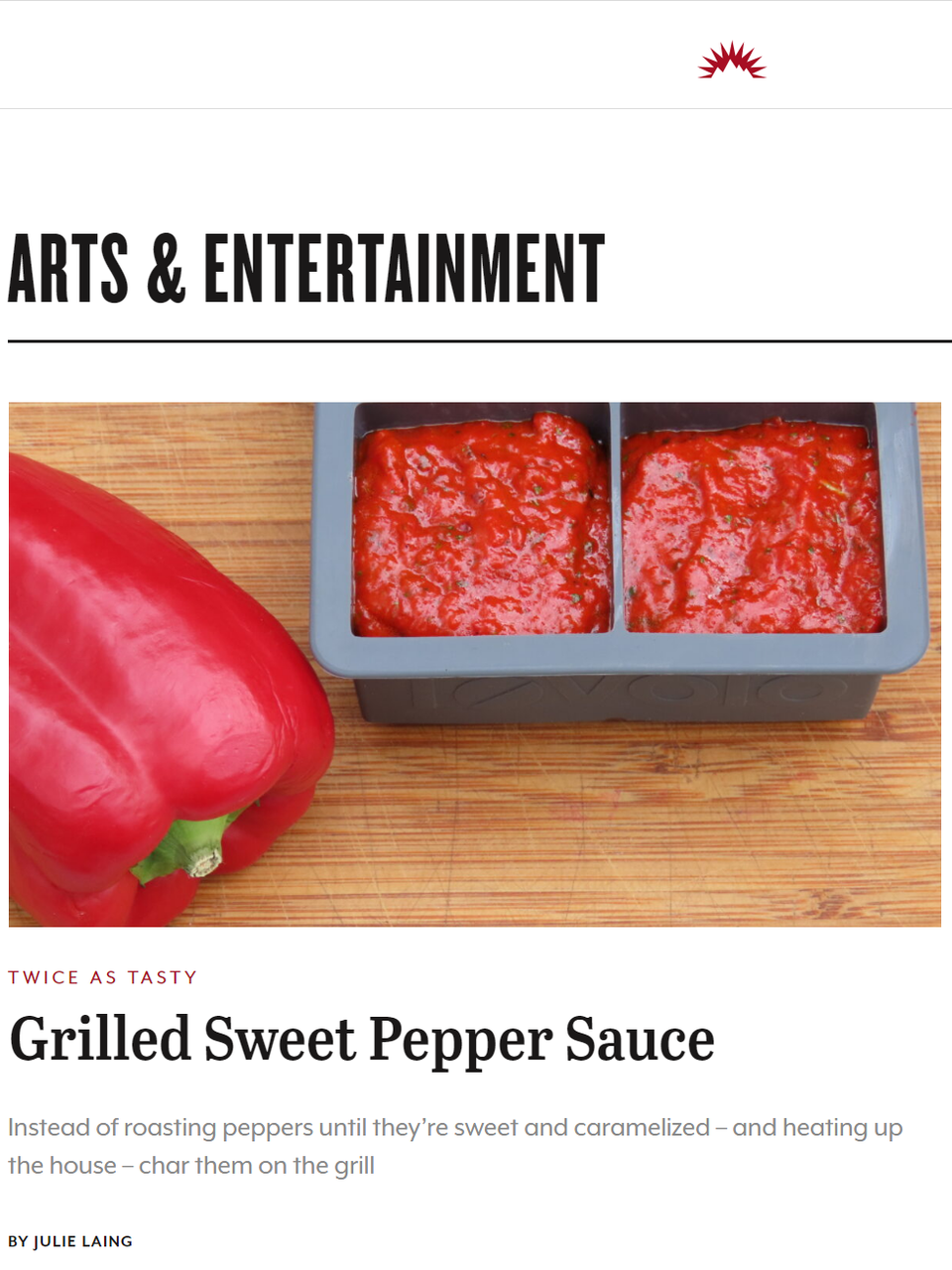
Grilled Sweet Pepper Sauce

I grill bumper crops of sweet peppers in large batches and then puree them into a sauce for pizza, pasta, and more. Learn more at TwiceasTasty.com.
So many vegetables become sweeter and smokier when roasted or grilled, including red bell peppers, as I explain this week in my Twice as Tasty column for the Flathead Beacon. I grill peppers as they ripen throughout the growing season, both to eat immediately and to gather in a zip-close bag in the freezer.

Soft roasted peppers peel more easily if you move them straight from the grill to a paper bag or airtight bowl, let them steam a bit, and then pull off the translucent skin while they’re still warm. They’re easiest to chop uniformly, either by hand or in a food processor, if you first spread them on a tray and freeze them until slightly firm.

When I have a bumper crop of sweet peppers, I grill and puree them into a sauce to use on pizza, pasta, and more. When making sauce, I still remove as much peel as possible, because it tends to be bitter. But I don’t bother chopping the peppers. A high-powered food processor easily breaks down halves or quarters. I’ve been using this food processor for years to make ultrasmooth Grilled Sweet Pepper Sauce.
Learn to make Grilled Sweet Pepper Sauce

Roasting Peppers

 I use not one but four techniques to roast peppers of all colors, sizes, and heat levels. Learn more at TwiceasTasty.com.
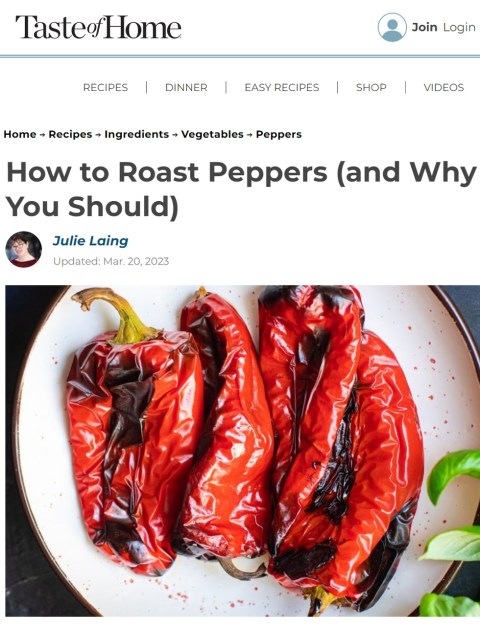
In one of my recent pieces for Taste of Home, I had a chance to share techniques for one of my favorite vegetable upgrades: roasting. I mainly roast homegrown peppers, so it’s an easy seasonal choice to char them on the grill. But if you’re buying peppers out of season or keeping an eye on a simmering pot in the kitchen, indoor techniques may make more sense. So I share not one but four ways to roast peppers of all colors, sizes, and heat levels.

Once glance at the price on a jar of roasted peppers in the store makes clear a key advantage to roasting your own. Other reasons include the ability to get them just the right softness to use in chunks in fresh dishes—jarred roasted peppers tend to be soft and slippery. I don’t just roast the standard red bell peppers, either: green bells, Gypsy peppers, Poblanos, and chilies all carry a smoky note when their charred.
Learn more about Roasting Peppers

Grilled Peppers

You could spend a small fortune buying jars of oily, roasted red peppers. Or you could grill your own. Get roasted red pepper recipes at TwiceasTasty.com.
Every year, we stuff at least 40 pepper plants into a hoop house, including bell peppers, Gypsy peppers, Poblanos, and several types of chilies. We go big because peppers can go in and on almost anything: salsas, salads, dips, sauces, breakfast eggs, lunch sandwiches, dinner pastas—the list is endless.

The challenge is in waiting for the peppers to ripen to bright yellows, oranges, reds, and purples and then capturing their peak flavor. My favorite variations use the grill to add a little char for fresh eating, such as for Corn, Bean, and Pepper Salsa and Shish Kebabs with Garlic–Soy Marinade, or a lot of smokiness before long-term storage, such as for Smoked Chilies and Home-Smoked Chili Paste. My latest trick falls somewhere in the middle: roasting peppers on the grill and then freezing them in a dice to throw in winter dishes or as a puree to use as a spread or sauce.
Learn to grill peppers and make Red Bell Pepper Puree

Summer Vegetables

Summer means filling bellies not just with the freshest produce possible but also with preserved vegetables the rest of the year. Learn more at TwiceasTasty.com.
If your garden isn’t in full swing yet, it’s about to be. Even here in Montana, with our long winters and short growing season, spring produce is beginning to wind down: Lettuces and spinach will soon be bolting, the asparagus crop has tapered off, and the strawberry bed has been picked nearly clean. In their place, summer produce is ready to burst forth, launching itself into the annual race to grow faster than I can harvest and process.

If you’ve been following along on Instagram, you’ve seen how I deal with spring’s vegetable bounty: #dailysalad. But with a large garden, summer vegetables need a different approach. The next few weeks are not just about filling bellies with the freshest produce possible but also about preserving those vegetables so that they can fill bellies the rest of the year. Here’s how I’ll be spending the next few weeks.
Read more about enjoying summer vegetables year-round