
What do Bloody Mary mix, carrot-top salsa, yogurt whey muffins, and roasted raspberry jam have in common? All these delicious recipes rely on ingredients that typically head straight for the compost or sink drain. In the Twice as Tasty workshop at last weekend’s Free the Seeds fair, I shared ways to eat from top to root. Here I share my notes from the workshop, which include ways to give trimmings a second life, ban “discard” from your kitchen, and ultimately look at what heads for your plate versus your compost bin in a new way.
Read more about eating from top to root
Author: Julie Laing | Twice As Tasty
Learn how to eat well year-round by preserving, pickling, freezing, dehydrating, fermenting, and more at TwiceasTasty.com.
Free the Seeds

Are you ready for Free the Seeds? It’s on its way! The 5th annual fair is happening Saturday in Kalispell, Montana. You can find the details here.
As one of the members of the organizing committee for this free event, I’ve been busy talking about it all over town and on the air. I’ll be presenting just one of the two dozen workshops at the fair, so if you’re local, I hope you’ll join me. But if it’s too far to travel, don’t worry: all this month, I’ll be expanding on my Free the Seeds workshop right here on the Twice as Tasty blog.
Read more about Free the Seeds!
Buckwheat
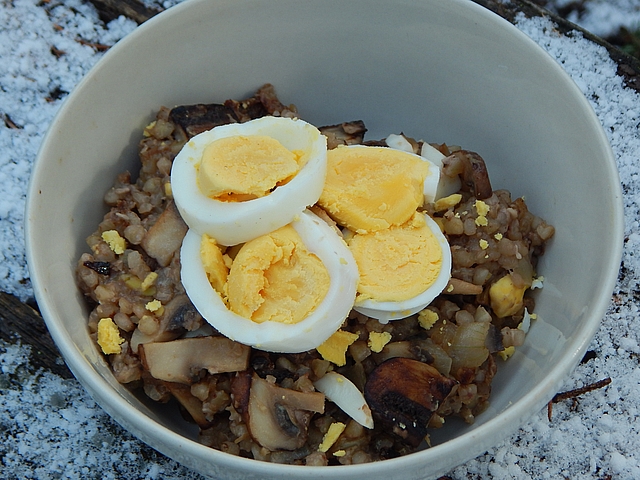
My first memorable encounters with buckwheat groats were in Russia. In the United States, roasted buckwheat groats are typically sold as “kasha,” but in Russia, all the каша I ate as a hot breakfast cereal was a mix of grains. My Russian friends tended to cook buckwheat on its own—traditionally in an oven until it softened to a porridge—and serve it as a savory meal more than a sweet one.
I’ve since found many reasons to love buckwheat. Despite its name in English, it’s not a type of wheat: it’s actually a gluten-free seed in the same plant family as rhubarb. So if wheat isn’t on your diet, buckwheat is your friend. Unlike some gluten-free grains, it’s packed with protein and amino acids. Soaking it removes some of its phytic acid, which can make it easier to digest. A presoak also speeds up the cooking process—instead of a slow bake in a low-temp oven, you can have it ready from the stovetop in 5 minutes for a modern take on каша сименуха, a traditional Russian breakfast, or for an easy dinner with roasted vegetables.
Learn to make Buckwheat Porridge with Mushrooms and Eggs and Roasted Vegetables with Tofu and Buckwheat
Beans and Cornbread

Baked beans can be a vegetarian’s guilty pleasure. Cans on the store shelf often make up for the lack of bacon by upping the sweetness factor, taking the beans out of the “healthy food” realm and putting them in the same category as store-bought granola and sweet potato fries. It’s unfortunate, because when cooked properly, vegetarian baked beans can have the perfect balance of sweet and tang.
I’ve always found canned vegetarian baked beans to be cloyingly sweet. Then I got hooked on beans in tomato sauce when I lived in London. These navy beans stewed in tomato sauce and popped into a can aren’t exactly gourmet, but the first flavor on my tongue wasn’t corn syrup. The Brits are great fans of them as beans on toast. As filling as this meal was on a backpacker budget, a stand in Covent Garden went one better: for a few quid, I could get a giant, piping hot jacket potato smothered in these beans. Since then, I’ve upscaled the beans, but I still love to serve them in baked potatoes.
Learn to make Vegetarian Baked Beans and Baked Polenta
Squash and Rice
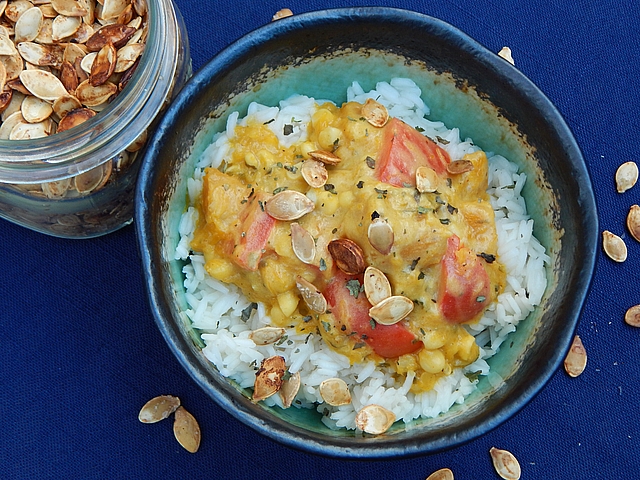
Our winter squash and pumpkin crop yielded little last year, and as I packed away other storage veg, I thought I would have to do without a cold-weather stash. But as daylight waned, friends and family kept sending me home with squash, most fearing it would spoil before they could use it or lacking inspiration for how to prepare it.
If you’re in that camp, this week’s post should both quell fears and inspire delicious meals. Winter squash and pumpkins keep far longer than people think, particularly if they’re properly cured and stored. And they can go in a range of meals, from breakfast to lunch to dinner to dessert. As a bonus, they’re easy to prep and cook ahead for multiple quick, unexpected meals, like risotto and curry.
Learn to make Thai Squash Curry and Squash–Mushroom Risotto
Taking Stock

Growing food has been on my mind: I’ve been busy prepping for a sprout-growing workshop this week and organizing next month’s Free the Seeds event. You too are probably noticing the steady march toward spring as bright seed catalogs arrive regularly and storage vegetables beg to be front and center in your meals. Now’s the time to take stock of what you’ve saved from your last growing season, particularly what you’ve used and what’s left.
Read more about taking stock of stored food
Sourdough Bagels

My first attempt at sourdough bagels followed our backcountry adventure last summer: it was a win for its poke bowl and huckleberry sourdough pancakes but a loss in the bagel department, when I had to resort to supermarket bakery “bagels.” Our county’s only bagel shop closed years ago, so the only local option was closer to squishy rolls than chewy, dense bagels. I started testing my own version as soon as we returned home.
Some research revealed the main problem: many commercial operations steam their bagels. It’s quick, cheap, and easy to automate for massive batches, but the bagels are soft and fluffy. (I’m not even sure the supermarket went this far; more likely, they took their hamburger bun dough and poked a hole in the center.) As with soft pretzels, bagels really want to be immersed in boiling water before baking. Boiling the dough lets its starches gel, forming a firm crust that surrounds a dense interior after baking. Without this step, you’ll end up with a texture and flavor closer to a bread roll. Although some bakers swear by a water bath spiked with honey and others go au naturel, I find a soda bath, similar to the one used for Sourdough Pretzel Bites, adds flavor and color.
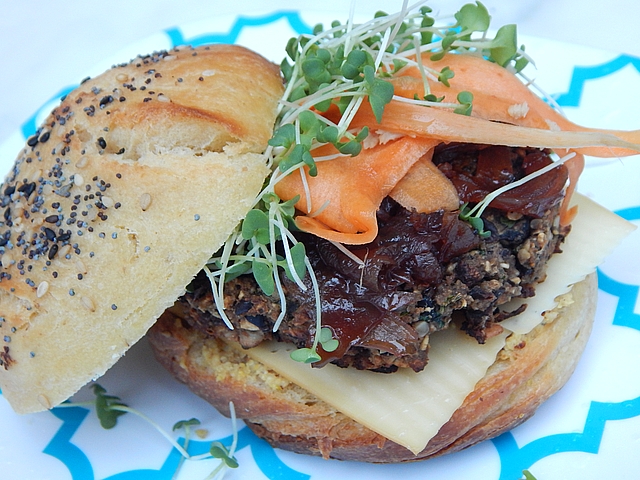
Learn to make Sourdough Bagels and Bagel Breakfast Sandwich
Sourdough Pretzels

Have you ever decided to try a recipe for the first time for a party? That was our first attempt at Sourdough Pretzel Bites. Several years back, George and I volunteered to prepare a fondue-themed surprise party for a dear friend. We bought about 10 kinds of cheese and made several sweet and savory fondues: classic Emmenthaler, cheddar and beer, Gruyere and wine, gjetost, Brie and shiitake, squash and cheddar, Spanish Manchego, bagna cauda, and of course chocolate. I guess that 30, maybe 40, people passed through the house that night, poking various dippers into every fondue pot we could get our hands on.
Our first sourdough soft pretzel attempt disappeared quickly that night, but in the years since I’ve tweaked and perfected the recipe. The dough is straightforward; where opinions vary widely is in how to achieve a crisp “shell” and soft center. German soft pretzels have long been dipped in lye, an alkaline substance so caustic that it’s used to clean clogged drains and requires gloves when handling. As much as I love traditional flavors and techniques, I wasn’t ready to introduce that element into my kitchen.
The eminent Harold McGee has recommended sodium carbonate, sometimes called soda ash, as a replacement: simply bake sodium bicarbonate, also known as the common kitchen staple baking soda, at a low temperature until most of its water and carbon dioxide evaporate. On the upside, your pretzels will have that traditional bite; on the downside, this “baked soda” will still irritate your skin. So I prefer standard baking soda in my soda water bath. It may be less traditional and less flavorful, but it balances well with the sourdough tang and doesn’t eat into my hands.
Learn to make Sourdough Pretzel Bites and Beer–Cheese Dip
Sourdough Focaccia

I see all types of bread as an easy snack, but focaccia stands out among them. I’d buy it oven-hot as a street snack in Italy, and that flavor has stuck with me decades later. It’s tempting to think of focaccia as a deep-crust pizza crust or sandwich bread and load up on toppings and fillings, but it really rises best in the oven when it isn’t overloaded and shows off its heavy glug of olive oil when other flavors don’t take over.
Although sourdough isn’t traditional for focaccia, the tang pairs beautifully with silky olive oil. It also makes the dough forgiving of busy schedules; instead of having to watch to ensure it doesn’t overproof, you can slide the pan into the refrigerator and bake it at your leisure. But one of the greatest perks of sourdough focaccia is that unlike many sourdough breads, you can cut it and eat it hot. This also means it doesn’t keep as well, so I make a small loaf in a single 9- by 13-inch pan and bake often. Besides snack food, the hot bread works well with a bowl of Tomato Juice Soup or on an appetizer plate with pickles, homemade cheese, and sliced fruit.
Learn to make Savory Sourdough Focaccia and Sweet Sourdough Focaccia
3rd Annual Sourdough Giveaway

Happy 2020 from Twice as Tasty! January is Sourdough Month here on the blog. The Sourdough Giveaway Experiment has been so successful over the last 2 years that I’ve made it an annual event. I’ll be giving away sourdough starter through January 31, 2020.
There’s even more reason to get your free starter this year: later this month, I’ll be launching a Twice as Tasty Challenge for newsletter subscribers. All you have to do to participate in the challenge is to subscribe here to the monthly newsletter. Details on the challenge will be sent to you later this month. And although you don’t have to be baking with sourdough to participate, you’ll have more fun and be more involved in this food community if you do!
Keep reading to get in on the 3rd Annual Sourdough Giveaway
