Gearing Up to Preserve

 My top tip for stress-free preserving is to gear up before you dig in. Learn more at TwiceasTasty.com.
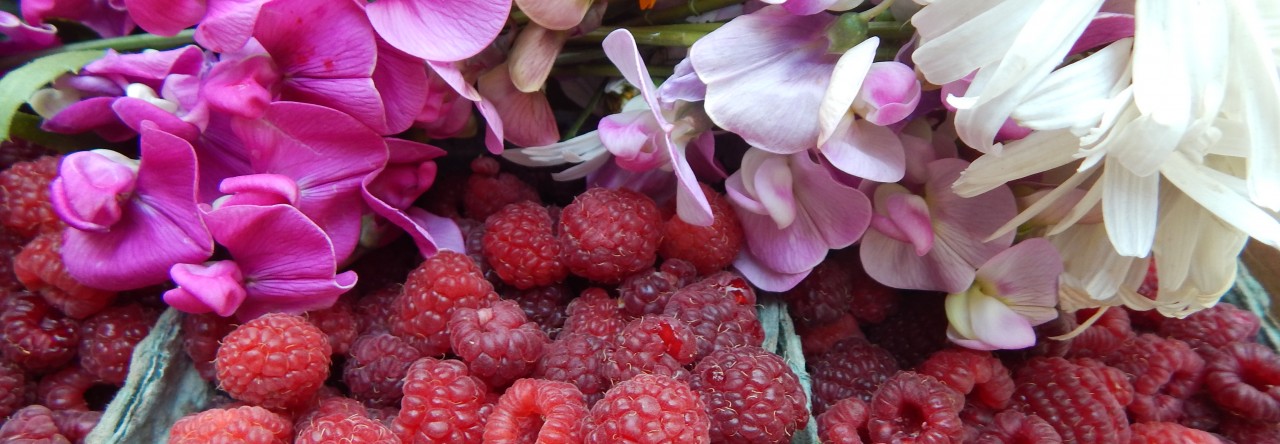
My fridge is currently full of macerating rhubarb and recently picked homegrown strawberries, ready to be turned today into jams and shrubs. I’m not the only one gearing up to preserve, as I share this week in my Twice as Tasty column for the Flathead Beacon. A local farmer told me last week that her crew has made 50 pounds of Rhubarb Kimchi, building on my recipe in The Complete Guide to Pickling. Tangy Radish Rounds and Spring Asparagus Pickles are also currently popular recipes from the book.

I’ll eventually be turning rhubarb into kimchi and fermented pickles, but today’s projects are on the sweeter side. Our strawberry crop has hit its peak, so I’ll be developing some jam recipes to share down the road, featuring the sweet fruit and pairing it with rhubarb. I’ll also be canning up one of my seasonal favorites: Rhubarb–Earl Grey Jam.
Learn how to gear up for preserving
Fermenting Grains and Beans

Lessons learned in my dosa-making adventures led to a recipe for beginners living in cold climates. Learn more at TwiceasTasty.com.
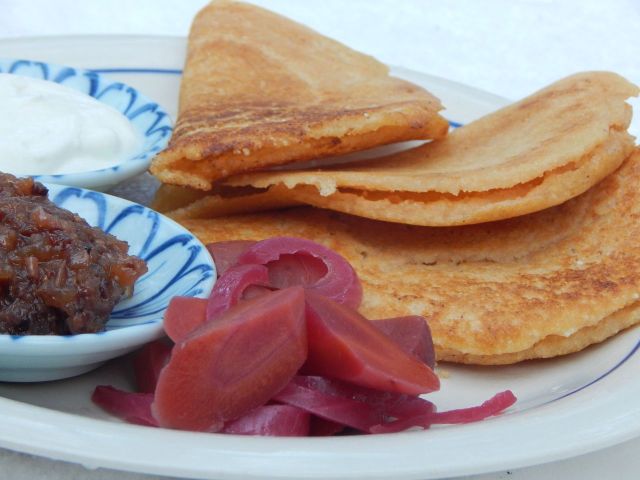
When it’s midwinter and the fermentation bug hits you, where do you turn? The logical choice to expand beyond sourdough and cheese, and the perfect pairing with this month’s Indian-Inspired Sweet-and-Sour Potatoes and Indian-Inspired Shrimp in Yogurt, seemed to be dosas. But these thin, crisp rice-and-bean pancakes offered as many challenges as advantages in my Northern Rocky Mountain kitchen.

So what I offer this week are the lessons I learned as I began my dosa-making adventures, with big nods to fermentation expert Sandor Katz and writer and cook Chandra Padmanabhan. These lessons led to an Indian-inspired dosa recipe ideal for beginners living in cold climates, with plenty of ways to creep closer to the traditional texture and flavor as you become more confident in your dosa-making skills.
Learn to ferment grains and beans and make Red Lentil and Basmati Dosas

Spiced Potatoes

Potatoes readily absorb anything you add to them, making them perfect vehicles for all sorts of spices. Get potato recipes at TwiceasTasty.com.
We grow and eat lots of potatoes, especially ones we’ve stored for winter: waxy reds and bright purples ideal for salads, starchier white varieties I use in gnocchi, and yellow potatoes that go into soups, curries, mashers—really, almost anything. Each variety tastes subtly different, but all readily absorb any flavor you add to them, making them perfect vehicles for all sorts of spices.

I often bring potatoes when teaching Twice as Tasty Indian Spices workshops, but we keep the workshop recipes simple so that the participants’ newly created spice blends can shine. At home, I sometimes reach for a homemade masala but just as often grab separate ground or whole spices. Because I’m generally rich in pickle brine, that often lands in my potato dishes for a sweet-and-sour effect. Keep reading after the recipe for more flavoring ideas.
Learn to make Indian-Inspired Sweet-and-Sour Potatoes and other variations

Quick Food Preservation

Refrigerating, freezing, and dry storing are the trifecta of quick preservation. Learn more at TwiceasTasty.com.
Preserving your harvest often seems like a daunting, time-consuming task, involving pounds of produce, stacks of jars, and boiling kettles on some of the hottest days of the year. Large-batch canning can operate that way: as a project, albeit one that fills your pantry. But it’s not the only way to preserve what you grow. Preservation can happen every time you come in from the garden with a little more than you and your family will eat at the next meal.

Refrigerating, freezing, and dry storing are the trifecta of quick preservation. As I mentioned while describing their pros and cons last week, produce preserved in these ways requires minimal prep and handling. Most of the tools and packaging you need are likely already in your home. Storage times can vary widely with these techniques, but some tips and tricks will let you get the most out of each. Best of all, a wide range of food can be preserved simply and easily with these quick preservation techniques.
Read more about quick food preservation

Prepare to Preserve

Whatever your type of produce, storage space, or free time, you can save your harvest. Learn more at TwiceasTasty.com.
How’s your garden growing? If it’s anything like mine, you’ve moved beyond planting to weeding and harvesting—and harvesting, and harvesting. With so much food coming ripe so quickly, it’s time to dig out the canning kettle, dehydrator, crocks, and other preservation tools that will let you enjoy homegrown (or farm fresh from a CSA) produce the rest of the year.

Later this month, I’ll be teaching a free online workshop through Free the Seeds that focuses on preparing to preserve your harvest. It’s a big topic, with far more information than I can share in one session, so I’ll be expanding on that topic all month here at Twice as Tasty. Be sure to join me online July 15 so that I can answer your questions directly (sign up for the Free the Seeds mailing list to receive a registration email), and then check back here for additional tips, tools, and recipes that save your harvest. You’ll also find pages of information on basic tools and techniques here.
Read more about preparing to preserve

Buckwheat

I’ve found many reasons to love buckwheat: it’s gluten free, packed with protein, and easy to prepare. Get buckwheat recipes at TwiceasTasty.com.
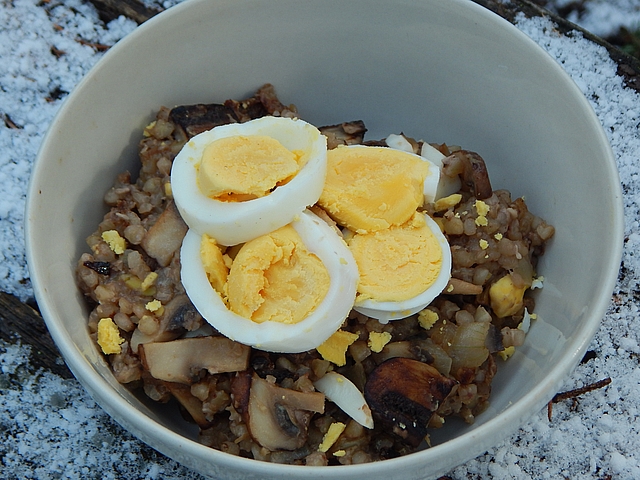
My first memorable encounters with buckwheat groats were in Russia. In the United States, roasted buckwheat groats are typically sold as “kasha,” but in Russia, all the каша I ate as a hot breakfast cereal was a mix of grains. My Russian friends tended to cook buckwheat on its own—traditionally in an oven until it softened to a porridge—and serve it as a savory meal more than a sweet one.

I’ve since found many reasons to love buckwheat. Despite its name in English, it’s not a type of wheat: it’s actually a gluten-free seed in the same plant family as rhubarb. So if wheat isn’t on your diet, buckwheat is your friend. Unlike some gluten-free grains, it’s packed with protein and amino acids. Soaking it removes some of its phytic acid, which can make it easier to digest. A presoak also speeds up the cooking process—instead of a slow bake in a low-temp oven, you can have it ready from the stovetop in 5 minutes for a modern take on каша сименуха, a traditional Russian breakfast, or for an easy dinner with roasted vegetables.
Learn to make Buckwheat Porridge with Mushrooms and Eggs and Roasted Vegetables with Tofu and Buckwheat

Beans and Cornbread

Homemade vegetarian baked beans can have the perfect balance of sweet and tang. Get bean recipes at TwiceasTasty.com.
Baked beans can be a vegetarian’s guilty pleasure. Cans on the store shelf often make up for the lack of bacon by upping the sweetness factor, taking the beans out of the “healthy food” realm and putting them in the same category as store-bought granola and sweet potato fries. It’s unfortunate, because when cooked properly, vegetarian baked beans can have the perfect balance of sweet and tang.

I’ve always found canned vegetarian baked beans to be cloyingly sweet. Then I got hooked on beans in tomato sauce when I lived in London. These navy beans stewed in tomato sauce and popped into a can aren’t exactly gourmet, but the first flavor on my tongue wasn’t corn syrup. The Brits are great fans of them as beans on toast. As filling as this meal was on a backpacker budget, a stand in Covent Garden went one better: for a few quid, I could get a giant, piping hot jacket potato smothered in these beans. Since then, I’ve upscaled the beans, but I still love to serve them in baked potatoes.
Learn to make Vegetarian Baked Beans and Baked Polenta

Squash and Rice

Squash and pumpkins keep far longer than you think and can be eaten from sunup to sundown. Get winter squash recipes at TwiceasTasty.com.
Our winter squash and pumpkin crop yielded little last year, and as I packed away other storage veg, I thought I would have to do without a cold-weather stash. But as daylight waned, friends and family kept sending me home with squash, most fearing it would spoil before they could use it or lacking inspiration for how to prepare it.

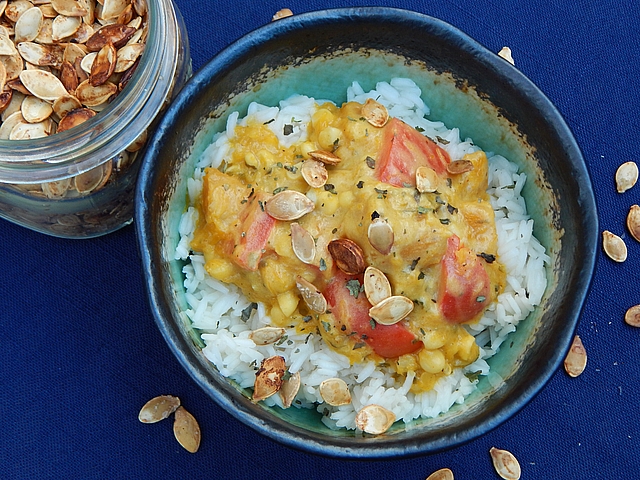
If you’re in that camp, this week’s post should both quell fears and inspire delicious meals. Winter squash and pumpkins keep far longer than people think, particularly if they’re properly cured and stored. And they can go in a range of meals, from breakfast to lunch to dinner to dessert. As a bonus, they’re easy to prep and cook ahead for multiple quick, unexpected meals, like risotto and curry.
Learn to make Thai Squash Curry and Squash–Mushroom Risotto

Taking Stock

Amid signs of the steady march toward spring, it’s time to take stock of your last saved harvest. Learn more at TwiceasTasty.com.
Growing food has been on my mind: I’ve been busy prepping for a sprout-growing workshop this week and organizing next month’s Free the Seeds event. You too are probably noticing the steady march toward spring as bright seed catalogs arrive regularly and storage vegetables beg to be front and center in your meals. Now’s the time to take stock of what you’ve saved from your last growing season, particularly what you’ve used and what’s left.
Read more about taking stock of stored food

Mashers

Everyone has a favorite  mash, but you can please them all with 5 or fewer ingredients. Get mashed potato recipes at TwiceasTasty.com.
Happy Thanksgiving! Hopefully your kitchen smells warm and spicy and you have many hands at work preparing the day’s spread. This foodie holiday holds many memories for me—from family gathered around Grandma Tiny’s table to “orphans” meals with friends to today’s version with family and friends and the hope that snow will be in the air. It’s been 25 years since I’ve eaten the main attraction of the table, but it remains a celebration—probably because I easily fill a plate before the turkey passes by.

I rarely think of mashing potatoes outside the holiday season (unless I want to use up yogurt whey). Instead, I bake them, roast them, and braise them; I turn them into salad, soup, curry, and gnocchi. Perhaps it’s the cranberries—a dollop sits so beautifully in a pile of mashed potatoes or sweet potatoes. So when these tart berries are in season, the potato masher comes out to play.
Learn to make Tangy Potato Mashers and Sweet Potato Mashers with Coconut Milk