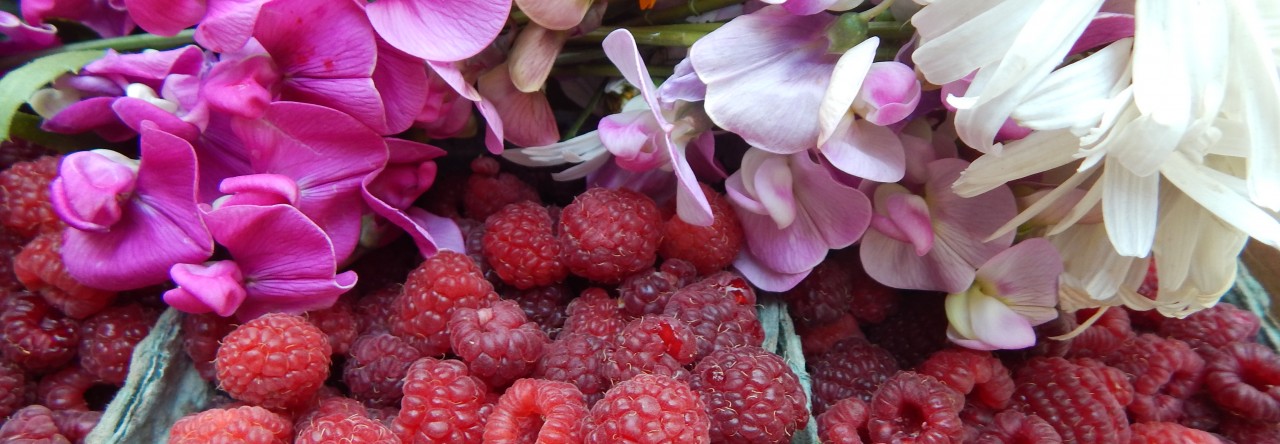
Fermented Cabbage

I’m a latecomer to the enjoyment of sauerkraut and kimchi, but I love that I can make both from a head of cabbage. Get home fermentation recipes at TwiceasTasty.com.
I have to admit that I’m a latecomer to the enjoyment of sauerkraut and other cabbage ferments and pickles. Perhaps it’s because I moved straight from a little kid eating processed hot dogs to a teenager refusing all meat—I’m not sure I’ve ever had a real sausage smothered in German sauerkraut. I’m not even a fan of coleslaw: it’s usually too heavy on the vinegar or the mayo and still fairly flavorless. It doesn’t help that for years I couldn’t grow brassicas without harvesting more cabbage moth larvae than edible cabbage leaves.

A couple of years ago, we mastered the cabbage moth problem, covering a hoop tunnel frame with mosquito netting and diligently clamping it down when we weren’t harvesting or weeding the broccoli, cauliflower, and cabbage protected beneath it. Once I started growing cabbage, I needed another way to deal with the enormous heads besides my favorite use: fresh, raw Asian Cabbage Salad. In discovering fermented cabbage, I learned that the variations developed around the world—from German sauerkraut to Korean kimchi—are as endless as they are for any other pickle.
Learn to make Apfel Sauerkraut and Head-Cabbage Kimchi
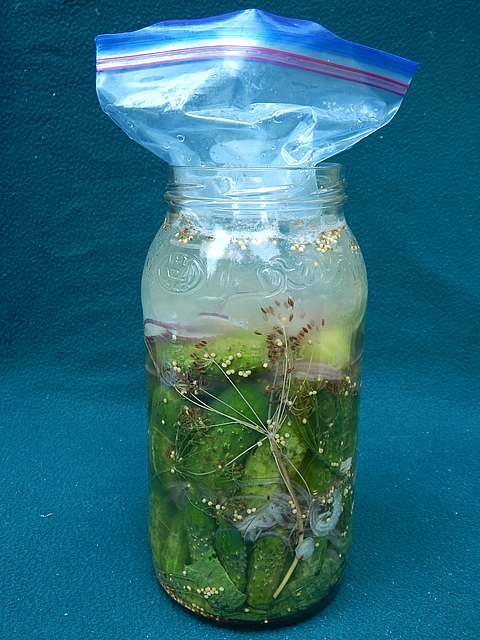
Fermented Cucumbers

I’ve loved cucumber pickles since I was a kid. Fermentation takes them to a new level. Get fermented vegetable recipes at TwiceasTasty.com.
I’ve loved pickles since I was a kid. My mom put dozens of jars of dill and “sweet” (bread-and-butter) pickles through a water bath every year, and I’d sneak them like they were potato chips. But the longer the pickles sat, the less chip-like crunch they gave. Over the years, I’ve played with ingredients and canning techniques that have helped. Then I discovered fermentation.

Think about it: Cucumbers are best fresh and raw. Putting them in hot water is bound to affect their texture. Fermentation replaces heat with time and vinegar with salt. No wonder the result is crisper and fresher. And the flavoring possibilities—from dill to tea—are endless.

If you’ve never run a fermentation, I suggest you check out my introductory post from earlier this month. But here are the basics: Start with everything clean and fresh. Monitor the batch daily so that you can see the process. If you have doubts, give it the toss and start again.
Learn to make Fermented Dill Pickles and Fermented Tea Pickles

Quick Ferments

When vegetables are sliced or pureed before fermentation, it’s easy to use them straight from the jar. Get veggie ferment recipes at TwiceasTasty.com.
If you’re new to vegetable fermentation, you likely look at recipes and think, “Can it be that easy?” This instantly leads to the terrifying thought, “It can’t; surely I’ll get it wrong.” So to kick off this month’s recipes for vegetable ferments, I offer my most foolproof recipe for your first foray into fermentation. Here, the carrots actually aren’t fully fermented; they sit barely long enough to kick off the process. Still, they use a lot of the techniques that apply to full fermentation of other vegetables: salting, weighting to encourage the carrots to release even liquid, and a rest period to pull even more water and sugars from the produce. Because these carrots are prepared as thin ribbons, it’s easy to open the jar and slide a few onto a sandwich, into a sourdough pita, or straight into your mouth. The recipe is so simple that while you’re at it, you might as well prepare your own horseradish to go in the jar—especially if you’re growing it.
Learn to make Barely Fermented Carrots and Horseradish Paste

Fall Ferments

Fermenting vegetables seems daunting, but it’s far simpler than making cheese, baking bread, or even canning vinegar-pickled produce. Learn more at TwiceasTasty.com.

Fermentation is one of the oldest ways to preserve food, but it’s a technique that has become unfamiliar for modern home cooks. We still consume a lot of fermented foods, including dairy and grains, and we may even be brave enough to try those at home. But somehow fermenting vegetables seems daunting, raising doubts about whether we’re preserving or spoiling food.

Essentially, fermenting is souring via microbes. Microorganisms break down the sugars and carbohydrates in food, causing a chemical change that increases acidity and ultimately preserves the food. The process leaves no room for microbes that spoil food to move in. Properly fermented food looks, smells, and tastes bright, crisp, and tangy. A fermentation that has problems will be discolored, soft, and rotten smelling; you’ll turn up your nose before it even gets near your tongue.

Most people think of pickled cucumbers or brined cabbage when they think of fermented vegetables. But many other vegetables, and even some fruits, can be fermented. In most cases, the only ingredients needed are fresh produce, salt, and water.
Read more about fermenting vegetables

Summer Vegetables

Summer means filling bellies not just with the freshest produce possible but also with preserved vegetables the rest of the year. Learn more at TwiceasTasty.com.
If your garden isn’t in full swing yet, it’s about to be. Even here in Montana, with our long winters and short growing season, spring produce is beginning to wind down: Lettuces and spinach will soon be bolting, the asparagus crop has tapered off, and the strawberry bed has been picked nearly clean. In their place, summer produce is ready to burst forth, launching itself into the annual race to grow faster than I can harvest and process.

If you’ve been following along on Instagram, you’ve seen how I deal with spring’s vegetable bounty: #dailysalad. But with a large garden, summer vegetables need a different approach. The next few weeks are not just about filling bellies with the freshest produce possible but also about preserving those vegetables so that they can fill bellies the rest of the year. Here’s how I’ll be spending the next few weeks.
Read more about enjoying summer vegetables year-round

Fresh Feta

I have a long list of reasons for making feta, starting with delicious and easy. Get homemade feta and salad recipes at TwiceasTasty.com.
I can give you a long list of reasons for making feta. It’s delicious. It’s relatively easy. It lets you become comfortable with many ingredients, tools, and techniques that are important in more finicky cheeses, including slow heating, powdered starter, held temperatures, curd cutting and stirring, hang draining, molding, and salting. It will impress all of your friends, if you decide to share. And did I mention how tasty it is?

In Greece and other Mediterranean countries, feta is as common as cheddar is in the United States. During my travels, I ate feta made from backyard goats and sheep, feta flavored with herbs just snipped in the garden, and feta in lots of salads. Feta is traditionally made from sheep or goat milk; if you can get your hands on either, you’ll get the best flavor. But even homemade cow’s milk feta tastes better than many of the most readily available commercial types.
Learn to make Dry-Salted Feta and Warm Quinoa and Feta Salad

Sour Cream

You easily get the best flavor from the fewest ingredients by making sour cream at home. Get homemade sour cream and cookie recipes at TwiceasTasty.com.Sour cream is one of my guilty food pleasures. I eat it regularly, sometimes daily. I eat it at breakfast with crepes and baked into Sour Cream Scones with Tart Cherries. It goes in creamy dressings for potato and other salads. It’s the base for dips and midday snacks. I put sour cream on baked potatoes, tacos, and empanadas. And I use it in desserts, including cookies.
I call sour cream a “guilty pleasure” because it can be high in calories and fat. Most commercial reduced-fat and nonfat versions are primarily whey, modified food/corn starch, salts, stabilizers, and artificial gums—not a good alternative. So if I’m buying sour cream, I read the labels closely and buy full-fat versions that only list “cultured cream” or something similar as the ingredient. But you can easily get the best flavor from the fewest ingredients by making sour cream at home.
Learn to make Fresh Sour Cream and Salted Chocolate Chip Cookies

Buttermilk

Cultured dairy is an easy, no-fuss first step to cheesemaking. Get buttermilk recipes at TwiceasTasty.com.
When I started sharing cheese and homemade dairy recipes and teaching workshops on making cheese last year, you learned how to use a simple starter to make yogurt and an acidic kitchen staple to make cheese. But to expand the range of dairy products and cheeses you make in your kitchen, you’ll need to become familiar with powdered starter.

These magical little packets of bacterial cultures do the same thing as yogurt and lemon juice: they acidify, or ripen, warm milk, letting the good bacteria grow. But the beauty of them is in their specificity. Each starter culture has particular strains of bacteria that create different flavors and textures from the same milk. The range of available cultures is impressive, and I recommend reading about them in Mary Karlin’s and Gianaclis Caldwell’s books to really understand how they work. Here, I’ll give a quick intro that will let you make and use cultured buttermilk.
Learn to make Cultured Buttermilk and Honey–Chili Buttermilk Biscuits

Making Better Yogurt and Cheese

Making new styles of cheese has taught me a few tricks that apply to my homemade standards. Learn about making better yogurt and cheese at TwiceasTasty.com.
Each April, the recipes on Twice as Tasty focus on making cheese and other dairy products at home. Between the information on the blog and the workshops I’ve been teaching to everyone from adults to kids, the pool of home cheesemakers has been growing steadily all year.

As I wrote last year, yogurt was my first homemade dairy product. It’s still the milk-based product I make most often, partly because it’s so easy and partly because it’s so versatile that I eat it all the time. This also means I’m constantly finding new ways to improve my yogurt-making skills.

I’ve also been playing with variations on acid-based cheeses and delving into new cheese styles and dairy products. Some of these will be the focus of blog posts in the coming month. But these styles have also taught me a few tricks that apply to my homemade standards. So before I offer you new recipes, here are some things I’ve learned in the past year about making yogurt and cheese.
Read more about making better yogurt and cheese

The Sourdough Giveaway Successes

As the first Twice as Tasty Sourdough Giveaway Experiment comes to a close, there’s only one word to describe it: success. Read more about the experiences of new sourdough bakers. (Photo by Vicki Faulkner)As the first Twice as Tasty Sourdough Giveaway Experiment comes to a close, there’s only one word to describe it: success. When I announced that I would be sharing my sourdough starter for free, people immediately began sending me their SASEs and joining in the project. When I extended it a second month, even more envelopes requesting sourdough began to appear in my mailbox. Many of the new proud owners of a sourdough starter have been sharing their experiences and photos with me over the last month. I’m excited to share some of these with you and show you how easily new bakers took to their sourdough starter.
Read more about the experiences of new sourdough bakers