Choosing Wooden Spoons

I reach for wooden spoons all of the time; when baking, sturdiness and handle comfort matter most. Learn more at TwiceasTasty.com.
As the holiday baking and gifting season begins, you may want to check out my recent piece for The Spruce Eats. I tested a dozen wooden spoons for the website earlier this year, using each of them to stir multiple batches of cookie dough or quick bread batter, as well as sautés, soups, pasta, and more.

I reach for wooden spoons all of the time in my kitchen, but they probably get the most use when I’m baking. Overall, I found that sturdiness and handle comfort mattered most when mixing doughs, especially dense ones. Some spoons I tested had additional features, like an edge shape that easily scraped down a mixing bowl or a small rubber scraper on the top of the handle that could clear out a measuring cup. A few had a shape that worked best when gripped a certain way to mix dough.
Learn about choosing and using wooden spoons

Kitchen Favorites: Mortar and Pestle

 Testing mortars and pestles revealed not only the best ones for various tasks but also my favorite. Learn more at TwiceasTasty.com.
As I’ve taught spice workshops and ground spices into custom mixes at home, I’ve used a range of tools: coffee grinders, nutmeg grinders and graters, salt mills and pepper grinders, hand-cranked spice mills. But it wasn’t until earlier this year, when I tested seven mortar and pestle sets for The Spruce Eats, that I became enamored of this traditional grinding tool.

As I spent weeks using various mortars and pestles, I not only learned how to choose and use the best ones for various tasks but also found my favorite: the IKEA Adelsten Mortar and Pestle. In my latest piece for The Spruce Eats, I tell the tale of my prior poor choices in mortars and pestles that never made them my go-to grinding tool and why I’ve made room for IKEA’s set in my small kitchen.
Learn about choosing and using a mortar and pestle set

Kitchen Favorites: Cereal Bowls

The humble cereal bowl can hold many meals in many settings. Learn more at TwiceasTasty.com.
In the introduction of Consider the Fork, which examines the history of everyday kitchen tools, Bee Wilson starts by considering the wooden spoon, “a quiet ensemble player in so many meals that we take it for granted.” She could have just as easily opened her book with the humble “cereal” bowl, so named for one of its primary uses that immediately gives a sense of size, even though capacity still varies widely. Rather than being a dedicated vessel for one food, the cereal bowl can hold many meals in many settings, as I describe in my latest piece for The Spruce Eats.

Although I have numerous bowls in my kitchen, and even several types that fit the cereal-appropriate category, I found a perfect fit in Duoluv Unbreakable Bowls. The size, shape, texture, and price all fit my needs even before I realized I really did need them. They mainly consist of wheat straw fiber, so they’re more environmentally friendly than 100% plastic bowls.
Learn about choosing and using bowls

Choosing Soup Ladles

For a recent piece for The Spruce Eats, I tested 15 soup ladles. Learn more at TwiceasTasty.com.
I’ve put quite a bit of thought into recipes for a wide range of soups, but I didn’t think much about the tool I use to serve those soups until I tested 15 soup ladles for The Spruce Eats. It turns out that how comfortably and cleanly you scoop soup from a pot and pour it into a bowl depends mostly on the ladle shape, size, and material. The latter can be especially important if you have nonstick cookware. Size might be the key consideration if you make soup in a small saucepan or giant stockpot. And shape and other features can be crucial if you’re skimming fat, drizzling gravy, or pouring into an oversized mug or wide, flat bowl.

By testing so many ladles, I developed all sorts of opinions and ideal uses for various ladle shapes, sizes, and materials. I also made a lot of soups, many of which will be lunch and dinner staples now that cool weather is becoming the norm.
Learn about choosing and using soup ladles

Kitchen Favorites: Immersion Blender

Since 2014, my Breville immersion blender has played many roles in my kitchen. Learn more at TwiceasTasty.com.
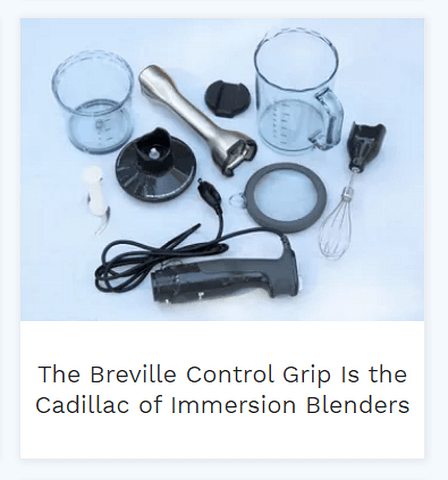
The tools I use in my tiny kitchen have to be more than functional: they have to earn their storage space by being small, powerful, multipurpose—or better yet, all three. In my latest piece for The Spruce Eats, I explain my love of one of my well-used kitchen gadgets, a Breville Control Grip immersion blender.

Since I became hooked on this immersion blender, I’ve retired my upright blender and rehomed my KitchenAid, both of which took up too much space. For a while, I didn’t even own a food processor, instead pushing my immersion blender to—and frankly beyond—its limits. It’s the tool I reach for when making fruit butter for canning, sorbet for freezing, fruit leather for dehydrating, or just simply soup for dinner.
Learn about choosing and using an immersion blender

Storing Avocados

In my latest for The Spruce Eats, I tested seven avocado storage solutions. Learn more at TwiceasTasty.com.
Did you know I regularly write about food and kitchen tools and share recipes and techniques on other websites, besides my weekly column for the Flathead Beacon? These pieces aren’t published on a regular schedule, and I try to share them on Facebook and Instagram as the go live. For those who don’t follow Twice as Tasty through social media, I’m making a push to share them here on the blog too.

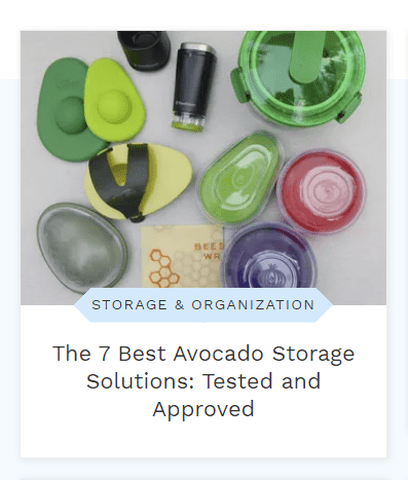
In my latest piece for The Spruce Eats, I tested seven avocado storage solutions, which meant a daily dose of avocados that George was happy to eat on everything from fish tacos to potato bowls. I found some storage tricks and avocado keepers that I continue to use in my kitchen.
Learn about storing avocados

Cooking Fall Meals

Learn more about my latest work on and off the blog at TwiceasTasty.com.
Several of my projects for The Spruce Eats have gone live in recent days. Even though I tested and researched these pieces earlier this year, the timing of their release works quite well: just in time for cooking up autumn’s last bites.

Of the two cookware sets that I reviewed, one has moved permanently into my kitchen and become our daily-use pots and pans. For the roundup, I dug deeper into the original author’s top picks, answered several common questions about slow cookers and pressure cookers, and interviewed Elizabeth Chorney-Booth, co-author of Best of Bridge: The Family Slow Cooker, for tips on choosing a slow cooker—and what to put in it.
Read more about cooking fall meals

Choosing Portable Burners

Of all the options when cooking outdoors, and portable induction burners are among the most efficient. Learn more at TwiceasTasty.com.
Our Montana heatwave rolls on, so I’m moving as may food projects as I can out of the hot kitchen to a shady, breezy space. Fortunately, there are plenty of options when cooking outdoors. As I blogged about all last month, a grill is my favorite summertime tool. It adds another layer of flavor whether I’m cooking a meal, preparing food for the freezer and midwinter use, or firing off rounds of vegetables to stockpile for canning.

But the grill is just one of my outdoor cooking tools. Aboard The Blue Mule, we carry a grill, a two-burner camp stove, and a Jetboil backpacking stove, covering every cooking need while on the water. At home, large canning sessions happen outdoors on a heavy-duty, two-burner cooker. The most recent addition to my cooking arsenal has been a portable electric burner. As long as I have access to a flat surface and an electrical outlet, I can set up this burner for Twice as Tasty live events, workshops, or anywhere else I want to go.

Off the blog, I’ve been researching the best portable burners for The Spruce Eats. My latest lineup has been focused on induction models.
Read more about induction cooking