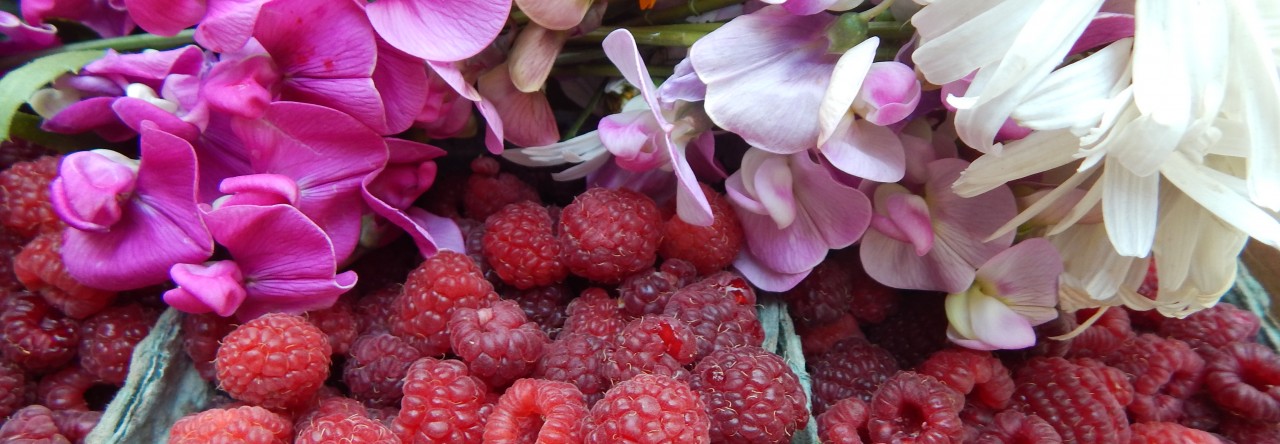
More Cakes and Curd

Fruit curds dress up any celebration, for breakfast or dessert. Get the recipes at TwiceasTasty.com.
I’ve always been a breakfast girl, regardless of the time of day. So when it’s time to celebrate an occasion like Twice as Tasty’s 5th birthday, there’s no reason to save the special treats for an evening dessert.

This post is prefaced “more” because I’ve already shared one of my favorite cakes and curd pairings: Gingerbread Pancakes with Berry Curd. I make this breakfast throughout the year, using fresh berries in summer and frozen ones in winter. But in spring and early summer, I switch up the flavors to use my most prolific early crop: rhubarb. The tangy flavor of rhubarb balances the richness of the egg yolks and butter in the curd. Its tang also pairs well with my favorite childhood pancakes, made light and bright by a scoop of yogurt.
Learn to make Rhubarb Curd and Yogurt Pancakes
Cakes and Curd

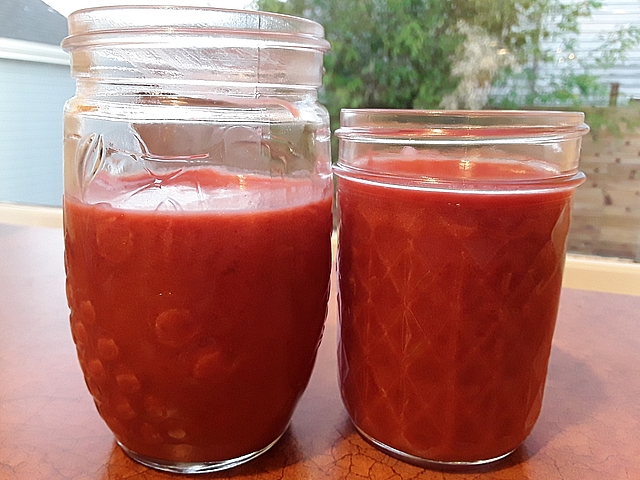
Fruit curds are the tarter yet richer siblings of syrups and jams. Learn to make Berry Curd and Gingerbread Pancakes. Get breakfast recipes at TwiceasTasty.com.
If you’ve only ever poured maple syrup on buttermilk pancakes, this week’s recipe pairing will blow your mind. Fruit curds are the tarter yet richer siblings of fruit syrups, jams, butters, and even sauces. Unlike these high-heat, bubbly creations, fruit curds cook low and slow, until their blend of juice, sugar, eggs, and butter becomes silky smooth. One bite of a fruit curd and you’ll want to use it as a spread on baked goods, a filling for shortcakes or layered cakes, a dipper for fresh fruit, a swirl of flavor in Fresh Yogurt, or even a sneaky spoonful eaten straight from the jar.

Just to up the ante, I like to pair luscious, jewel-toned berry curd with pancakes darkened by molasses and spices. Most gingerbreads are made as desserts and rich in butter, refined sugar, and egg, but the fruit curd topping covers all of those bases. For breakfast, all of those elements can be cut or scaled back to focus on warming spices and bittersweet molasses.
Learn to make Berry Curd and Gingerbread Pancakes

In the Pantry

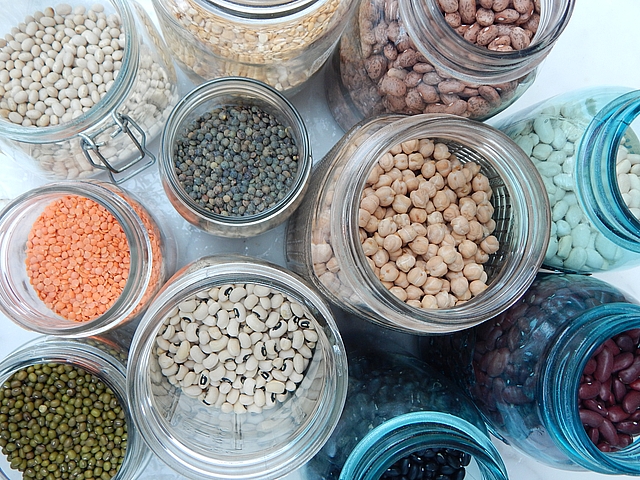
The secret to a well-stocked pantry is to keep small quantities of a large number of basic ingredients. Discover pantry essentials at TwiceasTasty.com.At 500 square feet, my house has a smaller kitchen and less food-storage space than most. Yet at any given moment, I can conjure a dozen of meals for a dozen people—I just need to find places for them to sit.

The secret to a well-stocked pantry is to keep small quantities of a large number of basic ingredients. Instead of buying prepackaged meals, sauces, and mixes, you can store fruits, vegetables, grains, dairy, proteins, and flavorings individually and mix them in endless variations. I dedicate at least half my pantry and most of my freezer and fridge space to such items. I fill the rest with homemade items that let me shortcut regularly used recipes, from stocks to pestos to condiments.

The advantages go beyond versatility. Stocking your pantry in this manner means your ingredients stay fresh, you can spend your money on quality items instead of large quantities that go stale before you finish them, and you’ll always open the fridge or cupboard and find something you want to eat.
Read more about improving your pantry

Sourdough Cinnamon Rolls

I love letting dough rise overnight to bake off for sweet breakfast buns. My creations haven’t always been successful—but this one is. Learn to make Sourdough Cinnamon Rolls with Buttermilk Glaze.Last week’s Sourdough Brioche post evolved out of a desire to make this week’s recipe: Sourdough Cinnamon Rolls. I’ve long loved letting dough rise overnight to bake off for sweet breakfast buns. But I’ve had some failures. I once overloaded a bundt pan with balls of frozen bread dough to make my mom’s favorite buttterscotch roll recipe—only to wake up and find the dough balls dangling rather obscenely outside the pan.

Initially, my cinnamon roll recipe was also unappealing—but for its flavor, not its looks. The plan was to use pizza dough. I’d read about such conversions on various blogs and websites, with titles like Easiest Cinnamon Rolls Ever and Shortcut Cinnamon Rolls. My attempt resulted in spiral-wound, cinnamon-tinged… pizza crust.

So although a handy ball of pizza dough seems like an easy shortcut, you’re better off learning to make last week’s delicious Sourdough Brioche Dough. It won’t just turn into the best hamburger buns you’ve ever tasted; it will turn into breakfast buns that taste and feel like cinnamon rolls.
Learn to make Sourdough Cinnamon Rolls with Buttermilk Glaze

Slow Cooker Fruit Butters

The garden I play in came with an established orchard—primarily apple trees. With little effort on our part, we always seem to end the growing season with far more boxes of apples than we need. After we’ve eaten our fill, I always store a box or two of whole, unblemished apples for eating out of hand. Then I make as much applesauce as my canning shelves can hold. By November, I’m salvaging the fruit in the remaining boxes to create apple butter.

Fruit butters capture all of the flavor of your chosen fruit. Often seen as finicky, they’re traditionally prone to burning and need endless stirring during their lengthy cooking time. I avoided them for years but then discovered a slow cooker variation. I fell for the hands-off, burnproof technique that let me dump a bunch of fruit into my Crock-Pot, leave it to cook for hours, and return to find a perfect blend ready for the canning kettle.
Learn to make Any-Fruit Butter and Slow Cooker Apple Butter

Fresh Green Tomatoes

As the growing season slows, the primary complaint I hear is “but my tomatoes are still hard and green!” The lament is loudest in northwest Montana, where our growing season is about 90 days. Tomatoes need 50–100 days to mature, so it’s easy to see why so many green fruits remain on our vines as the first frost approaches. My solution, as I explained last week, is to let most remaining tomatoes ripen indoors. But I always set some green tomatoes aside to eat fresh.

What comes to mind when you think of eating a green tomato? For many, it’s a plate of breaded and fried slices. Although Fried Green Tomatoes aren’t as Southern as you might think, they are delicious, easy to make, and suitable just about any time of day. Your mind may also turn to a Mexican salsa verde. The traditional recipes—and to my palate, the tastiest versions—are made with tomatillos, but green tomatoes are suitable stand-ins.
Learn to make Fried Green Tomatoes and Fresh Green Tomato Salsa

Grill It, Roast It, Smoke It

And just like that, September is here. Long before I’m ready for summer to be over, the month that signals the start of fall rolls in. But even though a few of August’s garden-fresh favorites are finished for the season, September’s list of harvestable fruits and vegetables is the longest of year, with the last of the summer beans, berries, and corn bumping up against the first of the fall greens, plums, and winter squash.

If August is the month for enjoying fresh fruit and veg, September is the month for adding a bit of charred, caramelized, and smoky flavor to the produce on the table. We’ll be grilling, roasting, and smoking all month at Twice as Tasty—mostly thanks to some incredible response from recent Twice as Tasty workshops.

Although my September schedule is quickly filling up, it’s not too late to get in on the current lineup or featured workshops locally. And Twice as Tasty will be on the road again in late October! For more details, click here.
Read more about grilling, roasting, and smoking

Wild Berries

We interrupt the regularly scheduled post to bring you…huckleberries! Regardless of where you live, some foraged fruit or vegetable likely draws people out of their gardens and into the wild. But if you live in the high country, you know that regularly scheduled activities get shunted aside when hucks ripen on mountain slopes. As the season progresses, the most accessible berries are snatched up by other omnivores—human and bear—so pickers must go farther and higher to find these treasures. In my case, a 3-mile roundtrip hike and 3-hour picking session yielded about half a gallon of tiny purple gems.

With that much effort and time involved, I tend to hoard my huckleberries and dole them out in small doses—no small feat when I will happily eat a cup of fruit on one bowl of granola and yogurt. So you won’t find me rolling the results of a day of foraging into a pie or jars of jam. Instead, I prefer recipes that highlight smaller amounts of fruit, whether for breakfast or for dessert.
Learn to make Crepes with Wild Berries and Lemon Cheese and Rhubarb–Huckleberry Galette

Birthday Desserts: Year 1

I am all about birthdays—especially mine. I’ve long moved on from celebrating for a day, to a week, and now to a month. So it’s not a stretch to spend much of this month celebrating the first year of Twice as Tasty.

It’s not a birthday without dessert, but I’ve never been a huge fan of the traditional cake loaded with frosting. As a kid, I always wanted homemade angel food cake, buried in berries and carrying a dollop of home-whipped cream. Pies have also topped my list of celebratory sweets, particularly when you can load a table with a dozen varieties. But both of these choices can be labor intensive for a crowd. For today’s party, it was hard to resist easily created desserts that show off freshly harvested botanicals and fruits of summer.
Learn to make Strawberry Shortcake with Lilac Cream and Rhubarb Crisp

Fruit Syrups

Syrup. For most of us, the word brings to mind pancakes or waffles drizzled with—OK, drowning in—liquid maple sugar or its cheaper, corn syrup–based counterpart. But as you start harvesting from your garden, the word expands to endless options based on the fruits of summer and enhanced with herbs.

My love of fruit syrups grew when I learned how to extract bonus jars of the flavor-packed liquid from fruit solids intended for jam—and make jam more easily in the process. Syrups are less finicky than jelly but can still be processed for long-term storage or simply stashed in the fridge. Traditionally made from boiled fruit that’s been strained to separate its juice, I’ve found a cold method separates the juice even more effectively from almost any fruit and a roasted method gives an extra boost of flavor.
Learn to roast and freeze fruit for syrup