
Choosing Deep Freezers

For my first All Recipes article, I dug into my deep freezer and perused those of family and friends. Learn more at TwiceasTasty.com.
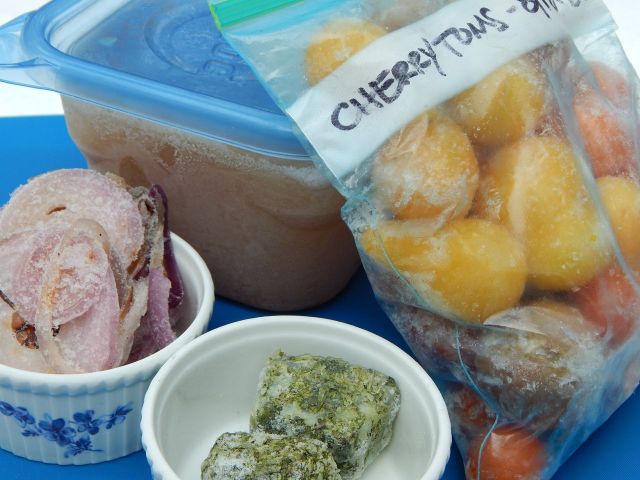
Of all the places I store the garden’s bounty and homemade treats, from canning to dehydrating to dry storage, my deep freezer is probably my favorite. Yet it’s one of the smallest models you can buy. That makes each cubic foot of space prime real estate in my world, and I’ve been filling every inch of it for more than 15 years. I explain why this little freezer works so well in my first piece for All Recipes.

If you’re looking for a deep freezer and have limited space, I’ve found my 7.0-cubic-foot model ideal for a couple. As I searched for the best models for homes with fewer space constraints, family and friends generously let me peruse their freezers to discover the styles and sizes they prefer and why. Their experiences shaped my choices for various freezer categories.
Learn about choosing and using deep freezers

Gearing Up to Preserve

 My top tip for stress-free preserving is to gear up before you dig in. Learn more at TwiceasTasty.com.
My fridge is currently full of macerating rhubarb and recently picked homegrown strawberries, ready to be turned today into jams and shrubs. I’m not the only one gearing up to preserve, as I share this week in my Twice as Tasty column for the Flathead Beacon. A local farmer told me last week that her crew has made 50 pounds of Rhubarb Kimchi, building on my recipe in The Complete Guide to Pickling. Tangy Radish Rounds and Spring Asparagus Pickles are also currently popular recipes from the book.

I’ll eventually be turning rhubarb into kimchi and fermented pickles, but today’s projects are on the sweeter side. Our strawberry crop has hit its peak, so I’ll be developing some jam recipes to share down the road, featuring the sweet fruit and pairing it with rhubarb. I’ll also be canning up one of my seasonal favorites: Rhubarb–Earl Grey Jam.
Learn how to gear up for preserving

Beating the Heat

A couple of my off-the-blog pieces come in just as handy as a shady grill amid a heatwave. Learn more at TwiceasTasty.com.
Stepping outside to a shady grill to keep the kitchen cool is just one way I beat summer’s heat. A couple of my pieces that are appearing off the blog this month may come in just as handy amid a heatwave.

I’ll get back to sharing new grilling recipes in the next week. This week, I want to put you behind the scenes for my recently published freezer tour for Greatist and my lineup of portable electric burners for The Spruce Eats.
Read more about beating the heat

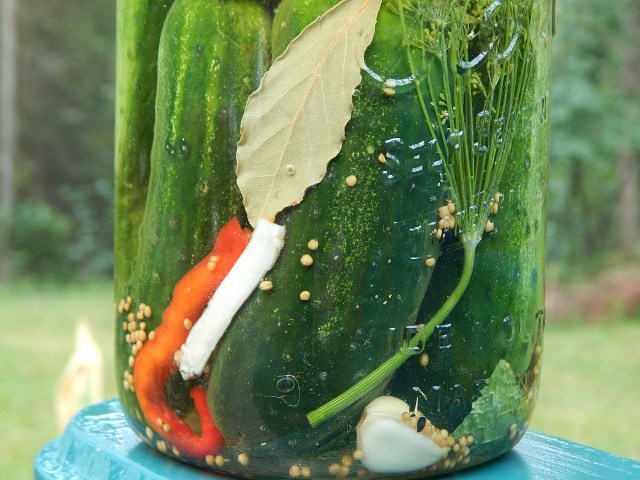
Prepare to Pickle

Pickling lets you extend the life of almost everything you grow. Learn more at TwiceasTasty.com.
Pickling lets you extend the life of almost everything you grow. You can pickle and eat your creation quickly, or you can let the jars sit for weeks to slowly preserve and flavor the produce.

As I mentioned while describing the pros and cons of pickling, the process, whether using vinegar or salt brine, safely preserves low-acid foods and can be varied to incorporate your favorite flavors and the size of your harvest. Pickling is a preservation technique but not a storage one; you need to pair it with canning or refrigerating. Some tips and tricks will help you successfully make pickles.

Read more about preparing to pickle

Prepare to Can

You know you’re serious about preserving homegrown food when you start canning in your kitchen. Learn more at TwiceasTasty.com.
You know you’re serious about preserving homegrown food when you start canning in your kitchen. As summer temperatures peak and the garden explodes, canning supplies take up semipermanent residence on the kitchen counter, and many evenings feature the “ping” of sealing jars.

As I mentioned while describing the pros and cons of canning, it’s a time-consuming process with must-follow rules and specialized tools. That’s part of why I’m such a fan of canning large batches and even multiple batches: If I’m going to spend the time, I want to fill a row of jars. Otherwise, I choose a quick preservation method like refrigerating or freezing. I even stash produce in the fridge or freezer to can later when I have a decent stockpile and more time. Doing so breaks up the canning process, making it seem less of a project.

Even though they take effort, canning projects are worth it, and some of my most delicious preservation recipes are stored stably and safely at room temperature in jars.
Read more about water-bath canning

Prepare to Dehydrate

Dehydration is simple and handy in the kitchen and on adventures.  Learn more at TwiceasTasty.com.
As you prepare to preserve your harvest, it’s easy to overlook a simple and effective technique: dehydration. The process provides nutritional, flavor, and storage benefits and both preserves and enhances a surprising range of foods. Dried foods are handy not just in your kitchen but also in your child’s lunchbox, the stem bag on your bike, the front pouch on your daypack, and your ski jacket pocket.

Like most preservation techniques, dehydrating has pros and cons. On the upside, dehydrating intensifies the flavor of food, saves space, and needs little hands-on time. On the downside, food that isn’t fully dried or properly stored can mold. And although you can dehydrate in open air, you’ll get the best control over moisture, heat, and other factors is you use a dehydrator.
Learn to dehydrate and make Marinated Dried Tomatoes

Quick Food Preservation

Refrigerating, freezing, and dry storing are the trifecta of quick preservation. Learn more at TwiceasTasty.com.
Preserving your harvest often seems like a daunting, time-consuming task, involving pounds of produce, stacks of jars, and boiling kettles on some of the hottest days of the year. Large-batch canning can operate that way: as a project, albeit one that fills your pantry. But it’s not the only way to preserve what you grow. Preservation can happen every time you come in from the garden with a little more than you and your family will eat at the next meal.

Refrigerating, freezing, and dry storing are the trifecta of quick preservation. As I mentioned while describing their pros and cons last week, produce preserved in these ways requires minimal prep and handling. Most of the tools and packaging you need are likely already in your home. Storage times can vary widely with these techniques, but some tips and tricks will let you get the most out of each. Best of all, a wide range of food can be preserved simply and easily with these quick preservation techniques.
Read more about quick food preservation

Prepare to Preserve

Whatever your type of produce, storage space, or free time, you can save your harvest. Learn more at TwiceasTasty.com.
How’s your garden growing? If it’s anything like mine, you’ve moved beyond planting to weeding and harvesting—and harvesting, and harvesting. With so much food coming ripe so quickly, it’s time to dig out the canning kettle, dehydrator, crocks, and other preservation tools that will let you enjoy homegrown (or farm fresh from a CSA) produce the rest of the year.

Later this month, I’ll be teaching a free online workshop through Free the Seeds that focuses on preparing to preserve your harvest. It’s a big topic, with far more information than I can share in one session, so I’ll be expanding on that topic all month here at Twice as Tasty. Be sure to join me online July 15 so that I can answer your questions directly (sign up for the Free the Seeds mailing list to receive a registration email), and then check back here for additional tips, tools, and recipes that save your harvest. You’ll also find pages of information on basic tools and techniques here.
Read more about preparing to preserve