Gearing Up to Preserve

 My top tip for stress-free preserving is to gear up before you dig in. Learn more at TwiceasTasty.com.
My fridge is currently full of macerating rhubarb and recently picked homegrown strawberries, ready to be turned today into jams and shrubs. I’m not the only one gearing up to preserve, as I share this week in my Twice as Tasty column for the Flathead Beacon. A local farmer told me last week that her crew has made 50 pounds of Rhubarb Kimchi, building on my recipe in The Complete Guide to Pickling. Tangy Radish Rounds and Spring Asparagus Pickles are also currently popular recipes from the book.

I’ll eventually be turning rhubarb into kimchi and fermented pickles, but today’s projects are on the sweeter side. Our strawberry crop has hit its peak, so I’ll be developing some jam recipes to share down the road, featuring the sweet fruit and pairing it with rhubarb. I’ll also be canning up one of my seasonal favorites: Rhubarb–Earl Grey Jam.
Learn how to gear up for preserving
Prepare to Can

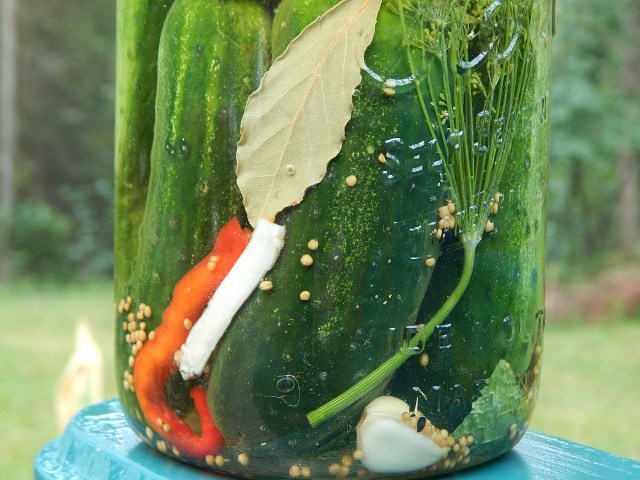
You know you’re serious about preserving homegrown food when you start canning in your kitchen. Learn more at TwiceasTasty.com.
You know you’re serious about preserving homegrown food when you start canning in your kitchen. As summer temperatures peak and the garden explodes, canning supplies take up semipermanent residence on the kitchen counter, and many evenings feature the “ping” of sealing jars.

As I mentioned while describing the pros and cons of canning, it’s a time-consuming process with must-follow rules and specialized tools. That’s part of why I’m such a fan of canning large batches and even multiple batches: If I’m going to spend the time, I want to fill a row of jars. Otherwise, I choose a quick preservation method like refrigerating or freezing. I even stash produce in the fridge or freezer to can later when I have a decent stockpile and more time. Doing so breaks up the canning process, making it seem less of a project.

Even though they take effort, canning projects are worth it, and some of my most delicious preservation recipes are stored stably and safely at room temperature in jars.
Read more about water-bath canning

Quick Food Preservation

Refrigerating, freezing, and dry storing are the trifecta of quick preservation. Learn more at TwiceasTasty.com.
Preserving your harvest often seems like a daunting, time-consuming task, involving pounds of produce, stacks of jars, and boiling kettles on some of the hottest days of the year. Large-batch canning can operate that way: as a project, albeit one that fills your pantry. But it’s not the only way to preserve what you grow. Preservation can happen every time you come in from the garden with a little more than you and your family will eat at the next meal.

Refrigerating, freezing, and dry storing are the trifecta of quick preservation. As I mentioned while describing their pros and cons last week, produce preserved in these ways requires minimal prep and handling. Most of the tools and packaging you need are likely already in your home. Storage times can vary widely with these techniques, but some tips and tricks will let you get the most out of each. Best of all, a wide range of food can be preserved simply and easily with these quick preservation techniques.
Read more about quick food preservation

Fermented Cucumbers

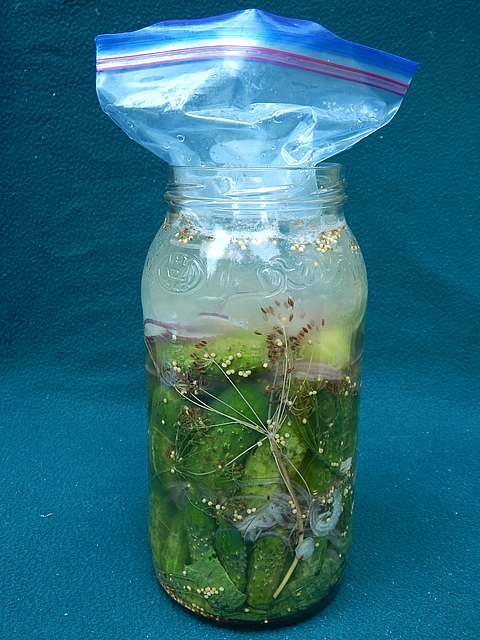
I’ve loved cucumber pickles since I was a kid. Fermentation takes them to a new level. Get fermented vegetable recipes at TwiceasTasty.com.
I’ve loved pickles since I was a kid. My mom put dozens of jars of dill and “sweet” (bread-and-butter) pickles through a water bath every year, and I’d sneak them like they were potato chips. But the longer the pickles sat, the less chip-like crunch they gave. Over the years, I’ve played with ingredients and canning techniques that have helped. Then I discovered fermentation.

Think about it: Cucumbers are best fresh and raw. Putting them in hot water is bound to affect their texture. Fermentation replaces heat with time and vinegar with salt. No wonder the result is crisper and fresher. And the flavoring possibilities—from dill to tea—are endless.

If you’ve never run a fermentation, I suggest you check out my introductory post from earlier this month. But here are the basics: Start with everything clean and fresh. Monitor the batch daily so that you can see the process. If you have doubts, give it the toss and start again.
Learn to make Fermented Dill Pickles and Fermented Tea Pickles

Pick a Pickle

Almost every vegetable garden explodes in July. My first July harvest included the last of the spring greens and asparagus, midcycle broccoli and garlic scapes, and the first snap peas, carrots, beets, and bulb onions. The harvest will go straight into our mouths, but as the yields grow jugs of vinegar and a box of salt will be front and center, ready for pickling.

All of my recently harvested vegetables can be pickled, along with snap beans, summer squash, tomatoes, peppers, eggplant, garlic, cabbage, and even fruit. That’s the beauty of pickling: it lets you preserve any low-acid vegetable safely. And like many of my favorite processing techniques, it’s endlessly variable. Various pickling techniques let you preserve everything from a single cucumber to a box of cukes. You can flavor them to fit any meal: American dills or bread-and-butters with burgers, Japanese kyuri asazuke with sushi, Indian kheer uragai with curry—and that’s just a few variations on cucumber pickles.
Read more about quick and easy pickling

Sourdough Bread

Sourdough Month wouldn’t be complete without talking bread. Here I share my favorite recipe. We call it Sourdough Cabin Bread because it makes my little Montana log cabin smell so good, but my young nephew has dubbed it “Auntie Julie’s Special Bread.” And it is special—whether you’re a new or experienced bread maker, you’ll likely be surprised by how easy it is to make these loaves. The techniques and tricks have two purposes: reduce effort and build flavor.

There’s a reason behind every technique given here. Using weights, instead of cups, improves accuracy. Mixing by hand, instead of with an electric mixer, prevents overmixing. Folding, rather than kneading, reduces your effort while enhancing the bread’s texture. A long fermentation allows the dough to feed, release gas, and develop flavor. The bowl in the oven captures steam and creates a crisp crust. The results are delicious, beautiful loaves that slice smoothly for sandwiches and other uses.
Learn to make Sourdough Cabin Bread and Gorgeous Grilled Cheese