
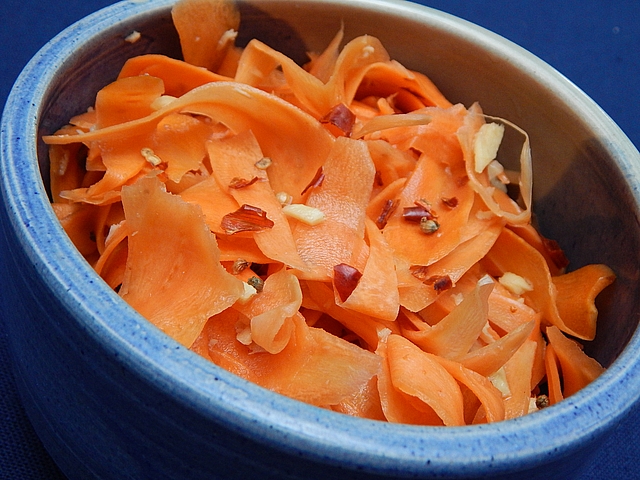
Ginger-Spiked Carrot and Apple Pickle

A flavorful pickle can add a bit of zing to many rich holiday mains. Learn more at TwiceasTasty.com.
Pickles have been a holiday staple since I was a kid. A bowl of home-canned pickles always sat on the dinner table at gatherings. While we waited for guests to arrive, my dad would be sneaking Christmas cookies, but I’d be dipping the cute little serving fork into the pickle bowl. If we set the table too early, I could nearly empty that bowl before the doorbell rang.

The flavorful pickle I share this week in my Twice as Tasty column for the Flathead Beacon adds a bit of zing to many rich holiday main dishes and puts a splash of color on the table. It’s one of the 125 recipes you can find in my cookbook The Complete Guide to Pickling.
Learn to make Ginger-Spiked Carrot and Apple Pickle
Pickled Asparagus

At some point, even I run out of ways to eat fresh asparagus. That’s when I turn to brine. Get pickling recipes at TwiceasTasty.com.
Whether you grow it or buy it, asparagus will be among your first spring vegetables. These green, purple, and even white spears can star on your table meal after meal until other produce ripens. I start with Grilled Asparagus as a standalone side dish with some lemon and herbs. I also serve it over arugula or with pasta in a salad. It’s delicious served under hollandaise or on pizza, stirred into risotto, baked into a frittata, or tossed in a stir-fry.

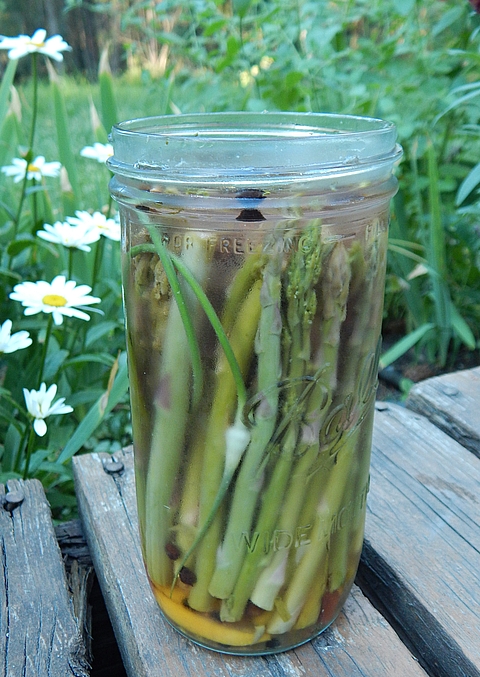
At some point, even I run out of ways to eat fresh asparagus. Whether you grow your own patch or buy bundles in season, you too probably end up with more asparagus in your kitchen than you can eat in one meal. But you don’t want to ignore it: the asparagus season ends as quickly as it arrives. That’s when I fill a jar or two with a brine. Although you can process pickled asparagus in a boiling water bath, it keeps its flavor and texture better when it heads straight to the table or rests in the fridge.
Learn to make Asparagus Refrigerator Pickles and Quick-Pickled Asparagus

Favorite Books: Fermenting

Does fermenting at home scare you? It’s understandable but easy to overcome. Learn more at TwiceasTasty.com.
I’m still getting lots of questions about last month’s posts on fermenting vegetables at home. If you’re afraid to ferment your own produce, it’s likely because the technique is unfamiliar. I understand the hesitation: Fermentation involves so few ingredients and tools but so much time that you worry about messing it up.

Fortunately, fermenting has a long history, and it’s modern popularity is on the rise. This translates to lots of fabulous resources to help you become comfortable with fermenting fruits and vegetables. Here are some of my favorite sources for fermentation recipes and advice.
Read more about home fermentation

Quick Ferments

When vegetables are sliced or pureed before fermentation, it’s easy to use them straight from the jar. Get veggie ferment recipes at TwiceasTasty.com.
If you’re new to vegetable fermentation, you likely look at recipes and think, “Can it be that easy?” This instantly leads to the terrifying thought, “It can’t; surely I’ll get it wrong.” So to kick off this month’s recipes for vegetable ferments, I offer my most foolproof recipe for your first foray into fermentation. Here, the carrots actually aren’t fully fermented; they sit barely long enough to kick off the process. Still, they use a lot of the techniques that apply to full fermentation of other vegetables: salting, weighting to encourage the carrots to release even liquid, and a rest period to pull even more water and sugars from the produce. Because these carrots are prepared as thin ribbons, it’s easy to open the jar and slide a few onto a sandwich, into a sourdough pita, or straight into your mouth. The recipe is so simple that while you’re at it, you might as well prepare your own horseradish to go in the jar—especially if you’re growing it.
Learn to make Barely Fermented Carrots and Horseradish Paste

Quick-Pickled Beets

For any meal, refreshing, easy pickles take minutes to make and are gobbled up in as little time. Learn to make Get quick-pickle recipes at TwiceasTasty.com.
I spend much of my summer pickling produce; it’s my favorite way to preserve vegetables. As the harvest grows and I haul pounds of cucumbers, snap beans, summer squash, and more from the garden to the kitchen, my canning shelves fill with vinegar-preserved pickles and every other available surface holds fermenting ones. There they wait for weeks, if not months.

So for any given meal, you can also find me making pickles—refreshing, easy ones that take mere minutes to prepare and are gobbled up in as little time. Quick pickles are defined by their name. They won’t satisfy your pickle craving through winter or preserve the bulk of your garden, but they will extend shelf life a bit and give a new flavor spin when you tire of eating a particular fresh vegetable, like beets.
Learn to make Quick-Pickled Beet Snacks and Orange-Sweetened Marinated Beets

Refrigerator Pickles

I don’t advocate small-batch canning, but I am a fan of quick and easy pickling that fills your refrigerator one jar at a time. If your only experience with pickling is opening a store-bought jar, then refrigerator vinegar pickles will convert you to homemade. Even if you grew up in a household that put up shelves of pickled vegetables every summer, like I did, refrigerator pickles have surprising benefits.

The disadvantage of refrigerator pickles—that they aren’t sealed in heated jars and thus shelf stable—can be an advantage in freshness and crispness. Small-space gardeners or CSA members can put up a jar at a time as produce ripens. Even expansive gardeners can use fridge pickles to test new flavor combinations. Cucumbers are ideal refrigerator pickles, because they soften so quickly when heated. You should still only use pickling cucumbers; the thick-skinned slicing cucumbers you find in grocery stores and even lemon cucumbers are really only useful as fresh pickles. After years of pasteurizing summer squash, I’ve switched from the canner to the fridge to keep the pickles’ crunch.
Learn to make Cucumber Refrigerator Pickles and Cumin-Spiced Zucchini Refrigerator Pickles