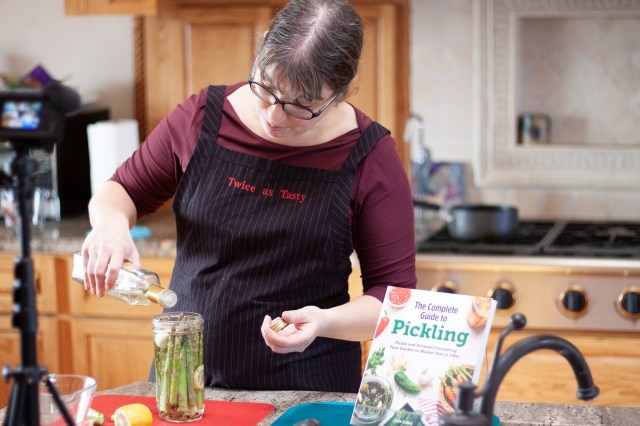
As I note this week in my Twice as Tasty column for the Flathead Beacon, in my world, spring means pickling workshops. I’m offering two free workshops in the upcoming week: a virtual presentation and demonstration on March 6 and an in-person talk with samples on March 10. I hope you can join me. Learn more about these workshops in my column. Learn to make Spring Asparagus Pickles
Fermented Red Onions and Half-Sour Dill Pickles. Photograph by Andrew Purcell.
It’s hard to believe that this time last year I was gearing up for the launch of my first cookbook, The Complete Guide to Pickling. The timeline of writing and publishing a book means that I spent September 2020 sitting on my hands, resisting the urge to share my favorite recipes from the book ahead of the sales schedule and Brenda Ahearn’s stunning photos from my side project, The Pickled Picnic recipe collection, before the cookbook’s release.
As the cookbook’s official on-sale and launch party dates approached, I shared a handful of recipes from the book and offered details on some helpful tools I’d discovered while working on the project. This year, I’m able to get a jump on sharing new recipes from the book while many of us are still in the heart of harvest season. Sample recipes from The Complete Guide to Pickling
Harvest is in full swing, which means my canning and fermenting supplies dominate my mudroom and my refrigerator is packed with produce waiting to be preserved. But after the successful launch of my pickling cookbook, The Complete Guide to Pickling, last fall, I’ve made time for some recipes that make minimal use of my homegrown produce, including pickled eggs.
We have a rich supply of eggs on the farm where I garden. As I created pickled egg recipes for my cookbook, I fell in love with the rich colors of brine-infused egg whites against bright orange yolks. Since then, I’ve been playing with all sorts of brines—reused from other pickles and made from scratch—to produce a range of colors and flavors.
Pickled eggs keep and travel well, and we’ve been eating them regularly all summer. They have become staples for multiday cruises aboard The Blue Mule, and they make a great post-yoga snack or grab-and-go breakfast with the garden’s latest berries. I’ve learned a few tricks along the way that will help you when making pickled eggs. Learn to reuse pickle brine and make pickled eggs
Preparing quick pickles from bell peppers. Photograph by Andrew Purcell.
My forthcoming cookbook, The Complete Guide to Pickling, opens its recipe chapters with quick pickles. If you think you don’t have time to pickle, polished off your favorite jar, or simply ran out of patience, this chapter is for you. Quick pickles are just like they sound: snappy, zippy, and ready to eat in anywhere from 15 minutes to 24 hours. They typically need just a handful of ingredients and a few minutes of prep. I make them in small, speedy batches.
A few tricks made it easy for me to create 25 recipes for the Quick Pickle chapter. Some use delicate vegetables, like avocados. Others thinly slice, smash, or grate their main ingredients, like Szechuan-inspired Smashed Cucumbers, Roasted Beet Pickles, and Ginger-Spiked Carrot and Apple Pickle. Some, like the Bell Pepper Slices in the photo, could be stored but lose their brightness over time. You’ll find other quick pickles scattered throughout The Complete Guide to Pickling: Sambal Oelek and Harissa are chile pastes that can be used as soon as they are made, several fresh salsa recipes are prep and eat, and many pickles based on fragile fruit, such as blackberries, peaches, and strawberries, are best the day they’re made. Read more about quick pickles and learn to make Russian-Inspired Pickled Mushrooms
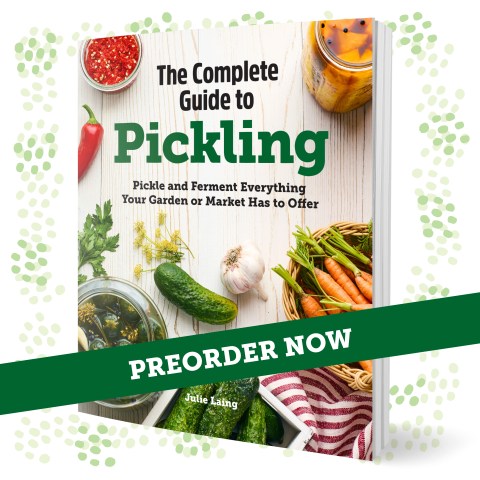
After a lot of hard work for the past several months, I’m excited to officially announce that my first cookbook is coming out: The Complete Guide to Pickling. It’s packed with essential information and 125 flavorful recipes, including homegrown classics and international flavors. You’ll find straightforward and scrumptious recipes for quick, fresh, and fermented pickles, as well as sweet and fruity pickles, hot sauces, relishes, salsas, krauts, chutneys, and more.
This month’s posts will focus on the book, including sneak peaks at recipes, bonus info about the project, and a new digital recipe collection that uses the pickles. Read more about my new cookbook
Amid summer’s bounty, as I haul bags and boxes of produce from garden to kitchen, I always want more. I clean and trim and slice and wonder whether each root tip and leafy top that lands in my compost bucket could find its way into a dish or jar instead. The nose-to-tail approach to cooking meats could be called tip to top for vegetables and fruits, and that remains my goal throughout the growing season. It’s a goal that aligns nicely with this week’s challenge for the Montana Local Food Challenge.
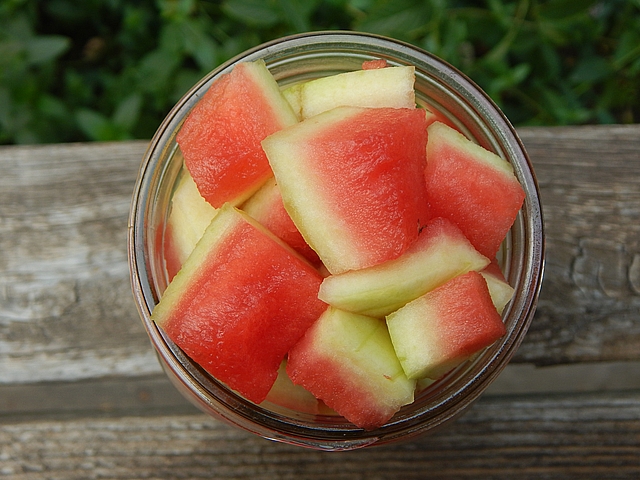
Some of your harvest lends itself easily to the idea: people eat beet greens as readily as beet roots. Others seem obvious when you think about it. Like peas? The shoots carry a similar flavor and can be turned into pesto or simply mixed into salads. Grow storage onions? The green tops can be used like scallions and even lightly trimmed while the bulbs are still growing. And the classic processed watermelon rind pickle can be ready to eat alongside the juicy pink melon. Learn to make Quick-Pickled Watermelon Rind and Watermelon–Feta Salad
If your garden isn’t in full swing yet, it’s about to be. Even here in Montana, with our long winters and short growing season, spring produce is beginning to wind down: Lettuces and spinach will soon be bolting, the asparagus crop has tapered off, and the strawberry bed has been picked nearly clean. In their place, summer produce is ready to burst forth, launching itself into the annual race to grow faster than I can harvest and process.
If you’ve been following along on Instagram, you’ve seen how I deal with spring’s vegetable bounty: #dailysalad. But with a large garden, summer vegetables need a different approach. The next few weeks are not just about filling bellies with the freshest produce possible but also about preserving those vegetables so that they can fill bellies the rest of the year. Here’s how I’ll be spending the next few weeks. Read more about enjoying summer vegetables year-round