Grill It, Roast It, Smoke It

And just like that, September is here. Long before I’m ready for summer to be over, the month that signals the start of fall rolls in. But even though a few of August’s garden-fresh favorites are finished for the season, September’s list of harvestable fruits and vegetables is the longest of year, with the last of the summer beans, berries, and corn bumping up against the first of the fall greens, plums, and winter squash.

If August is the month for enjoying fresh fruit and veg, September is the month for adding a bit of charred, caramelized, and smoky flavor to the produce on the table. We’ll be grilling, roasting, and smoking all month at Twice as Tasty—mostly thanks to some incredible response from recent Twice as Tasty workshops.

Although my September schedule is quickly filling up, it’s not too late to get in on the current lineup or featured workshops locally. And Twice as Tasty will be on the road again in late October! For more details, click here.
Read more about grilling, roasting, and smoking

Canning It Forward

This is a big week at Twice as Tasty, and it’s all about canning it forward. For the second year, I’ll play a part in feeding more than 100 hungry sailors at the Montana Cup, an annual sailing regatta hosted by the North Flathead Yacht Club in Somers, Montana. Jars of preserves and other Twice as Tasty treats will be shared for meals and awards. Coincidentally, the regatta’s opening day is the Ball brand’s seventh annual Can-It-Forward Day.

Gifting and sharing home-preserved food cans it forward to the joy of both creator and eater. You’ll find plenty of recipes here to inspire your canning projects. But this blog is just one small voice in the world of home preserving, and much of my inspiration began with other voices. Here are some of my favorite canning recipes from other sources.
Read more about my favorite recipes from other sources

Homemade Sorbet

I started making sorbets a few years ago after tasting rhubarb–rosemary sorbet created by our local Sweet Peaks shop. I believe these purveyors of handcrafted ice creams had recently opened and were peddling their chilly concoctions from a converted horse trailer at the weekly farmer’s market. The sorbet was to die for. I immediately thought, “I can grow rosemary, and my shady property produces rhubarb all summer. I could make this!”

A bit of research revealed that I needed to make sorbet: not only does it burst with fruit flavor undiluted by dairy, but it requires no special equipment, like an ice cream maker (although if you own one, you can put it to use). A few tricks and techniques produce a silky sorbet from just about any fruit you can think of and show off herbs and other botanicals. I use two methods, depending on the featured fruit.
Learn to make Raw Fruit Sorbet and Cooked Fruit Sorbet

Fruit Syrups

Syrup. For most of us, the word brings to mind pancakes or waffles drizzled with—OK, drowning in—liquid maple sugar or its cheaper, corn syrup–based counterpart. But as you start harvesting from your garden, the word expands to endless options based on the fruits of summer and enhanced with herbs.

My love of fruit syrups grew when I learned how to extract bonus jars of the flavor-packed liquid from fruit solids intended for jam—and make jam more easily in the process. Syrups are less finicky than jelly but can still be processed for long-term storage or simply stashed in the fridge. Traditionally made from boiled fruit that’s been strained to separate its juice, I’ve found a cold method separates the juice even more effectively from almost any fruit and a roasted method gives an extra boost of flavor.
Learn to roast and freeze fruit for syrup

Sourdough Breakfasts

When most people think of sourdough, they picture a bread loaf with a crackling crisp crust and moist, tangy interior. But when you play with sourdough, you quickly discover bread is just one of many possible creations—and not necessarily the easiest.

My sourdough adventures began a couple of years ago, when I was gifted an old starter that had been lurking in a refrigerator. It didn’t have the rising power necessary for a loaf of bread; it required strength training. As I noted last week, the process of feeding a starter works like this: Pull out some starter, replace it with flour and water, and then let it work its magic, repeating the process until it readily ferments, bubbles, and grows. But I was loath to throw away weaker starter. Fortunately, a range of low-rise treats grab all the flavor with little effort.
Learn to make Sourdough Pancakes and Sourdough Waffles

Raspberries

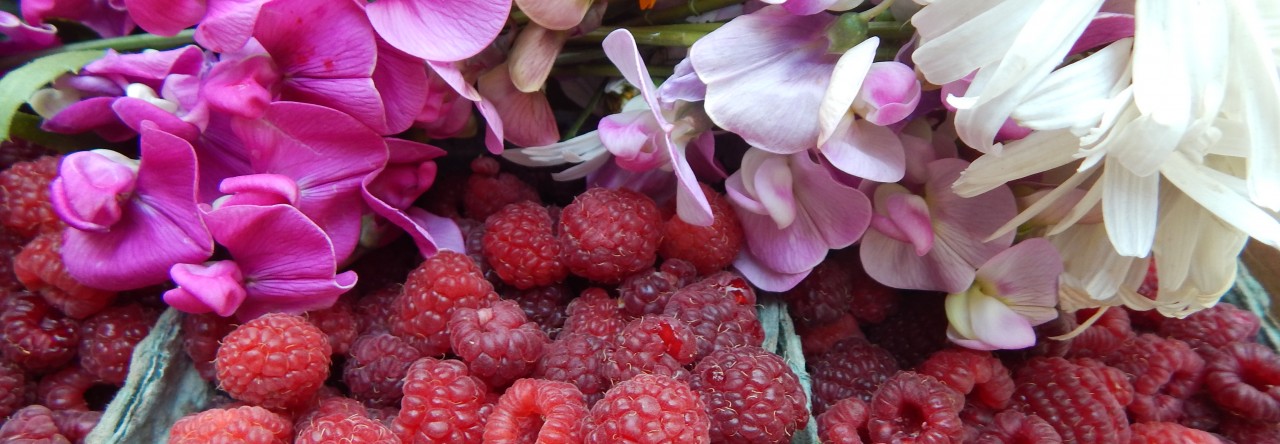
Raspberries are probably my favorite fruit; as a kid, I used to walk barefoot in PJs to the berry patch and pick them straight onto my bowl of Cheerios. Strawberries may be a close second. After everyone from my 4-year-old nephew to newlywed friends told me how they gobbled up Chamomile-Scented Strawberry Syrup, which I made using Liana Krissoff’s Canning for a New Generation, I was prepared to put up an even larger batch the next year—only to have the strawberry patch fall short. But raspberries came in with a bumper crop, so I decided to attempt an adaptation. Then while I was prowling online, I found Carey Nershi’s fabulous cocktails at Reclaiming Provincial and knew I needed to start in the oven. The idea of roasting delicate raspberries may seem odd, but that step adds another level of flavor that’s irresistible in syrup, jam, or salad dressing. Learn to make Roasted Raspberry Syrup and Apricot–Raspberry–Mint Jam

Canning My Way

Canning, jarring, putting up—depending on where you live, one of these terms likely comes to mind when you hear someone talk about preserving food. Once the domain of grandmothers with giant gardens and 4-Hers learning home-ec skills, recent years have seen a shift in the people processing at home. Eugenia Bone released Well-Preserved in 2009, sharing recipes developed in her New York apartment and designed to fill two to six jars at a time. Blogger Marisa McClellan launched Food in Jars, and her success and subsequent books helped popularize small-batch canning. Articles on home canning appeared in the Wall Street Journal and New York Times and on NPR, and Slate declared at-home preserving “ridiculously trendy.” Since then, the number of books, blogs, and people canning at home have only grown.

I love that a rising interest in eating well year-round has led more people to support farmer’s markets and CSAs, make meals from scratch, and save what’s in season for later use. The appeal of small-batch processing is understandable: Take your leftover fruit or veg and seal it in a couple of jars. The argument is that it’s a quick and easy way to preserve food.

The “couple of jars” part is where I disagree. By the time I prep my canning gear and the food item, heat a kettle of water, make a brine or jam, and finally process the batch, I want to pull the maximum number of jars from that kettle. Instead of going small, I recommend going big—at least big enough to maximize your yield while minimizing your effort and sometimes spreading out the work.
Read more about canning my way

Rhubarb

I grew up in a rhubarb family: large patches growing in my dad’s and grandpa’s gardens, rhubarb pie at Thanksgiving (never diluted with strawberries), and a stash of rhubarb sauce in my mom’s fridge that I put on everything from ice cream to Cheerios. Among the first things I planted when I moved to Montana were rhubarb eyes taken from my dad’s plants; they’ve since spread out into a garden patch that produces all summer long and never bolts—one of the few perks of gardening in the shady woods.

After a winter of playing with various combinations of produce-influenced cocktails that put a splash of summer into the grayest day, I instantly saw “beverage” when I cut my first stalks of rhubarb in spring. The straight rhubarb needed another flavor to balance the bright pink syrup, and I knew from making sorbet that rosemary would add just the right touch in a summer cocktail. Learn to make Rhubarb–Rosemary Syrup and Rhubarb–Orange–Ginger Marmalade