
Lemon Tahini Sauce or Dressing

Brightening tahini with lemon makes it surprisingly versatile. Use it as a drizzle-worthy sauce, a pourable salad dressing, or a yogurt or herb-laden dip. Learn more at TwiceasTasty.com.
The first thing I thought when snapping and choosing photos for this week’s Twice as Tasty column for the Flathead Beacon was that everyone would think I’d squirted yellow American mustard on falafel. The impression couldn’t be further from the truth. The bright yellow sauce that I share in this week’s column does get its color from turmeric, but the flavor is entirely the bright citrus tang of lemon, the pungent bite of garlic, and the earthy, slightly bitter taste of tahini.

Given its layers of flavor, Lemon Tahini Sauce is surprisingly versatile. In my recipe, I give options for making it into a thicker drizzle-worthy sauce or a thinner pourable salad dressing. Leave the minced garlic chunky or puree the mixture until smooth. Add yogurt or fresh herbs to make it a dip, and swap in lime juice as a flavor variation.

Learn to make Lemon Tahini Sauce or Dressing

Spiced Red Lentil Dip

My free public workshop this Saturday digs into lentil varieties and ways to cook, spout, and ferment them for everything from spiced dips to full meals. Learn more at TwiceasTasty.com.
My free March 2 workshop on lentils will be my 10th presentation for Free the Seeds. If you’re in Northwest Montana, join us for not just my workshop but the whole daylong event to pick out free seeds, talk with local food experts, and attend the full slate of workshops on everything from successful gardening to saving seeds. If you’re not local, you can still participate in four workshops via Zoom.

I explain more about the event and my workshop in my latest Twice as Tasty column for the Flathead Beacon. I also share one of my favorite easy lentil recipes: Spiced Red Lentil Dip. In the workshop, we’ll look at the range of lentil varieties that are easy to find locally and ways to enjoy them, from cooked to spouted to fermented and from crunchy snacks to full meals.
Learn to make Spiced Red Lentil Dip

Spring Vegetable Quiche

I soon expect to gather enough asparagus and baby spinach for my first spring quiche. Learn more at TwiceasTasty.com.
If you’ve been reading my latest Twice as Tasty columns for the Flathead Beacon and some of my other recent work, you know that spring has been oh-so-slowly arriving in Montana, with days of sun, snow, rain, frost—and sometimes all four in a single morning. The garden is beginning to wake up, with the greens we let go to seed last fall sprouting in freshly weeded beds and my first round of cold frame seeds showing signs of life. Walking onions and chives have been available for harvesting in small quantities, and rhubarb and mint will soon be big enough for the first crisp and mojitos.

However, the asparagus is still stubbornly in hiding from freezing overnight temperatures. As soon as we consistently get nights just a couple of degrees warmer, I expect to gather enough of it and baby spinach for my first spring quiche.
Learn to make Spring Vegetable Quiche

Late Tomatoes

Late tomatoes never match midsummer fruit, but I treasure them as the season’s final flush. Get tomato recipes at TwiceasTasty.com.
Tomatoes are the last true summer crop that I grab from the garden. The shift comes as swiftly as the fall back to standard time: one deep temperature swing makes every green fruit still on the vine inedible. Each fall, I follow weather forecasts, gamble on their accuracy, and try to pluck every fully formed tomato before the first killing frost.

Even if I succeed, the reward isn’t the perfectly red, juicy treats I’ve been feasting on all summer. It’s boxes of hard, underripe tomatoes. Some I’ll eat or preserve while green, but most sit for weeks beside my desk, where I watch them gradually ripen.

These tomatoes never match the bright, sweet bite of sun-kissed midsummer fruit, but I treasure them as the season’s final flush. Rather than eating them out of hand, I’ve found that letting them cook slowly, like in this savory pie, maximizes their maturing flavor.
Learn to make Late-Season Tomato Pie and Herb and Cheese Pie Crust

Flavorful Reductions

Cooking a quick sauce or glaze in the same pan as your main ingredient soaks up concentrated flavor. Learn more at TwiceasTasty.com.
As I wrap up my month of cookware testing, I’ve been stretching the limits of nonstick pans by using some of my favorite flavor-building techniques: browning, reducing, and glazing. Stainless steel and cast iron are the more typical materials for these techniques, because some of the point is to suck up the caramelized bits that stick to the pan—those bits that nonstick surfaces are designed to eliminate. But there’s a difference between burned-on food and fond, the caramelized particles left after browning. Even a good nonstick pan generates some of these intensely flavored bits.

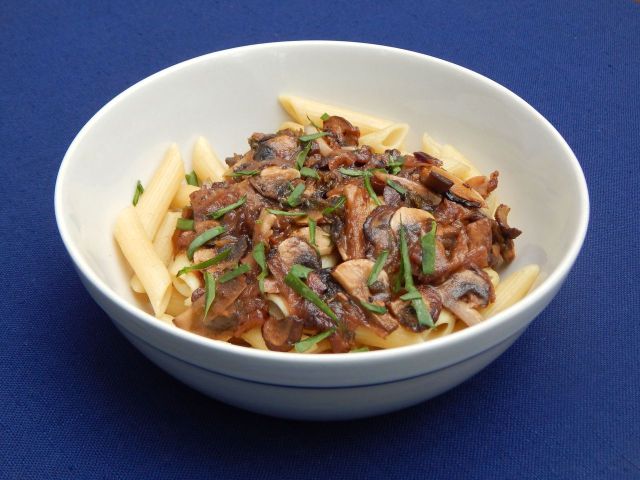
It made sense to me to test these techniques in nonstick pans, since I never create them using the standard base ingredient: browned meat. By cooking a quick sauce or glaze in the same pan as your main ingredient, you can soak up that concentrated flavor—whether you started with meat, shrimp, mushrooms, or root vegetables. It really is all about the flavor.
Learn to make flavorful reductions and Mushroom Pan Sauce

Cooking Grains

Most grains want a fun, flavorful addition, whether it’s stirred in or piled on top. Learn more at TwiceasTasty.com.
Eggs may be the ideal test food for skillets, but grains put saucepans through their paces. Starchy foods like rice, oats, pearly barley, and pasta always tend to get sticky, but everything from type of pot to temperature to water-to-grain ratio can also make them stick or even burn onto the cooking pot. This can leave you not just with a gummy meal but also with a gummy mess to clean up.

So as I’m testing cookware this month, I’m cooking lots of grains. All of them want a fun, flavorful addition, whether it’s stirred in or piled on top, like this week’s new recipe.
Learn about cooking grains and Curried Sweet Potato and Mango

Quiche

Quiche is a bit more work than frittata, but it has its upsides too. Get quiche and frittata recipes at TwiceasTasty.com.
When I prepared to share this recipe, I was surprised to realize it would be my first quiche on the blog. It’s one of my favorite springtime dinners: the hens are back to a full laying schedule no matter how cold it was over winter, spring greens and herbs are ripe for the picking, and asparagus is growing by inches every day.

Quiche is a bit more work than frittata, because you have to make and roll out a crust. It also takes longer to cook, because you’re letting the eggs slowly set up in the oven. But it has its upsides too. Because the eggs cook slowly, they come out more like custard, whereas frittata has a tendency to set up more like hard-scrambled eggs and can burn on the bottom of you aren’t careful. The pastry helps to hold everything in place, which can make it easier to enjoy leftovers for a quick breakfast or pack them for lunch. And then there’s the pastry itself: if you’re making one crust, it’s the perfect excuse to double the recipe and bake a crumble-top pie. If you can’t justify a whole pie to yourself, the trimmed edges of the quiche crust can be rerolled into one of my favorite childhood snacks.
Learn to make Spring Vegetable Quiche and a bonus snack

Buckwheat

I’ve found many reasons to love buckwheat: it’s gluten free, packed with protein, and easy to prepare. Get buckwheat recipes at TwiceasTasty.com.
My first memorable encounters with buckwheat groats were in Russia. In the United States, roasted buckwheat groats are typically sold as “kasha,” but in Russia, all the каша I ate as a hot breakfast cereal was a mix of grains. My Russian friends tended to cook buckwheat on its own—traditionally in an oven until it softened to a porridge—and serve it as a savory meal more than a sweet one.

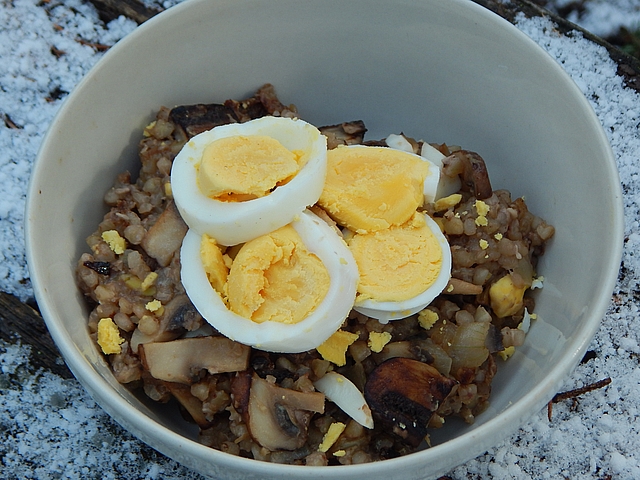
I’ve since found many reasons to love buckwheat. Despite its name in English, it’s not a type of wheat: it’s actually a gluten-free seed in the same plant family as rhubarb. So if wheat isn’t on your diet, buckwheat is your friend. Unlike some gluten-free grains, it’s packed with protein and amino acids. Soaking it removes some of its phytic acid, which can make it easier to digest. A presoak also speeds up the cooking process—instead of a slow bake in a low-temp oven, you can have it ready from the stovetop in 5 minutes for a modern take on каша сименуха, a traditional Russian breakfast, or for an easy dinner with roasted vegetables.
Learn to make Buckwheat Porridge with Mushrooms and Eggs and Roasted Vegetables with Tofu and Buckwheat

Paneer

My freezer holds all sorts of vegetables ready to mix with homemade paneer for Paneer Tikka Masala. Learn to make cheese at TwiceasTasty.com.
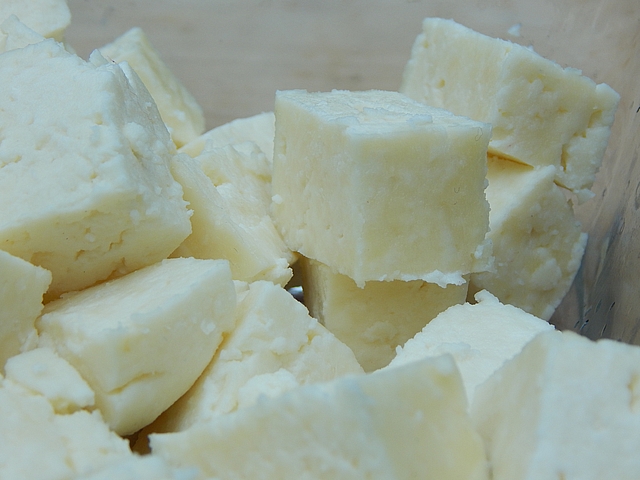
Every April, I’m focused on two things: what I’m going to grow in my garden this year, and how I’m going to eat up everything I saved from last year’s harvest. Last week’s post used up not just the whey leftover from making yogurt but also the potatoes starting to sprout in my storage bins. This week, I dug deeply into my freezer and found all sorts of vegetables for an Indian dinner: cherry tomatoes, onions, peppers, garlic, and cilantro pesto. Flavor them with my dwindling supply of home-smoked chilies and homemade curry powder, toss in some freshly made paneer, and the flavors explode.

There are several other fabulous things about this week’s recipes. If you already make Lemon Cheese, you don’t need to learn to make paneer: you just need to learn how to press your cheese. If you don’t yet make this cheese, which also goes by queso blanco, whole-milk ricotta, and farm cheese, you have another reason to learn how.
Learn to make Fresh Paneer and Paneer Tikka Masala

Bean Soups

Soups fill our winter evenings, and the most filling ones start with beans. Get bean soup recipes at TwiceasTasty.com.
Soups fill our winter evenings, and the most filling ones start with beans. I love cooking with dried beans and tend to store many types in quart jars—which means I often have jars with just a scoop of beans left that I want to use up before I restock. Fresh Mixed-Bean Soup is the perfect option. You can use just about any bean in it, including lentils and split peas; the more variety, the more color and texture in the final soup. I often start by emptying as many jars as I can and then adding whatever beans I have in larger quantities, 1/2 cup at a time. Sometimes I even toss in leftover pearl barley.

In many ways, a soup with many types of beans resembles the bean soup mixes you can buy prebagged and tied with a pretty ribbon. But you’ll spend a lot less money if you buy the beans separately in bulk. You’ll also save money and have more control over the salt content and other additives if you started with dried instead of canned beans. And once you start cooking with dried beans, you’ll discover plenty of other uses for them, including—on this blog—pinto or kidney beans in Red Beans and Rice, black beans in veggie burgers, and chickpeas in falafel and this week’s other recipe, a Moroccan bean soup.

Learn to make Fresh Mixed-Bean Soup and Harira