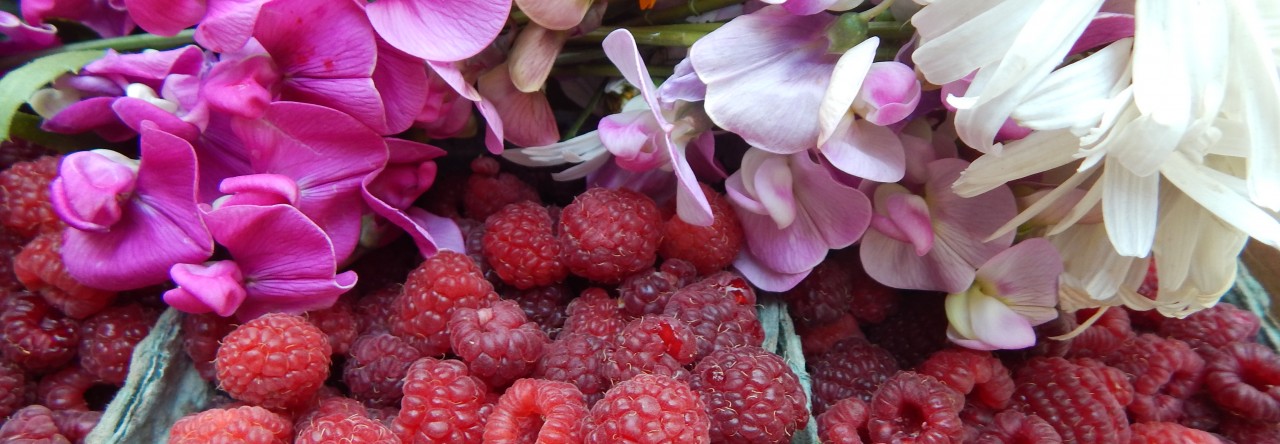
Strawberry-Rhubarb Shrub

I usually find strawberries too sweet to pair with rhubarb, but the vinegar in a drinking shrub balances the combination for my taste buds. Learn more at TwiceasTasty.com.
If you’d walked into my kitchen late last night, you would have found me turning some of summer’s first fruit into a batch of shrub. A drinking shrub, as I share this week in my Twice as Tasty column for the Flathead Beacon, is an old DIY beverage that fans of today’s sparking water and hard seltzers should have on their radar. The combination of fruit, vinegar, and sugar into a concentrate that is then diluted with fizzy water to taste packs a flavor punch and quenches thirst of hot summer days. Mix in a couple of shots of alcohol and you end up with a sparkling evening cocktail.

I usually have several shrub flavors in my fridge, made with the current bumper crop of fresh fruit or whatever I squirreled away in the freezer for the off-season. Although I find strawberries too sweet to pair with rhubarb in desserts and jams, the vinegar in a shrub balances this popular combination for my taste buds.
Learn to make Strawberry-Rhubarb Shrub

Gluten-Free Scallion Pancakes

Savory pancakes can be eaten any time of day and make a delicious light summer meal that features seasonal veggies. Learn more at TwiceasTasty.com.
If you think of pancakes as sweet breakfast treats, think again. Savory pancakes can be eaten any time of day and make a delicious light summer meal that features seasonal veggies—in and on them. This week, in my Twice as Tasty column for the Flathead Beacon, I share one of the first variations I make each summer. It’s easy to make, delicious, and—bonus—gluten-free, dairy-free, and vegan.

You can make scallion pancakes with store-bought scallions (also called green onions), but if you grow your own bulb onions, you can swap in small ones as you’re thinning your onion bed. I make them even earlier in the season with walking onions and then later in summer with just the green tops from nearly full-grown bulb onions that I pull early to use fresh.

Other vegetables and herbs work well in savory pancake batter, including zucchini with basil and grilled peppers with chives. I then pile on more vegetables as toppings, especially pickled ones like Tangy Radish Rounds, Ripe Cherry Tomato Pickles, Pickled Avocado Slices, and other quick pickles from my cookbook.
Learn to make Gluten-Free Scallion Pancakes

Arugula Salad with Asparagus and Shaved Parmesan

Homegrown greens have flavor that is muted or missing from store-bought ones. Learn more at TwiceasTasty.com.
One of my favorite things about the start of garden season is clipping the first homegrown spring greens. If you grow lettuce, spinach, arugula, or other greens, you know what I’m talking about. If you don’t, I highly recommend getting a few seeds and giving it a try. Homegrown greens have flavor that is often muted or missing from store-bought ones, and you can buy seeds in varieties that grocery stores won’t carry. These seeds grow easily in the ground or in pots. My sister seeds two “lettuce bowls”—wide, low plastic pots—for my parents each year that sit in the shade on their porch all summer. When the supply gets low, they simply pull the straggly plants and tuck in a few new seeds.

My homegrown lettuces and other greens mainly land in salads, as I share this week in my Twice as Tasty column for the Flathead Beacon. I also tuck them into tacos and sandwiches, fold them into hot pasta or curry, and pair them with eggs.
Learn to make Arugula Salad with Asparagus and Shaved Parmesan

Compound Herb Butter

I save homegrown herbs in many ways, but one of the easiest may be mixing them into butter. Learn more at TwiceasTasty.com.
I save homegrown herbs in many ways, but one of the easiest may be mixing them into butter and freezing them, as I share this week in my Twice as Tasty column for the Flathead Beacon. This technique for making compound herb butter is also ideal for a bunch of fresh herbs you’ve purchased but won’t use up before they start to fade, since you only need 2–4 tablespoons for each stick of butter.

I typically mix up small, fresh portions of flavored butters to use immediately, like my favorite lime butter for grilled corn. Small batches of compound butter keep well in the refrigerator for a few days. For longer storage, freeze “logs” of herb butters and use them throughout the year.
Learn to make Compound Herb Butter

Homemade Baked Mac and Cheese

My mom’s kid-friendly mac and cheese and my more flavorful version are just the beginning for cheesy pasta ideas. Learn more at TwiceasTasty.com.
We’ve had a spate of cool spring weather here in northwest Montana, including days when I woke up to snow on my just-emerging crocus and scilla, so I’ve been in comfort food mode. That means—along with other recipes that satisfy filling, fatty food cravings—mac and cheese.

I grew up eating homemade mac and cheese baked in the oven until the center was gooey and the top was a crunchy cheese crust. My mom’s version was kid-friendly and simple: elbow pasta, butter, flour, milk, and mild Cheddar. I’ve tweaked it to bring in more flavor and better texture. But when it comes to making mac and cheese your own, the recipe I share this week in my Twice as Tasty column for the Flathead Beacon is just the beginning.
Learn to make Homemade Baked Mac and Cheese

How To Make Cheese, Step by Step

For the Old Farmer’s Almanac website, I created a basic cheese making guide and a recipe with step-by-step photos for Farmer’s Cheese. Learn more at TwiceasTasty.com.
I’m excited to share my first pieces for The Old Farmer’s Almanac website—all about cheese! I created a basic cheese making guide to help beginners make their first cheese and experienced cheese makers learn some of the history and details about the process. It includes a recipe for a classic cheese from pioneer days: Farmer’s Cheese. You’ll also find that recipe in a separate post that includes step-by-step photos of the process.

I’m just as excited that by creating these pieces for Almanac.com, the editors have added more recipes to their website for making cheese and other dairy products. The website’s collection now includes recipes for homemade ricotta, yogurt, and butter. I have another piece in the works for their website, too.
Learn how to make cheese, step-by-step

Homemade Fruit Leather: Most Requested

I usually make my most requested fruit leathers from homegrown and frozen berries and homemade applesauce. Learn more at TwiceasTasty.com.
Homemade jams and preserves are delicious, but they take hours my garden demands I spend weeding and harvesting. As I explain this week in my Twice as Tasty column for the Flathead Beacon, freezing homegrown fruit lets me keep up with the harvest and save that haul to preserve in a different way when I have more time. Two-step preserving may seem like extra work, but it’s really a time saver when that second process needs some dedicated hours and focus, like canning jam and rolling up dried fruit leather.

Berries freeze particularly well for later preserving projects, as well as for smoothies, baked goods, and more. I always spread them on a tray for a first round of freezing to discourage clumping in the freezer bag. Again, what seems like extra work makes pulling out just a few berries for muffins or a galette so much easier. Even defrosting an entire bag for my nephew and niece’s favorite fruit leather flavors seems to happen more quickly if the berries haven’t frozen into a solid brick.
Learn to make Homemade Fruit Leather

Potato Salad with Pickles and Creamy Dressing

Pickled vegetables and a mild, creamy dressing present a dichotomy of flavors as a complementary pairing. Learn more at TwiceasTasty.com.
In the early 2000s, I lived in St. Petersburg, Russia, for close to a year. I’d been traveling through Europe and northern Africa for much of the year before that and was drawn to the local flavors in each country and region I visited. Russia presented an interesting dichotomy: a love of all things pickled yet little tolerance for anything spicy or powerfully flavored.

The salad and dressing recipe I share this week in my Twice as Tasty column for the Flathead Beacon shows how this dichotomy can be a complementary pairing, which is perhaps one reason both tangy and mild flavors were so popular in Russia. In contrast, the blend that many Westerners know as Russian dressing, which often contains chili sauce, horseradish, and other hot or sharp flavors, would have been too much for my Russian friends. They even found my homemade mac and cheese, with its dash of mustard powder, too spicy. But the tangy combination of pickled vegetables and sour cream in this potato salad was just fine.
Learn to make Potato Salad with Pickles and Creamy Dressing

Roasting Peppers

 I use not one but four techniques to roast peppers of all colors, sizes, and heat levels. Learn more at TwiceasTasty.com.
In one of my recent pieces for Taste of Home, I had a chance to share techniques for one of my favorite vegetable upgrades: roasting. I mainly roast homegrown peppers, so it’s an easy seasonal choice to char them on the grill. But if you’re buying peppers out of season or keeping an eye on a simmering pot in the kitchen, indoor techniques may make more sense. So I share not one but four ways to roast peppers of all colors, sizes, and heat levels.

Once glance at the price on a jar of roasted peppers in the store makes clear a key advantage to roasting your own. Other reasons include the ability to get them just the right softness to use in chunks in fresh dishes—jarred roasted peppers tend to be soft and slippery. I don’t just roast the standard red bell peppers, either: green bells, Gypsy peppers, Poblanos, and chilies all carry a smoky note when their charred.
Learn more about Roasting Peppers

Beyond Tasty

I’m excited to announce that my writing endeavors have been expanding to include several new-to-me publications. Learn more at TwiceasTasty.com.
I’m excited to announce that my writing endeavors have been expanding to include several new-to-me publications—and going beyond featuring recipes, cooking techniques, and kitchen tools.

When I started this food blog in 2016, I was primarily working as a freelance editor with a few writing projects for some of my editing clients. After I published my cookbook The Complete Guide to Pickling in 2020, I began writing more pieces for other publications. With the launch of my Twice as Tasty column in the Flathead Beacon in 2021, I continued to spend less time editing and more time writing. In recent months, I’ve begun to work with an even wider range of publications.

You can now find my writing and photography on Kitchn, Taste of Home, and Health.com, even as I continue to write for The Spruce Eats and my weekly Flathead Beacon column.
Learn more about my latest projects