Filling Salads

Salads are so versatile: chop up some ingredients, toss them with dressing, and your fresh, one-dish meal is ready to eat. Get salad recipes at TwiceasTasty.com.
Salads dominate my harvest menu. They’re so versatile: chop up some ingredients, toss them with a bit of dressing, and your fresh, one-dish meal is ready to eat. I start making homegrown salads as soon as spring greens show true leaves and don’t stop until the ground freezes.

Most salads fit the “no recipe required” category. Once you find your preferred ratios, even the dressing can be made on the spot with whatever’s at hand. If you follow @twiceastastyblog on Instagram you’ll find plenty of my daily salads. But I still get enough requests for ingredients and proportions that you’ll find a couple dozen salad and dressing recipes on the blog and can even gather your friends for a workshop. Some of these recipes are traditional, like panzanella, sunomono, and the two American classics in this week’s post. But as you’ll learn, all of these salads can be adapted based on what’s in season and what you have on hand.
Learn to make Three-Bean Salad and Taco Salad

Flavors of Fall

Even though September means hours of putting up homegrown food, much of the garden will offer portions suitable for fresh meals. Learn more at TwiceasTasty.com.
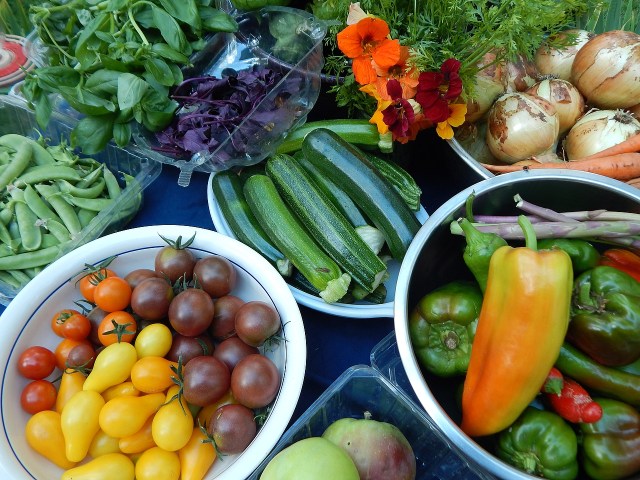
Of all the growing months, September holds the garden’s greatest bounty. I’ll harvest the widest variety of produce over the next few weeks, some of it from plants that are in their prime but much of it from those that are yielding their final offerings. In my garden, many plants will release preservable quantities this month, including nightshades, cucumbers, squash, and if a frost hits before the month’s end, apples. Plums and pears will be the only new arrivals, but they’ll all be ready at once.

Even though I spend plenty of hours in September putting up homegrown food, much of the garden will offer portions suitable for fresh meals. Broccoli and even asparagus are still putting out a handful or two of new shoots at a time. Corn and snap beans just passed their peak but will continue to give up enough for immediate use. Cherry tomato and basil plants will keep reminding me of summer even as the days shorten and cool. So I’m taking a break from sharing canning recipes this month to pass on some of my favorite ways to savor the flavors of fall.
Read more about the flavors of fall

Eating Well Outdoors

When I plan an outdoor adventure, I start with what’s in my garden. Learn more at TwiceasTasty.com.
I divide my summer free time fairly evenly between gardens and sailboats. But before I became hooked on sailing, I spent many summer days in hiking boots. I returned to those on-foot adventures last weekend, spending 3 days in Glacier National Park covering 19 miles while climbing and then descending 4,500 feet.

Besides a return to gorgeous vistas and sore muscles, the weekend brought me back to the enjoyment of eating well even at 6,000 feet. I’ve always been convinced that meals out of a pack, kayak, canoe, car, camper, or sailboat don’t have to feature Ramen, instant rice, or even ever-improving yet increasingly expensive pouches of freeze-dried dishes. When I plan an outdoor adventure, I start with what’s in my garden and how I can bring it fresh, dehydrate it, or otherwise process it so that it can be incorporated into a woodland, mountain, or ocean meal plan.
Read more about eating well outdoors

Classic Pickles

I’ve learned many tricks for keeping classic cucumber pickles crisp—and to set aside extra cukes for relish. Get pickling recipes at TwiceasTasty.com.
Dill pickles fit the “classic” category on so many levels. They have a long history among home canners, and in my home in particular. While my mom boiled vinegar brine and tended the canning kettle, my sister and I were given the job of packing whole cucumbers into quart jars because we had small hands. Weeks later, I’d start pulling jars from the packed shelves to munch on the crisp, sour vegetables.

Since I first learned to can pickles, I’ve found many tricks for keeping cucumbers crisp throughout the heated processing that lets you store them on shelves at room temperature. My mom always added grape leaves from our homegrown vines, harnessing their tannins to help keep the cukes crisp; I found horseradish leaves have the same effect. I’ve also started pasteurizing the jars instead of dropping them into a boiling water bath. Pasteurizing takes a little more time at my altitude, but the lower temperature still gives a crunchier pickle. Set aside any cucumbers that are blemished or won’t squeeze into the jars for relish.
Learn to make Processed Cucumber Dill Pickles and Cucumber Relish

Classic Jams

I’ve turned from my mom’s classic recipes to more fruit-forward jams. Get homemade jam recipes at TwiceasTasty.com.
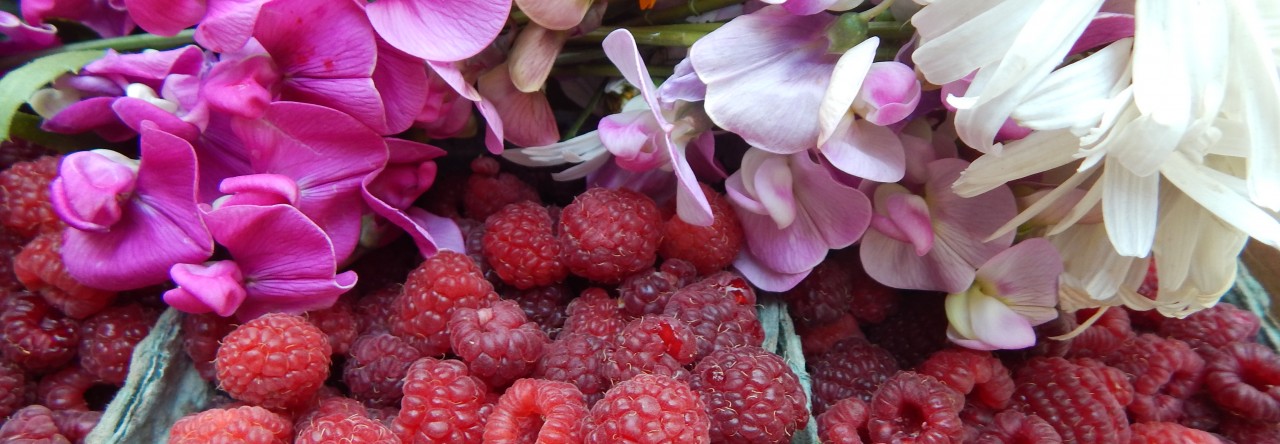
As a kid, jam making dominated the summer berry and fruit season. My dad grew much of the fruit: rows of strawberries ripened not long after school let out, and raspberries, boysenberries, and loganberries, which my dad started with cuttings from my grandfather’s vines, came on midsummer. Raspberries were always my favorite: I learned from my mom to fill small canning jars with fresh berries using a classic recipe straight out of the Ball Blue Book, with fruit, lemon juice, powdered pectin, and lots of sugar.

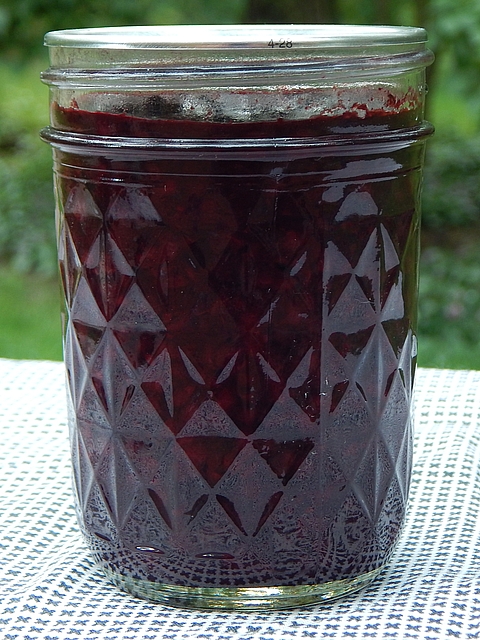
That last bit is the reason I’ve turned from my childhood recipes to updated versions using Pomona’s Universal Pectin whenever I want to can any jam with added pectin. It jells with little or no sweetener and is vegan (it’s extracted from citrus peel and activated by calcium). You can get about four batches instead of the usual one from each box of pectin, and although you risk a softer set, I’ve successfully cooked multiple batches at once. The first jam I ever made with it, more than 10 years ago and using a blend of berries, is still one of my favorites. I soon followed it with a version using my favorite sour cherries.
Learn to make Tart Berry Jam and Sour Cherry Jam

One Prep, Two Meals

One of my busy summer tricks is to prep once and eat twice. Learn more at TwiceasTasty.com.
In my corner of northwest Montana, July 4 is the unofficial start to tourist season. The University of Montana’s Institute for Tourism and Recreation Research reported that more than 2.4 million people visited Montana last July—more than double the state’s population—and that half of those visitors entered Glacier National Park, Yellowstone, and a long list of other stops. Those numbers downshift quickly: By October, there are again more residents than visitors in the state.

Like these tourists, I try to cram as much as possible into this short summer season, both in the garden and on a sailboat. I’m harvesting and processing at least 3 times a week and sailing just as often. This requires some intensive scheduling and as many shortcuts in the kitchen as possible.

One of my key tricks is to prep once and eat twice. I’m not just talking leftovers, although I make plenty of oversize meals to reheat later in the week. Instead, my “one prep, two meals” plan creates two separate meals from similar base ingredients and freshens them with new flavors. It’s the easiest way I know of to avoid feeling like you’re eating the same meal day after day yet speed up later-meal processes.
Read more about one prep for two meals

Birthday Cake: Year 3

It’s Twice as Tasty’s birthday month, and that means cake. Get birthday cake recipes at TwiceasTasty.com.
This month, we’re celebrating 3 years of Twice as Tasty! I’ve already shared some of the year’s best recipes and most popular workshops. And since my favorite “desserts” are usually served in a cocktail glass, I was quick to pass on my favorite recipe for homemade liqueur. This week’s post is for those of you who prefer to eat your dessert.

As I mentioned in last year’s birthday dessert post, I think a good celebratory cake must be moist, easy to decorate, and delicious. This ginger cake nails all three. The molasses not only adds the requisite gingerbread flavor but also keeps the crumb moist. The caramel glaze simply pours over the top: no fussy frosting time required. And the three versions of ginger—fresh, ground, and crystallized—replicate the flavors I fell in love with in Triple Gingersnaps.
Learn to make Triple Ginger Cake and Fresh Caramel Sauce

Alcohol Infusions

Start with vanilla extract, and then expand your repertoire to drinkable liqueurs. Get alcohol infusion recipes at TwiceasTasty.com.
It seems that almost every baking recipe, and many other sweet treats, call for vanilla extract. Although the price of full beans and their extract may tempt you to substitute imitation vanilla, the cooks in my family were firm believers of using the real deal long before Jamie Oliver told the world that the fake version comes from the beaver anal gland. He didn’t have that quite right, but other sources of synthetic vanillin include coal tar, paper waste, and cow poop, which don’t sound any more appealing. Since companies are only required to use the label “artificial vanilla” or “imitation vanilla,” you’ll never really know what you’re eating.

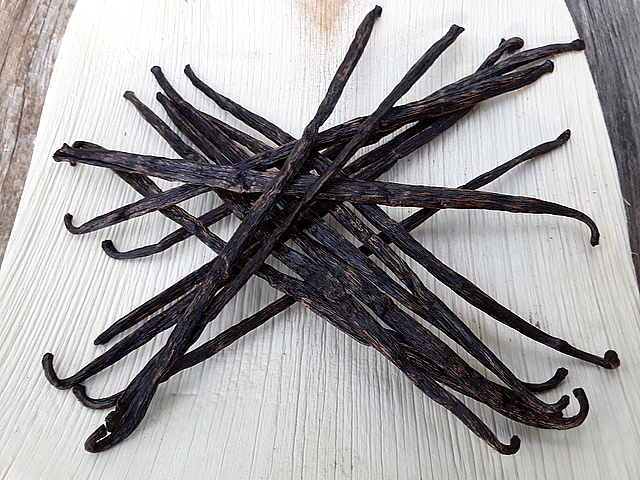
When a 2017 cyclone wiped out a large chunk of Madagascar’s vanilla crop, prices for beans skyrocketed. So in splurging for the real stuff, you can get the most bang for your buck by making your own extract from vanilla beans: Scrape out the seeds needed for your recipe, and then use the pods for your extract, like you would for vanilla-infused sugar. Once you realize how easy it is to infuse this vanilla flavor, you’ll be on your way to making alcoholic infusions you intend to drink—liqueurs like triple sec.
Learn to make Homemade Vanilla Extract and Homemade Orange Liqueur

No Recipe Required

Spring’s first edible gems are so delicious that recipes are not required. Learn more at TwiceasTasty.com.
May began with a week of firsts for Twice as Tasty. I had my first experience baking in a real woodfired pizza oven during a Grilled Sourdough Pizza workshop, and I taught my first Fine Dining: Front Country workshop for Outsiety. In both classes, I was able to share first cuttings freshly snipped from the garden. This week, I also baked the first stalks of rhubarb into a dessert to share with friends.

My first cuttings are almost always from perennials pushing up through the ground year after year. You probably think little of these plants when you see them in a produce section: they’re not showy, or colorful, or supersized. But when they’re the first edibles to pop through your garden soil, on their own time and with no effort on your part, they’re gems. And my favorite ways to eat them are so simple that you don’t even need a recipe.
Read more about simple spring meals

Learning to Eat Well

Want to get a jump-start on the summer season? Take a Twice as Tasty workshop. Learn more at TwiceasTasty.com.
It’s time: Uncover beds, clean up the garden, thin the berry patches, pull the season’s first weeds, and plant seeds and starts. Gardening season has begun.

Although your mind might be reeling with the to-do lists that will get your garden up and running, give a little thought to where its bounty is going: table, fridge, freezer, pantry, and more. I’ve already loaded the blog with lots of information to help you enjoy what you’ve grown—now and later. But you’ll get an even bigger jump-start on the season with a Twice as Tasty Live workshop. You’ll learn more, faster, among friends, and with my personal help. This week’s post highlights some of the best workshops to get on your calendar this summer. As days grow longer, my schedule gets tighter, so pick your topics and contact me soon to set up your personalized workshop for the summer season.
Read more about learning to eat well