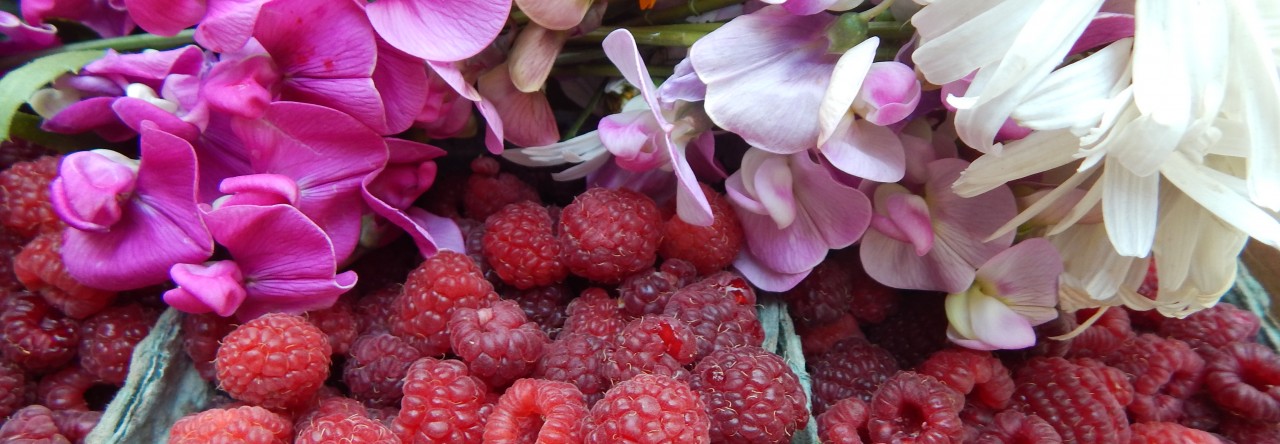
Quick Saves

This primer brings together ways I quickly save the last rounds of in-season veg. Read more about quick-save vegetables. Learn more at TwiceasTasty.com.
As the growing season winds down, I get plenty of questions about what to do with the last weeks of homegrown harvests and the last crops from farmer’s markets. By now, you’ve likely eaten your fill of your favorite fresh dishes and processed your favorite canned and frozen goods. If you’re like me, you’re torn between wanting to be done with the labor of weeding and harvesting and wanting to capture those last few tomatoes, those last few broccoli stalks, to enjoy after snowfall.

I’ve already shared many of my favorite ways to save excess and end-of-season produce. This month, I’ll continue to share some of my favorite fall canning recipes. But this week, I wanted to bring together in one post some of the ways I quickly save the last rounds of in-season veg.
Read more about quickly saving vegetables
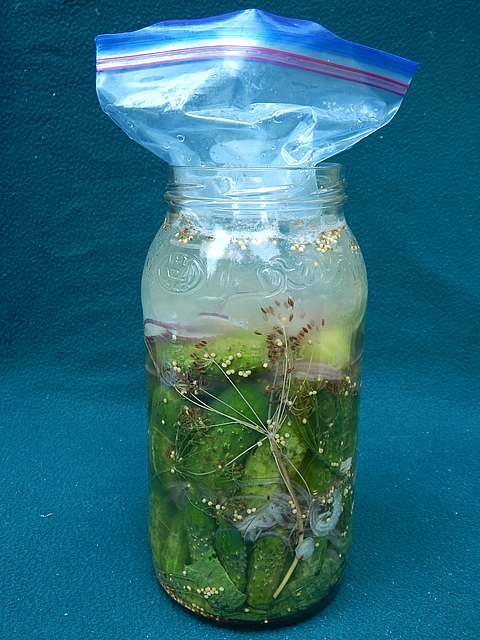
Fermented Cucumbers

I’ve loved cucumber pickles since I was a kid. Fermentation takes them to a new level. Get fermented vegetable recipes at TwiceasTasty.com.
I’ve loved pickles since I was a kid. My mom put dozens of jars of dill and “sweet” (bread-and-butter) pickles through a water bath every year, and I’d sneak them like they were potato chips. But the longer the pickles sat, the less chip-like crunch they gave. Over the years, I’ve played with ingredients and canning techniques that have helped. Then I discovered fermentation.

Think about it: Cucumbers are best fresh and raw. Putting them in hot water is bound to affect their texture. Fermentation replaces heat with time and vinegar with salt. No wonder the result is crisper and fresher. And the flavoring possibilities—from dill to tea—are endless.

If you’ve never run a fermentation, I suggest you check out my introductory post from earlier this month. But here are the basics: Start with everything clean and fresh. Monitor the batch daily so that you can see the process. If you have doubts, give it the toss and start again.
Learn to make Fermented Dill Pickles and Fermented Tea Pickles

Processed Green Tomatoes

When I asked members of the Twice as Tasty Facebook group for recipes they’d like to see on the blog, green tomato requests poured in. I try to ripen my late-season tomatoes and eat the stubborn ones fresh, so my green tomato repertoire was limited. Perfecting long-term storage of green tomatoes called for experimentation, practice—and some unannounced taste testing at Twice as Tasty-catered events.

After sampling a range of pickled and fermented green tomatoes and salsa, sauce, relish, and chutney recipes, a few trends appeared. Pickled greenies are best stored in the refrigerator, where they never feel the heat of a boiling water bath and retain their shape and texture. Salsas could go either way. If you can’t create Grilled Tomatillo Salsa, you can process a green tomato salsa—but I prefer it fresh. In contrast, processing is ideal for a thick, rich chutney.
Learn to make Curried and Pickled Green Tomatoes and Green Tomato Chutney

Fresh Green Tomatoes

As the growing season slows, the primary complaint I hear is “but my tomatoes are still hard and green!” The lament is loudest in northwest Montana, where our growing season is about 90 days. Tomatoes need 50–100 days to mature, so it’s easy to see why so many green fruits remain on our vines as the first frost approaches. My solution, as I explained last week, is to let most remaining tomatoes ripen indoors. But I always set some green tomatoes aside to eat fresh.

What comes to mind when you think of eating a green tomato? For many, it’s a plate of breaded and fried slices. Although Fried Green Tomatoes aren’t as Southern as you might think, they are delicious, easy to make, and suitable just about any time of day. Your mind may also turn to a Mexican salsa verde. The traditional recipes—and to my palate, the tastiest versions—are made with tomatillos, but green tomatoes are suitable stand-ins.
Learn to make Fried Green Tomatoes and Fresh Green Tomato Salsa

Beets

Root vegetables are ideal for roasting. Beets, potatoes, carrots, onions, garlic—all take on a range of flavors missing from a raw or boiled preparation. The hidden sugars rise to the surface and caramelize, and the oven’s enclosed, indirect heat intensifies flavors. High-temperature roasting seals the surface, leaving the interior soft and moist, while low heat deters mushiness. Either way, the result is delicious.

Most root vegetables can be roasted in the same way: Cut them into pieces, coat them with some oil so that they cook rapidly and don’t stick to the pan, and spread them evenly and turn them occasionally for consistent cooking. Even beets and garlic can be roasted in this way. But I like to wrap these vegetables whole in foil, let this bonus layer and their natural skins seal in their juices and flavor, and then remove the skins and cut them down to size at the end.
Learn to roast beets and make Roasted Beet and Cheese Salad

Grilled Tomatoes

I grill a lot of vegetables, from asparagus to tomatillos, but I probably spend the most time grilling tomatoes. Not only are they delicious on a skewer with other vegetables for dinner, but they’re also fabulous when pulled off the canning shelf or from the freezer. And the process for grilling large tomatoes is easy: slice them in half, sear them cut side down on a hot grill for a couple of minutes, and then flip and cook a few more minutes until soft.

Those of us with large gardens quickly come up with enough grilled tomato batches for canner loads of salsa, Bloody Mary mix, and pasta sauce. But in recent years, I’ve been running a small batch to freeze in cubes—the perfect size to drop into a soup, spread on a pizza crust, or simply dip into with mozzarella-stuffed breadsticks.
Learn to make Grilled Tomato Pizza Sauce and Stuffed and Grilled Breadsticks

Fresh Tomatoes

Tomatoes top the list of my favorite fresh summertime, homegrown vegetables. (Yes, scientifically, they’re fruit. But to a cook, they’re vegetables.) These are fresh summertime favorites because their sweet, juicy flesh is at its peak, tasting completely different from tomatoes that have been grilled, roasted, or otherwise cooked or preserved. They’re homegrown favorites because despite the few tomato varieties available in grocery stores, hundreds of varieties are available as seed.

We planted 26 tomato starts in late May and have been harvesting 14 varieties this month. Some are tiny, bright red cherry tomatoes; some are dark purple giants. My childhood loves are sweet Yellow Pears I eat like candy from the vine, but some of my recent favorites are heirloom Black Cherry tomatoes, with large (for the “cherry” class), dusky fruit, and dense, heart-shaped Oxheart tomatoes. Each adds a distinct flavor and texture to fresh appetizers and salads.
Learn to make Herbed-Tomato Dip and Panzanella (Tomato and Bread Salad)

Canning It Forward

This is a big week at Twice as Tasty, and it’s all about canning it forward. For the second year, I’ll play a part in feeding more than 100 hungry sailors at the Montana Cup, an annual sailing regatta hosted by the North Flathead Yacht Club in Somers, Montana. Jars of preserves and other Twice as Tasty treats will be shared for meals and awards. Coincidentally, the regatta’s opening day is the Ball brand’s seventh annual Can-It-Forward Day.

Gifting and sharing home-preserved food cans it forward to the joy of both creator and eater. You’ll find plenty of recipes here to inspire your canning projects. But this blog is just one small voice in the world of home preserving, and much of my inspiration began with other voices. Here are some of my favorite canning recipes from other sources.
Read more about my favorite recipes from other sources

Garlic and Nasturtiums

When it comes to making pickles, I often think big: pounds of produce, half-gallon jars for fermenting, multiple batches of quart and pint jars for canning, and hours spent cleaning, preparing, and processing. But when it comes to eating pickles, a few often go a long way: a couple of Definitely Dilly Beans in a Grilled Tomato Bloody Mary, a few slices of Better Bread-and-Butter Pickles to serve with or stuff in Gorgeous Grilled Cheese, a handful of Cumin-Spiced Zucchini Refrigerator Pickles to accompany Indian dishes.

As I’ve already shared this month, some pickles are best in both small batches and small doses. This makes them ideal condiments to pack quickly and easily into small jars, store in your fridge, and dip into as needed. Two I always try to have on hand are pickled garlic and nasturtium “capers.”
Learn to make Pickled Garlic and Pickled Nasturtium Seeds

Refrigerator Pickles

I don’t advocate small-batch canning, but I am a fan of quick and easy pickling that fills your refrigerator one jar at a time. If your only experience with pickling is opening a store-bought jar, then refrigerator vinegar pickles will convert you to homemade. Even if you grew up in a household that put up shelves of pickled vegetables every summer, like I did, refrigerator pickles have surprising benefits.

The disadvantage of refrigerator pickles—that they aren’t sealed in heated jars and thus shelf stable—can be an advantage in freshness and crispness. Small-space gardeners or CSA members can put up a jar at a time as produce ripens. Even expansive gardeners can use fridge pickles to test new flavor combinations. Cucumbers are ideal refrigerator pickles, because they soften so quickly when heated. You should still only use pickling cucumbers; the thick-skinned slicing cucumbers you find in grocery stores and even lemon cucumbers are really only useful as fresh pickles. After years of pasteurizing summer squash, I’ve switched from the canner to the fridge to keep the pickles’ crunch.
Learn to make Cucumber Refrigerator Pickles and Cumin-Spiced Zucchini Refrigerator Pickles