Pickling Salt and Other Canning Supplies

My canning-related pieces for several websites provide valuable insight and suggest handy supplies. Learn more at TwiceasTasty.com.
Canning season is upon us, and I’ve been writing canning-related pieces for several websites. If you’re new to home canning or experienced but looking to learn more about key ingredients and tools, these articles and product reviews provide valuable insight and suggest supplies you may want to keep handy over the next few months.

You can also find plenty of info on the basics of home canning, how to get ready to can, and other canning topics here on the blog. Beyond the new pieces I share in this post, you’ll want to check out the roundup of my go-to canning cookbooks for The Spruce Eats.

Personally, I’ve started my canning season with tart cherry pie filling, which I canned up using recipes from Preserving With Pomona’s Pectin and The All New Ball Book of Canning and Preserving so that I can compare the two versions and decide which I prefer. I’ve also made a batch of Roasted Raspberry Syrup, a particular favorite in my sister’s house. Using other preserving techniques, I’ve been playing with rhubarb, currant, cherry, mixed berry, and other shrub variations and keeping my fermentation crock full with curtido, an El Salvadoran cabbage slaw preserved with pickling salt, based on recipes from my pickling cookbook.
Learn about choosing Pickling Salt and Other Canning Supplies
Kitchen Favorites: Canning Cookbooks

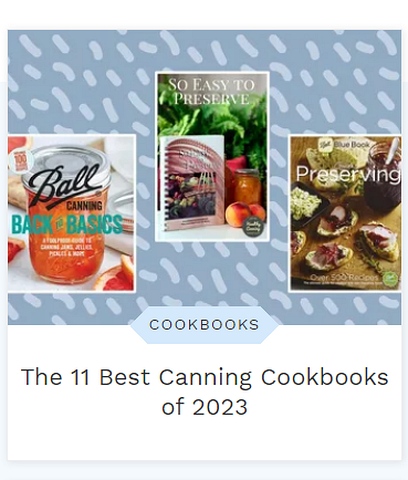
I’ve updated my list of favorite canning books with new editions plus newer releases worth adding to your canning bookshelf. Learn more at TwiceasTasty.com.
It might not feel like canning season with garden beds buried in snow. Still, seed catalogs keep arriving. To my mind, the smart way to grow and preserve your own food is to follow the progression from buying seeds to planting to harvesting to canning. That means that now, as I choose varieties from seed catalogs, I’m noting the recipes that I hope to can in summer or fall.

If you think the same way, you’ll want to be leafing through some of the canning cookbooks in my recent piece for The Spruce Eats. I originally wrote this roundup in 2021 and shared more about sourcing safe canning recipes in a related blog post. I’ve updated the list with new editions of some of my favorite canning books plus a couple of newer releases worth adding to your canning shelves.
Learn about choosing and using canning cookbooks

Kitchen Favorites: Cookware and Canning Cookbooks

Tramontina’s pots perform so well that I couldn’t give them up. Learn more at TwiceasTasty.com.
I’m excited to share two pieces I worked on earlier this year that have made it live on The Spruce Eats: one on stackable cookware and one on canning books. The topics may seem to have little in common, but both articles feature favorites in my personal kitchen and will hopefully help you in choosing tools and resources.
Read more about cookware and canning books

Prepare to Pickle

Pickling lets you extend the life of almost everything you grow. Learn more at TwiceasTasty.com.
Pickling lets you extend the life of almost everything you grow. You can pickle and eat your creation quickly, or you can let the jars sit for weeks to slowly preserve and flavor the produce.

As I mentioned while describing the pros and cons of pickling, the process, whether using vinegar or salt brine, safely preserves low-acid foods and can be varied to incorporate your favorite flavors and the size of your harvest. Pickling is a preservation technique but not a storage one; you need to pair it with canning or refrigerating. Some tips and tricks will help you successfully make pickles.

Read more about preparing to pickle

Prepare to Can

You know you’re serious about preserving homegrown food when you start canning in your kitchen. Learn more at TwiceasTasty.com.
You know you’re serious about preserving homegrown food when you start canning in your kitchen. As summer temperatures peak and the garden explodes, canning supplies take up semipermanent residence on the kitchen counter, and many evenings feature the “ping” of sealing jars.

As I mentioned while describing the pros and cons of canning, it’s a time-consuming process with must-follow rules and specialized tools. That’s part of why I’m such a fan of canning large batches and even multiple batches: If I’m going to spend the time, I want to fill a row of jars. Otherwise, I choose a quick preservation method like refrigerating or freezing. I even stash produce in the fridge or freezer to can later when I have a decent stockpile and more time. Doing so breaks up the canning process, making it seem less of a project.

Even though they take effort, canning projects are worth it, and some of my most delicious preservation recipes are stored stably and safely at room temperature in jars.
Read more about water-bath canning

Prepare to Preserve

Whatever your type of produce, storage space, or free time, you can save your harvest. Learn more at TwiceasTasty.com.
How’s your garden growing? If it’s anything like mine, you’ve moved beyond planting to weeding and harvesting—and harvesting, and harvesting. With so much food coming ripe so quickly, it’s time to dig out the canning kettle, dehydrator, crocks, and other preservation tools that will let you enjoy homegrown (or farm fresh from a CSA) produce the rest of the year.

Later this month, I’ll be teaching a free online workshop through Free the Seeds that focuses on preparing to preserve your harvest. It’s a big topic, with far more information than I can share in one session, so I’ll be expanding on that topic all month here at Twice as Tasty. Be sure to join me online July 15 so that I can answer your questions directly (sign up for the Free the Seeds mailing list to receive a registration email), and then check back here for additional tips, tools, and recipes that save your harvest. You’ll also find pages of information on basic tools and techniques here.
Read more about preparing to preserve

Tomatoes

Grilling and preserving pair perfectly, and their advantages stretch far beyond flavor. Get grilled tomato recipes at TwiceasTasty.com.
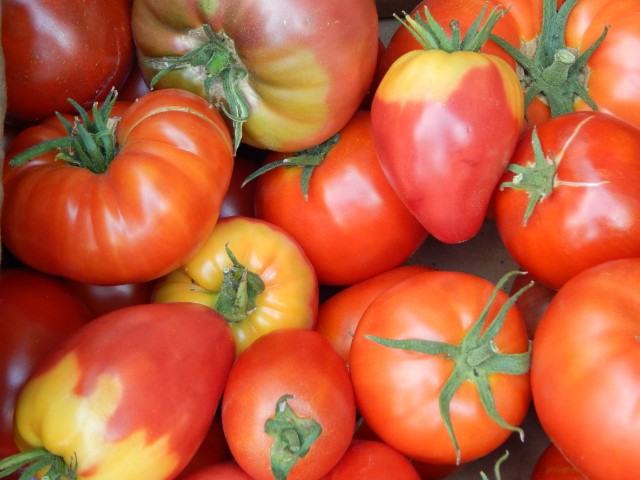
You’ve probably noticed that I love grilled vegetables. I also love home-canned goods, and the techniques of grilling and preserving pair together perfectly. The advantages of grilling for canning stretch far beyond flavor, particularly for tomatoes.

Grilling combined with freezing makes it easy to start processing vegetables as they ripen throughout the growing season, making preserving seem more like a habit than a chore. During tomato season, we pull the ripest fruit from the vine every few days. That evening, we fire up the grill and cook off a rack or two of tomatoes; the hot halves go straight into a colander set over a large bowl to drain off the juice—usually while we’re enjoying a grilled dinner. Once they’re cool, I pour the separated solids and juice into separate containers, weighing and labeling each before adding them to the freezer.

When the freezer’s full, I have two products ready for processing: solids and juice. Because the juice was drained off, any sauce or salsa doesn’t have to cook for hours to thicken. Because the solids have already been pulled out of the juice, I can quickly apply it to any recipe, from beverage to soup. In just a couple of hours, I can have several canner batches processed for long-term storage. The freezer is ready for the next round of preserving, and the canning shelves are full of delicious fire-roasted flavors.
Learn to make Grilled Tomato Pasta Sauce and Tomato Juice Soup

Classic Zucchini

My mom tried every way she could think of to feed us zucchini. I still rely on her classic and newer recipes. Get zucchini recipes at TwiceasTasty.com.
As I was growing up, my mom tried every way she could think of to feed us zucchini. My dad always planted several hills, plus a couple extra in case one failed, and Mom found endless ways to sneak it into dishes once the crop started coming in. Chocolate zucchini cake was her favorite way to disguise the squash: the texture gave it away, but that didn’t stop us from reaching for a slice. She also processed it as pickles, relish, and even salsa.

My favorite way to save zucchini today is grated and frozen for pancakes and quick bread. But if you’re short on freezer space, pickled zucchini becomes far more attractive. The year before I was born, my great-aunt Verle gave my mom a classic zucchini relish recipe that Mom made for decades. She claims we liked it even better than Cucumber Relish. Zuke relish doesn’t stand out in my memories, but I loved relish as a kid, so I must have been eating a lot of these jars. It’s stood the test of time; my great-aunt’s original recipe required only minor tweaks to match today’s safe-canning standards.
Learn to make Zucchini Relish and Bread-and-Butter Zucchini Refrigerator Pickles

Classic Pickles

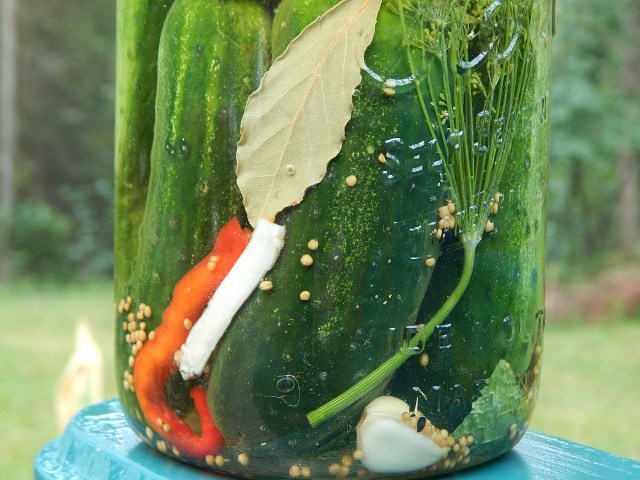
I’ve learned many tricks for keeping classic cucumber pickles crisp—and to set aside extra cukes for relish. Get pickling recipes at TwiceasTasty.com.
Dill pickles fit the “classic” category on so many levels. They have a long history among home canners, and in my home in particular. While my mom boiled vinegar brine and tended the canning kettle, my sister and I were given the job of packing whole cucumbers into quart jars because we had small hands. Weeks later, I’d start pulling jars from the packed shelves to munch on the crisp, sour vegetables.

Since I first learned to can pickles, I’ve found many tricks for keeping cucumbers crisp throughout the heated processing that lets you store them on shelves at room temperature. My mom always added grape leaves from our homegrown vines, harnessing their tannins to help keep the cukes crisp; I found horseradish leaves have the same effect. I’ve also started pasteurizing the jars instead of dropping them into a boiling water bath. Pasteurizing takes a little more time at my altitude, but the lower temperature still gives a crunchier pickle. Set aside any cucumbers that are blemished or won’t squeeze into the jars for relish.
Learn to make Processed Cucumber Dill Pickles and Cucumber Relish

Canning Classics

I’m turning back the clock to classic canning recipes and my first steps in improving upon them. Learn more at TwiceasTasty.com.
In looking back over the last 3 years of Twice as Tasty recipes, I realized there’s a gap in my story of home canning and other adventures in the kitchen. A lot of people have been asking for this story lately, usually phrased as “How did you get started making all of this?” I respond with my childhood food memories: gardening with my dad, canning with my mom, baking with my grandma, berry picking with my sister.

I’ve shared a few family recipes on the blog, but with canning in particular I’ve skipped over the recipes that got me hooked on home-canned food, jumping straight to those I love today. These newer recipes tend to be more complex in flavor and sometimes technique than the jars that filled my childhood and first adult canning cupboards. They’re worth every minute of extra effort. But this month I’ll turn back the clock to some classic flavors and my first steps in improving upon them.
Read more about classic canning recipes