Pickling Salt and Other Canning Supplies

My canning-related pieces for several websites provide valuable insight and suggest handy supplies. Learn more at TwiceasTasty.com.
Canning season is upon us, and I’ve been writing canning-related pieces for several websites. If you’re new to home canning or experienced but looking to learn more about key ingredients and tools, these articles and product reviews provide valuable insight and suggest supplies you may want to keep handy over the next few months.

You can also find plenty of info on the basics of home canning, how to get ready to can, and other canning topics here on the blog. Beyond the new pieces I share in this post, you’ll want to check out the roundup of my go-to canning cookbooks for The Spruce Eats.

Personally, I’ve started my canning season with tart cherry pie filling, which I canned up using recipes from Preserving With Pomona’s Pectin and The All New Ball Book of Canning and Preserving so that I can compare the two versions and decide which I prefer. I’ve also made a batch of Roasted Raspberry Syrup, a particular favorite in my sister’s house. Using other preserving techniques, I’ve been playing with rhubarb, currant, cherry, mixed berry, and other shrub variations and keeping my fermentation crock full with curtido, an El Salvadoran cabbage slaw preserved with pickling salt, based on recipes from my pickling cookbook.
Learn about choosing Pickling Salt and Other Canning Supplies

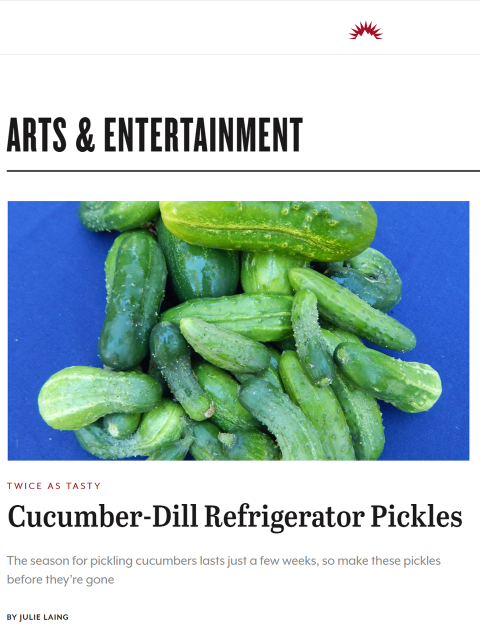
Cucumber-Dill Refrigerator Pickles

Fridge pickles can capture the classic, cucumber-and-dill flavor and crispness without the hassle of canning. Learn more at TwiceasTasty.com.
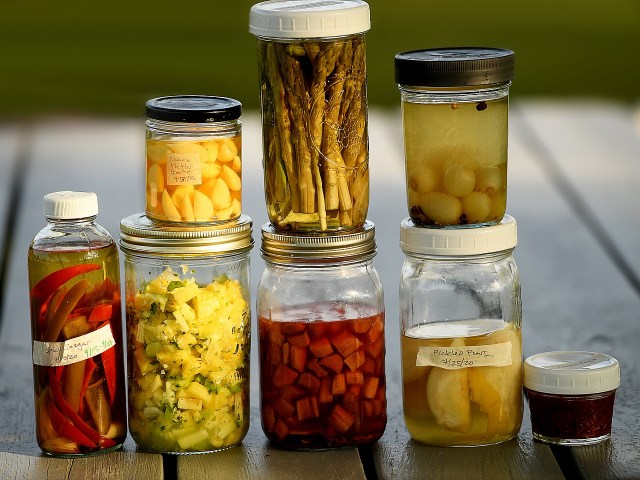
If there was any doubt that I love pickles, it was dispelled when my first cookbook focused entirely on pickling. Even I explored some new-to-me flavors and foods for that book, some of which has since become personal favorites: Lime-Pickled Onions, Cultured Curtido (Cabbage Slaw), Zucchini Escabeche (Grilled and Pickled Zucchini), Fresh Pears with Lemon, Tepache (Fermented Pineapple Beverage), Sweet Vinegar-Pickled Eggs, Scratch-Made Sriracha, and more. But I always leave space in the fridge for simple, classic, cucumber-and-dill pickles.

In my Twice as Tasty column this week for the Flathead Beacon, I share one of my simplest and most straightforward pickling cucumber recipes that can be eaten in about a day (if you just can’t wait) but will keep for weeks in the refrigerator. It’s a great way to use less than a pound of pickling cucumbers, whose importance I also explain in the column, or make a couple of jars with a larger crop but without the hassle of canning.
Learn to make Cucumber-Dill Refrigerator Pickles

Spring Asparagus Pickles

Join me at two free pickling workshops this month. Learn more at TwiceasTasty.com.
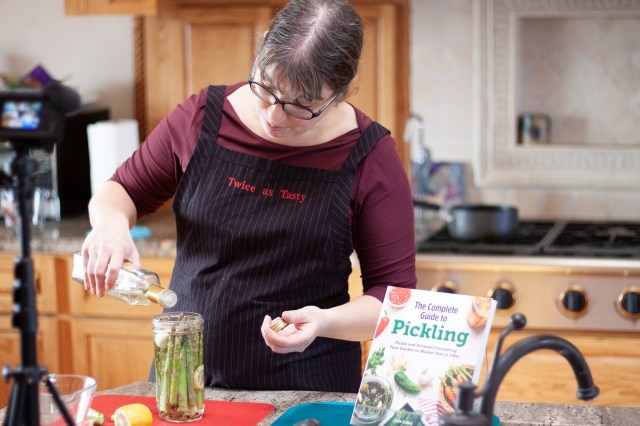
Pickling asparagus. Photograph by Andrea Getts.

As I note this week in my Twice as Tasty column for the Flathead Beacon, in my world, spring means pickling workshops. I’m offering two free workshops in the upcoming week: a virtual presentation and demonstration on March 6 and an in-person talk with samples on March 10. I hope you can join me. Learn more about these workshops in my column.
Learn to make Spring Asparagus Pickles

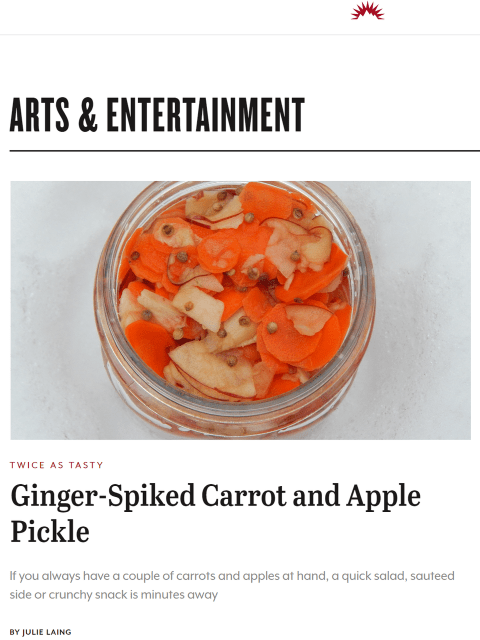
Ginger-Spiked Carrot and Apple Pickle

A flavorful pickle can add a bit of zing to many rich holiday mains. Learn more at TwiceasTasty.com.
Pickles have been a holiday staple since I was a kid. A bowl of home-canned pickles always sat on the dinner table at gatherings. While we waited for guests to arrive, my dad would be sneaking Christmas cookies, but I’d be dipping the cute little serving fork into the pickle bowl. If we set the table too early, I could nearly empty that bowl before the doorbell rang.

The flavorful pickle I share this week in my Twice as Tasty column for the Flathead Beacon adds a bit of zing to many rich holiday main dishes and puts a splash of color on the table. It’s one of the 125 recipes you can find in my cookbook The Complete Guide to Pickling.
Learn to make Ginger-Spiked Carrot and Apple Pickle

Storing Pickles

Several tricks and tools will help you store pickled foods so that they stay fresh and crisp. Learn more at TwiceasTasty.com.
Now that you’re eager to or have successfully made pickles from the recipes in my new cookbook, The Complete Guide to Pickling, where and how should you store them? I talk briefly about pickle storage in the book, but several more tricks and tools will help you keep your pickled foods fresh and crisp.

As I mentioned in my post about pickling hacks earlier this month, you need two basic tools to make and store pickles: a container and a way to cover it. To ensure your pickles and their container stay clean and fresh, inside and out, choose nonreactive containers and lids—in other words, ones made of glass, stainless steel, food-grade plastic, or silicone.

Sure, you can cap your pickles with old metal mayonnaise lids or reuse tin-plated canning lids and rings; I did this, and recommended this repurposing, for years. But both will rust and break down over time as the acid in the pickle brine eats away at them, leaving an unattractive sticky mess around the jar threads, on your refrigerator shelves, and even potentially on the underside of the lid, where it can flake down into the food. Instead, I now save those old lids for dry storage and have switched to nonreactive options for high-acid foods.
Read more about storing pickles

Fermenting Tools

If you catch the fermentation bug, it’s worth investing in some tools. Learn more at TwiceasTasty.com.
When I was testing tools for The Complete Guide to Pickling, I had the most fun with tools for fermentation. Until I started writing the book, I had mostly fermented using tools and equipment already in my kitchen, relying on zip-close bags, small glass jars, and airlocks cobbled together with old canning lids. But when I realized I would be including more than 30 fermented recipes in the book, it was time to research and test some fermenting tools.

The surge of interested in fermented foods has opened opportunities for companies and entrepreneurs to present tools designed to make fermentation easy, manageable, and trouble free. Some of those companies were willing to send me their products to test as I created the recipes in the book.

My main takeaway was this: If you catch the fermentation bug, it’s worth investing in some tools. To create a healthy fermentation, you must keep the food submerged in the brine. You’ll get the best results if you can also limit airflow. Here are some of my favorite tools to help with both.
Read more about fermenting tools

Canning Tools for Picklers

Some of my favorite tools make home-canning easier, safer, and more reliable. Learn more at TwiceasTasty.com.
Start making pickles, and you may quickly run out of refrigerator space. But don’t let that slow you down. Instead, consider canning your pickles.

As I explain in the opening chapter of my new book, The Complete Guide to Pickling, space is the primary reason I process pickles. Many pickles taste better and stay crisper, and fermented ones keep their probiotic goodness, when you don’t subject them to a boiling water bath. But some pickles hold up well to high heat, including beets, snap beans, and (when handled properly) cucumbers. Other pickled foods are ideal for canning, including many of the chutneys, sauces, relishes, and sauces in my book.

If you already can jams, jellies, and fruit in a boiling water bath, you likely have everything you need in your kitchen to can pickles. But if you’re new to canning or have been using some tool hacks to process your jars, a few tools will make your home canning easier, safer, and more reliable.
Read more about canning tools for picklers

Pickling Tools & Hacks

Use tools already in your kitchen to make pickles. Read more about pickling tools and hacks. Learn more at TwiceasTasty.com.
I’ve been hearing all week from people receiving their copies of The Complete Guide to Pickling. Now that it’s in your hands, I hope you’re excited to start making some tasty pickles. But where to begin, and what do you need?

In writing this book, I not only expanded my pickling repertoire but also tested a range of tools designed to make pickling easy and foolproof. I only had space to briefly describe some of those tools in the book, so this month I want to share some of my favorites and why you may want to add them to your pickling toolbox.

But let me be clear: you can make most of the pickles in The Complete Guide to Pickling using tools that are already in your kitchen or that you can pick up easily and cheaply. That’s how I first started pickling on my own, and I still reach for many of these tool hacks today. I recommend starting this way—you’ll quickly learn what should be at the top of your list for a tool upgrade.
Read more about pickling tools and hacks

Classic Zucchini

My mom tried every way she could think of to feed us zucchini. I still rely on her classic and newer recipes. Get zucchini recipes at TwiceasTasty.com.
As I was growing up, my mom tried every way she could think of to feed us zucchini. My dad always planted several hills, plus a couple extra in case one failed, and Mom found endless ways to sneak it into dishes once the crop started coming in. Chocolate zucchini cake was her favorite way to disguise the squash: the texture gave it away, but that didn’t stop us from reaching for a slice. She also processed it as pickles, relish, and even salsa.

My favorite way to save zucchini today is grated and frozen for pancakes and quick bread. But if you’re short on freezer space, pickled zucchini becomes far more attractive. The year before I was born, my great-aunt Verle gave my mom a classic zucchini relish recipe that Mom made for decades. She claims we liked it even better than Cucumber Relish. Zuke relish doesn’t stand out in my memories, but I loved relish as a kid, so I must have been eating a lot of these jars. It’s stood the test of time; my great-aunt’s original recipe required only minor tweaks to match today’s safe-canning standards.
Learn to make Zucchini Relish and Bread-and-Butter Zucchini Refrigerator Pickles

Classic Pickles

I’ve learned many tricks for keeping classic cucumber pickles crisp—and to set aside extra cukes for relish. Get pickling recipes at TwiceasTasty.com.
Dill pickles fit the “classic” category on so many levels. They have a long history among home canners, and in my home in particular. While my mom boiled vinegar brine and tended the canning kettle, my sister and I were given the job of packing whole cucumbers into quart jars because we had small hands. Weeks later, I’d start pulling jars from the packed shelves to munch on the crisp, sour vegetables.

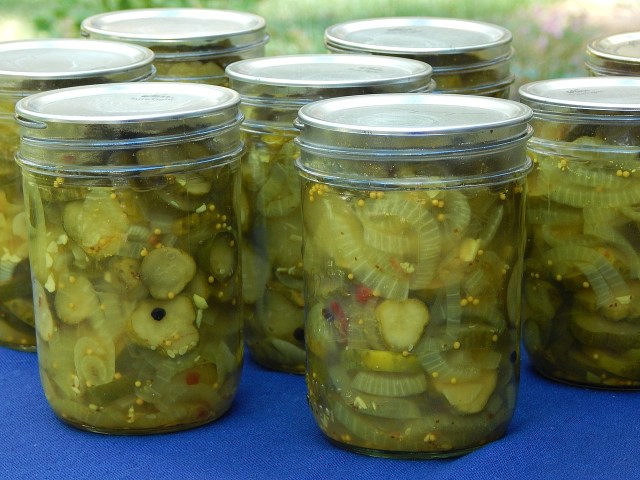
Since I first learned to can pickles, I’ve found many tricks for keeping cucumbers crisp throughout the heated processing that lets you store them on shelves at room temperature. My mom always added grape leaves from our homegrown vines, harnessing their tannins to help keep the cukes crisp; I found horseradish leaves have the same effect. I’ve also started pasteurizing the jars instead of dropping them into a boiling water bath. Pasteurizing takes a little more time at my altitude, but the lower temperature still gives a crunchier pickle. Set aside any cucumbers that are blemished or won’t squeeze into the jars for relish.
Learn to make Processed Cucumber Dill Pickles and Cucumber Relish