Slow Cooker Fruit Butters

The garden I play in came with an established orchard—primarily apple trees. With little effort on our part, we always seem to end the growing season with far more boxes of apples than we need. After we’ve eaten our fill, I always store a box or two of whole, unblemished apples for eating out of hand. Then I make as much applesauce as my canning shelves can hold. By November, I’m salvaging the fruit in the remaining boxes to create apple butter.

Fruit butters capture all of the flavor of your chosen fruit. Often seen as finicky, they’re traditionally prone to burning and need endless stirring during their lengthy cooking time. I avoided them for years but then discovered a slow cooker variation. I fell for the hands-off, burnproof technique that let me dump a bunch of fruit into my Crock-Pot, leave it to cook for hours, and return to find a perfect blend ready for the canning kettle.
Learn to make Any-Fruit Butter and Slow Cooker Apple Butter

Canning It Forward

This is a big week at Twice as Tasty, and it’s all about canning it forward. For the second year, I’ll play a part in feeding more than 100 hungry sailors at the Montana Cup, an annual sailing regatta hosted by the North Flathead Yacht Club in Somers, Montana. Jars of preserves and other Twice as Tasty treats will be shared for meals and awards. Coincidentally, the regatta’s opening day is the Ball brand’s seventh annual Can-It-Forward Day.

Gifting and sharing home-preserved food cans it forward to the joy of both creator and eater. You’ll find plenty of recipes here to inspire your canning projects. But this blog is just one small voice in the world of home preserving, and much of my inspiration began with other voices. Here are some of my favorite canning recipes from other sources.
Read more about my favorite recipes from other sources

Any-Fruit Jam

Sweetness defines jams—and sometimes overpowers them. To my mind, a jam that leaves a lingering coat of sugar on your tongue misses the point: savor the fruits of summer. Making fruit-forward jam is simple once you understand a bit of the science behind it.

Fruit needs three things to set, or thicken, a spreadable consistency: acid, sugar, and pectin. Think of the molecular interactions in fruit like a high-school romance: Pectin molecules are attracted to water, but water is attracted to sugar. If water and sugar “hook up,” the pectin molecules will bond—with a little encouragement from their best friend, acid—and the jam will thicken.

The traditional method of encouraging this interaction is to throw enough sugar into the batch to distract all the water molecules. But more sugar is not the only option. An acidic pectin, like one based on citrus fruits, is an effective matchmaker for pectin molecules. Another method to encourage pectin couplings is to reduce the pool of available water molecules.
Learn to make Any-Fruit Jam without Added Pectin and Any-Fruit Jam with Added Pectin

Fruits of Summer

June has me craving garden sweets. Rhubarb has been gracing my table for weeks; now strawberries are reddening to join it. In warmer areas, you’re probably anticipating blackberries, blueberries, and tart cherries before the month is out. As we roll into July, raspberries, apricots, and early plums will all start to appear. It’s hard to resist summer’s sweet bounty.

It’s also hard to overcome the desire for fruit out of season. Although American grocery stores stock nearly every vegetable imaginable all year, some fruits can be harder to come by outside their harvest window. Those that do appear year-round, or close to it, lack that fresh summer flavor that makes them so appealing. How they are grown is also of concern; more than half of the Dirty Dozen list (foods with the worst pesticide residue based on USDA and FDA data) is fruit. These are all good reasons to grow—and save—fruit yourself.
Read more about preserving the fruits of summer

Sourdough Breakfasts

When most people think of sourdough, they picture a bread loaf with a crackling crisp crust and moist, tangy interior. But when you play with sourdough, you quickly discover bread is just one of many possible creations—and not necessarily the easiest.

My sourdough adventures began a couple of years ago, when I was gifted an old starter that had been lurking in a refrigerator. It didn’t have the rising power necessary for a loaf of bread; it required strength training. As I noted last week, the process of feeding a starter works like this: Pull out some starter, replace it with flour and water, and then let it work its magic, repeating the process until it readily ferments, bubbles, and grows. But I was loath to throw away weaker starter. Fortunately, a range of low-rise treats grab all the flavor with little effort.
Learn to make Sourdough Pancakes and Sourdough Waffles

Winding Down the Year

What a fabulous first Twice as Tasty year! As 2016 ends, I want to briefly look back at what’s been done since the blog’s launch last June and even share a few of the things to come.

This is the 37th post on the blog. Twice as Tasty now includes nearly 60 recipes and some additional 20-plus pages that apply a range of techniques to preparing, storing, and eating well all year. These have been going out each Tuesday to more than 150 email subscribers and Facebook followers. The 40-plus members of the companion Facebook group have been busy asking questions about and sharing the results of their food adventures.

Offline, Twice as Tasty has been feeding concertgoers and yogis, participating in food swaps, trying new recipes and techniques, and taste-testing with friends and family. I am grateful for everyone’s support and participation. And I’m so excited to share more in the coming year. Read more about what’s in store for 2017

Made with Love

I’m a perennial giver of food. Whether it’s for a holiday, at an event, or just because someone expresses random interest in something I made, I can’t help myself: I have to gift a jar or bag of homemade goodness.

I love receiving food too, but sometimes even I—someone who processes hundreds of jars a season, dehydrates and freezes, ferments and smokes—am hesitant to open a gifted jar. These are usually the ones that have perhaps a single word on the lid identifying the contents. No date, no maker, and no suggestions for putting it to use. These jars often work their way to the back of my canning shelves, hiding behind the familiar and loved. It makes me think some of my gifts go just as astray. So I’ve devise a way to change that—and I’m gifting my idea to you.
Read more about gifting food

Botulism and Canning Safely

When I mention this blog, it rarely takes noncanners long to reveal they are afraid of making their family sick and to ask for the secret to canning safely. Their fear is of the big, scary B word: botulism. But what strikes me is their belief that they need to be let in on a secret to avoid it.

Honestly, there is no secret to safe canning. Everything you need to know is in every decent book and on every decent website that covers the topic. Canning is a process, but it’s not a mysterious one: If you can follow directions, you can get it right. Or, in the words of Kevin West, author of the fabulously informative Saving the Season, “If you can safely prepare chicken, a potential vector for food-borne pathogens such as salmonella, then you can handle home canning.”

Unfortunately, botulism has become a boogeyman, the arch villain of a cautionary tale who peers over the rim of a boiling water bath at many home canners. It doesn’t have to be that way. Read more about botulism and canning safely

Raspberries

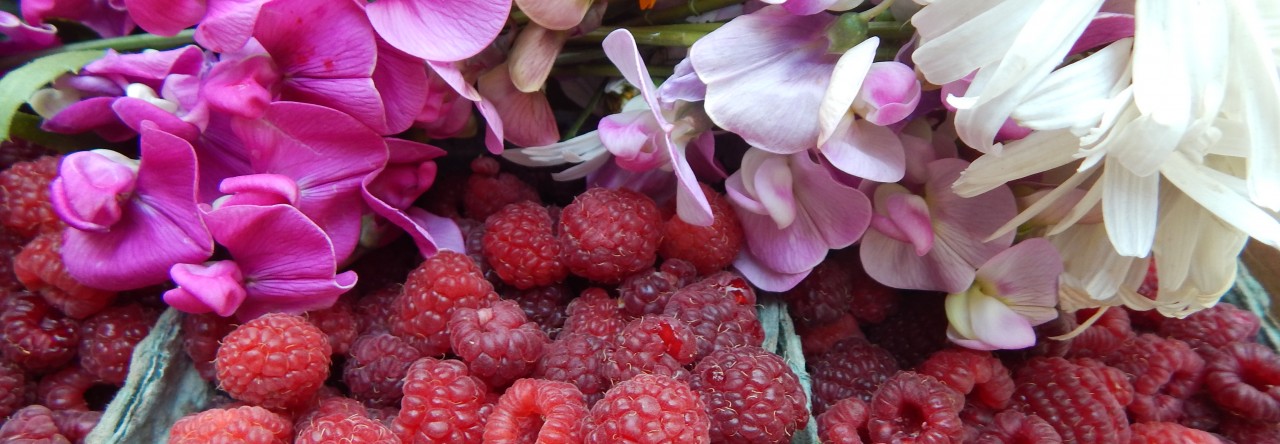
Raspberries are probably my favorite fruit; as a kid, I used to walk barefoot in PJs to the berry patch and pick them straight onto my bowl of Cheerios. Strawberries may be a close second. After everyone from my 4-year-old nephew to newlywed friends told me how they gobbled up Chamomile-Scented Strawberry Syrup, which I made using Liana Krissoff’s Canning for a New Generation, I was prepared to put up an even larger batch the next year—only to have the strawberry patch fall short. But raspberries came in with a bumper crop, so I decided to attempt an adaptation. Then while I was prowling online, I found Carey Nershi’s fabulous cocktails at Reclaiming Provincial and knew I needed to start in the oven. The idea of roasting delicate raspberries may seem odd, but that step adds another level of flavor that’s irresistible in syrup, jam, or salad dressing. Learn to make Roasted Raspberry Syrup and Apricot–Raspberry–Mint Jam

Tart Cherries: Sweet

My area is known for its sweet Flathead (Lambert) cherries, but I grew up with a pie cherry tree that I would climb into to pick its tart, bright red fruit—and often eat right within the branches. So let that warn you as to how tart I like my cherries.

If you’ve read the Canning Tools page, you may have noticed a slow cooker on the optional list. Fruit butters are entirely the reason. Fruit butters use both pulp and juice (unlike jelly) but let a long cooking time evaporate excess moisture and build dense texture and flavor (unlike jam). I use a slow cooker to make all fruit butters, which lengthens the cooking time but makes the process nearly hands off and burnproof. Add some spices to the reduction, and the cherries pop. If you have more cherries than your slow cooker can hold, set them aside for scones. Learn to make Tart Cherry Butter with Chai Spices and Sour Cream Scones with Tart Cherries