Holiday Spice

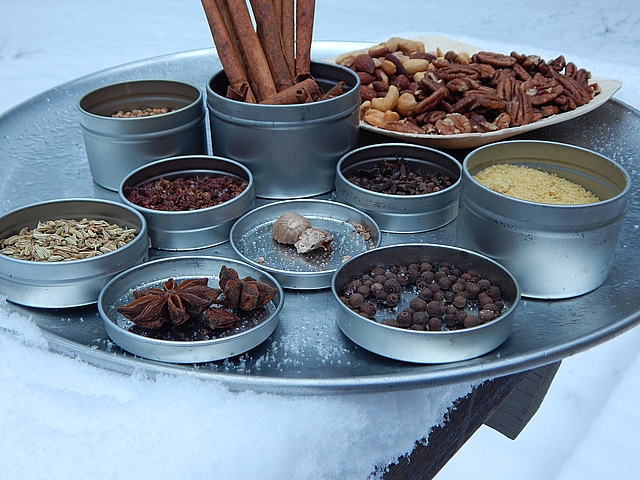
Sweets top the list of foods given at the holidays, so some of my favorite “small” homemade gifts are short on sugar yet big on taste. Learn to make Sweet Spice Mix and Sweet and Spicy Nuts.
I like giving homemade food gifts. They’re appreciated by everyone: the child with a sweet tooth, the apartment dweller without room to garden, the new mom too busy to can, the grandparent who simply doesn’t need more stuff. But food gifts are also perfect for people you want to thank with something thoughtful that won’t break your year-end budget: your hairdresser or favorite coworker, your child’s soccer coach or piano teacher, the neighbor who feeds your cat or helped jump your car. Chances are none of these people need more candles, bath soaps, fridge magnets, or Christmas ornaments. But they all need to eat.

The first food gifts that come to mind during the holidays are cookies, and it’s certainly easy to stretch a batch as you prepare treats for the family or an exchange. But if your giftee has dozens of clients or students, the sugar load can add up fast. Some of my favorite “small” gifts are short on sugar yet big on taste.
Learn to make Sweet Spice Mix and Sweet and Spicy Nuts
All-Occasion Cookies

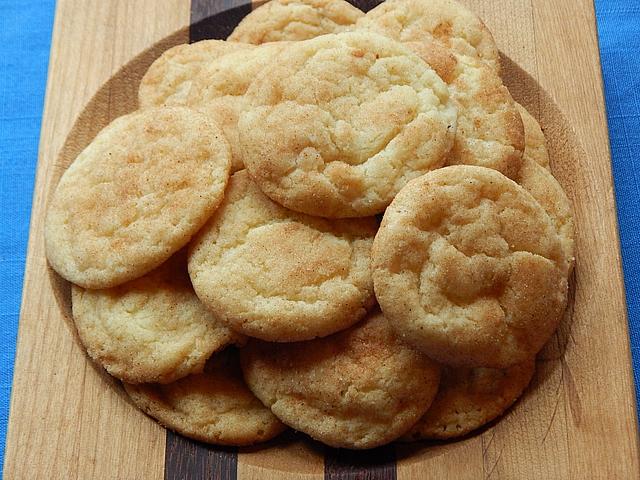
Holiday cookies can take work, and sometimes you want simple yet delicious sweets worthy of the tray. That’s where this week’s recipes come in. Learn to make Triple Gingersnaps and Snickerdoodles.
It’s hard to imagine the winter holidays without cookies. But what is a Christmas cookie? Ask three people to name one, and you’ll likely get three answers. Still, the answers likely have things in common. They probably require special tools or rich ingredients. They likely involve loads of time messing with cookie cutters, icings, and extra decorations. Most of all, they—and all the other cookies on the holiday tray—are likely only made once a year.

Despite the effort that goes into Christmas cookies, I’m often overwhelmed by layers and sugar and, after the third pass of the tray, want something just a little sweet and a little simple. That’s where this week’s cookies come in. They’re simple enough you can make them any time of the year. They’re also easy to make ahead, freeze, and pull out freshly baked just before serving. And they’re still so delicious they can hold their own among fancier creations.
Learn to make Triple Gingersnaps and Snickerdoodles

The Sourdough Giveaway Experiment

A sourdough starter wants to be loved—and has plenty of love to go around. That’s why I’m giving away sourdough starter this month. Read more about the Sourdough Giveaway Experiment.
Of all the topics on Twice as Tasty, it seems that people are most curious about sourdough. It was the focus of my first public workshop and will be the focus of blog posts every January and workshops every spring. It often comes up when I serve food at events locally, and it seems to be increasingly popular nationally.

All with good reason: A sourdough starter is an incredible creation. There are lots of reasons to love it, from health benefits to flavor. To me, one of the greatest things about a sourdough starter is that it wants to be loved—and has plenty of love to go around. That’s why I’m giving away sourdough starter this month and hope you’ll join me in this sourdough experiment.
Read more about the Sourdough Giveaway Experiment

Spinach

Two traditions surround the American feast at the heart of Thanksgiving: an excessive amount of food and its subsequent leftovers. Some are easily consumed—who would turn down a slice of pie for breakfast? But others threaten to hang around in the fridge until even the dog turns up her nose.

Fortunately, many uses for holiday leftovers reach beyond microwaved reruns and turkey sandwiches. Leftover roasted vegetables are ideal for Roasted Squash Soup and cut your prep time to about 30 minutes. Extra pumpkin puree can be turned into quick bread. But some of my favorite post-holiday meals come from the most challenging leftovers: spinach and cranberries.
Learn to make Warm Spinach–Cranberry Salad and Potato–Mushroom–Spinach Curry

Winter Squash

“What do you eat at Thanksgiving?” I get this question a lot, not from people seeking my favorite recipes but from those wondering how a pescatarian can fill her plate from a holiday table featuring a giant bird. It always makes me laugh: Thanksgiving is the one holiday at which I’m guaranteed to eat well, thanks to the tradition of cooking far more food that the intended guests can consume.

No matter your food preferences, the Thanksgiving spread is sure to include things you will and will not eat. These days, turkey tops my move-on-down-the-line list, along with accompaniments baked in or built from the star of the show. But as a kid, my least favorite Thanksgiving dish was pumpkin pie. I was in college before I learned to appreciate any variety of winter squash, and I didn’t discover a true liking for pumpkin pie until I deviated from the too common canned filling to home-roasted, lightly spiked sugar pumpkin.
Learn to make Deep-Dish Pumpkin–Rum Pie and Roasted Squash Puree Soup

Slow Cooker Fruit Butters

The garden I play in came with an established orchard—primarily apple trees. With little effort on our part, we always seem to end the growing season with far more boxes of apples than we need. After we’ve eaten our fill, I always store a box or two of whole, unblemished apples for eating out of hand. Then I make as much applesauce as my canning shelves can hold. By November, I’m salvaging the fruit in the remaining boxes to create apple butter.

Fruit butters capture all of the flavor of your chosen fruit. Often seen as finicky, they’re traditionally prone to burning and need endless stirring during their lengthy cooking time. I avoided them for years but then discovered a slow cooker variation. I fell for the hands-off, burnproof technique that let me dump a bunch of fruit into my Crock-Pot, leave it to cook for hours, and return to find a perfect blend ready for the canning kettle.
Learn to make Any-Fruit Butter and Slow Cooker Apple Butter

Preparing for Holidays

All last month, I was undecided about which recipes and ideas to share in November. I was traveling in several regions and climates, wearing everything from four layers of long johns and raingear to tank tops and summer dresses. And meals featured the fresh strawberries I associate with spring, the Dungeness crab of fall and winter, and everything between.

Shortly after I returned home to Montana, Mother Nature decided the blog’s November theme for me. After just a couple of days in my own kitchen, snow began to fall and winter was suddenly upon us. Instead of digging the final carrots and potatoes and cleaning up garden beds, I was curled up by the woodstove, reading food books and thinking about the coming holiday season. For me, that means planning to gather with friends and family, making lists of gifts to create, and of course, deciding what we’ll eat.
Read more about preparing for holiday gatherings and meals

Favorite Books: The Science of Food

If you looked at my book purchases over the last couple of years, you might think I started Twice as Tasty as an excuse to expand my food library. I’d be hard-pressed to dispute it. As my partner and I increasingly returned to basic ingredients and making what we eat from scratch, one of my greatest joys has been learning from people with far more experience, training, and knowledge about food. Although there is a wealth of helpful information online, many of my favorite sources sit on a shelf, ready to be pulled open when I’m looking for answers or ideas.

Earlier this year, I shared some of my go-to books on canning. They’re the inspiration for many recipes on this blog, and my favorites tell me not just how to best can something but also why the process works. When I want to write about other kitchen processes, I often have a different stack on my desk: books on the science of food.
Read more about my favorite resources on the science of food

Cabbage

I’ve been writing about enjoying and preserving green tomatoes this month, but they aren’t the only vegetables pulled from the garden as the season winds down. From the hoop house, I’m harvesting the last of the peppers. From the main garden, I’m snagging sweet carrots, a late seeding of cilantro, and the last cabbage.

After years of losing brassica crops to moths, I recently started growing cabbage again. The key is a small hoop frame straddling the bed, with ultrafine mesh netting clipped in place over the hoops and enclosed ends. Light and water can get in, but the plants stay cool and free of cabbage worms. It also means I’ve returned to making cabbage salad. The recipe I remember needed upgrades, primarily because it relied on instant noodles for crunch. I can’t recall what my mom served with the salad, but these days I’m hooked on a shrimp pairing.
Learn to make Asian Cabbage Salad and Wasabi-Marinated Shrimp

Processed Green Tomatoes

When I asked members of the Twice as Tasty Facebook group for recipes they’d like to see on the blog, green tomato requests poured in. I try to ripen my late-season tomatoes and eat the stubborn ones fresh, so my green tomato repertoire was limited. Perfecting long-term storage of green tomatoes called for experimentation, practice—and some unannounced taste testing at Twice as Tasty-catered events.

After sampling a range of pickled and fermented green tomatoes and salsa, sauce, relish, and chutney recipes, a few trends appeared. Pickled greenies are best stored in the refrigerator, where they never feel the heat of a boiling water bath and retain their shape and texture. Salsas could go either way. If you can’t create Grilled Tomatillo Salsa, you can process a green tomato salsa—but I prefer it fresh. In contrast, processing is ideal for a thick, rich chutney.
Learn to make Curried and Pickled Green Tomatoes and Green Tomato Chutney