One Prep, Two Meals: Grilled Peppers

Grilled peppers upgrade many quick, easy meals. Get one prep, two meal recipes at TwiceasTasty.com.
If you search through the blog’s recipe index, it quickly becomes obvious that grilling and smoking are my favorite ways to prepare peppers. Sure, raw peppers add a crisp, sweet flavor to everything from salads to summer rolls. But quickly cut free their cores and place them on a hot grill, and you have an immediate upgrade to salsas, sauces, kebabs, black bean burgers, and even canning projects. Set them on a grill over low heat and smoking woodchips, and you can smoke chilies until they are dry enough to store for winter use or just enough to puree them into my favorite chili paste.

For many of these uses, I’m grilling bumper crops of peppers until I run out of coals. But you can enjoy the same intense flavor with just a pepper or two for a weeknight meal. Better yet, make room for just a little extra veg and you can prep two meals at once. I lean toward pasta on the grilling night: I multitask by cooking the pasta while I’m prepping or monitoring the grill, and then I make a creamy sauce base while I’m waiting for the peppers to cool enough to peel. The next night, all I need to do is chop up the grilled veg before stirring it into batter for savory pancakes.
Learn to make Creamy Grilled Bell Pepper Pasta and Grilled Pepper Pancakes with Goat Cheese

Fired Up

Cooking over fire is simple and adaptable for not just meats but also vegetables and fruit. Learn more at TwiceasTasty.com.
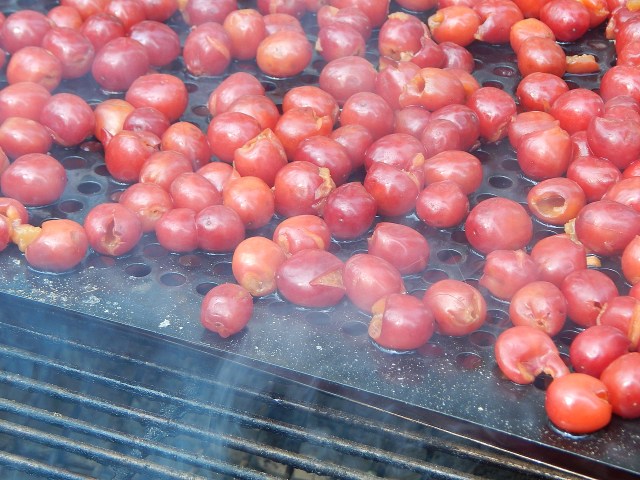
This time of year, I’m always fired up about preparing food on the grill. Just this last week, I was grilling sourdough pizza aboard the Blue Mule and smoking cherries to infuse in bourbon and to pickle. Although I throw plenty of more traditional foods on the grill, like shrimp and fish, I increasingly fill my beat-up Weber kettle grill with vegetables and fruit.

The Twice as Tasty collection of grilling and smoking recipes has grown large enough that I recently broke it into its own category on the Recipes page. But many preparations are so simple and adaptable that once you get the hang of how your grill or smoker handles produce, you’ll realize you don’t need a recipe and can use the tool to prepare multiple meals and even frozen or canned treats.
Read more about grilling and smoking your harvest

Smoked Cherries

Twice as Tasty’s birthday month seems the perfect time to share my newest favorite way to enjoy tart cherries. Get home-smoked recipes at TwiceasTasty.com.
I’m keeping an impatient eye on my sour cherry tree, waiting for the green fruit to ripen, just so that I can pick, destem, pit, and smoke the fruit. That’s right—smoked cherries. Although my cherry tree is still stubbornly green, Twice as Tasty’s birthday month seems the perfect time to share my newest favorite way to enjoy the tart fruit.

We expanded our smoking repertoire last year after having had such success turning smoked chilies into a spicy paste and enjoying roasted and smoked beets on numerous sandwiches, including Vegetarian Smoked-Beet Reuben. Broccoli and asparagus both received the flavorful treatment, and we continue to smoke an array of store-bought and homemade cheeses. But cherries became the icing on the cake—or should I say, the garnish of the cocktail.
Learn to make Smoked Cherries and Bourbon-Infused Smoked Cherries

Multibatch Canning

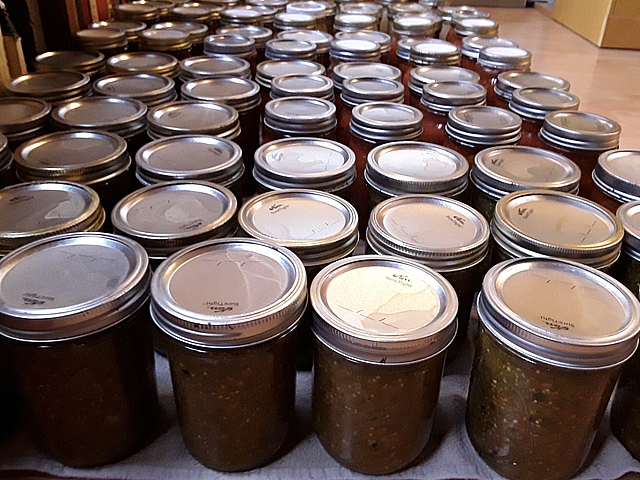
Call it impressive or call it procrastination: We sealed up 85 jars of goodness on Sunday. Learn more at TwiceasTasty.com.
Winter came early to Montana this year. The first flakes started coming down at home September 28, while we were sailing in Canada’s Gulf Islands. By the time I got home a month later, more snow and single-digit mornings were just days away.

It made for some interesting fall garden cleanup and canning. We managed to dig the last of this year’s carrots and beets and stuff next year’s garlic before the pre-Halloween storm, but we had to wait until last weekend to do the final round of canning with apples, tomatoes, and tomatillos. Call it impressive or call it procrastination: We sealed up 85 jars of goodness on Sunday. Read on for more about multibatch canning and boxing vegetables on the cusp of winter.
Read more for canning tricks and storage tips

One Prep, Two Meals: Fish

 A bit of extra prep one night means you can have a second meal ready to grab and go. Get fish recipes at TwiceasTasty.com.
Photograph by Brenda Ahearn Photography

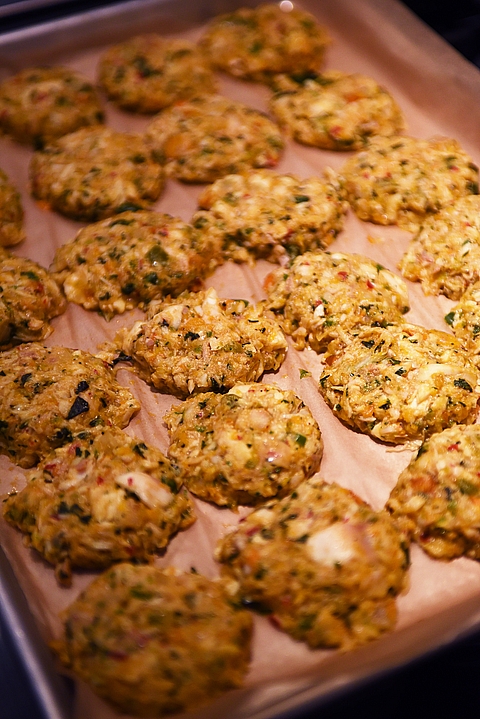
If we’re lucky, Monday nights are free nights in summer: we are home and can prepare and enjoy a meal without other obligations or projects. It’s the one night of the week that I might make a more labor-intensive meal, like fish cakes. But I always know Tuesday will be a picnic before racing sailboats, and a bit of extra prep Monday night means I have a second meal ready to grab and go.

These fish cakes call for some chopping and mincing and two stages of cooking, but they’re worth the effort. The first time I served batches at a house concert, the host said I could have made three times the amount and the platter would be emptied. They’re less greasy than fried fish cakes and more flavorful than potato-based ones. The recipe here easily serves 4, which means I can reheat the leftovers later in the week. To avoid eating the same meal two nights in a row, I set some fish aside and prep a marinade and the extra vegetables while the fish cakes are cooking. On Tuesday, grilled skewers require minimal effort.
Learn to make Mediterranean Fish Cakes and Grilled Fish Skewers

Red Onion

Once you master how to grow and keep onions, onion marmalade and relish take a little effort but store well. Get savory spread recipes at TwiceasTasty.com.

Onions have been an unexpected challenge to grow and to keep. They appear easy: just pop them in the ground, watch them grow, pull them out, let them dry a bit, and shove them in a box. But appearances can be deceiving. Onion growth is linked not just to temperature but also to daylength—two factors that run to extremes in northwest Montana. I spent years buying ubiquitous onion sets and harvesting tiny bulbs that bolted easily before realizing that they would never reach full size before days grew too short, temperatures became too cool, and the growing season ended. The solution? Buy transplants.

Suddenly, the onion crop was huge. But this presented another problem: how to store them. Onions are traditional dry-storage vegetables and can handle a range of temps, from just above freezing to 50°F. The main issue is humidity: unless they’re in a dry space with only 60%–70% humidity, they’ll quickly soften and rot. My little cabin with its unheated mudroom has few such spaces. I grill and freeze many of my onions, but on big years I’m still left with many pounds to try to keep through winter. Savory spreads, such as marmalade and relish, take a little more effort but store well.

Apple–Red Onion Marmalade

  • Servings: 7 half-pint jars
  • Difficulty: 3
  • Print
1-1/2 pounds red onions, including papery skins
1-1/2 lemons
6 pounds underripe or tart apples
3 1-inch cinnamon sticks
4-1/2 cups water
3-3/4 cups apple cider vinegar (5% acidity)
4-1/2 cups granulated sugar

Pull the papery skins from the onions, setting them aside; remove and compost the root ends. Using a mandoline or sharp knife, thinly slice the onions, setting aside enough of the thinnest to equal 1 cup. Zest the lemon, adding the zest to the pile of sliced onions. Chop the remaining onions, onion peels, lemon, and apples, retaining the apple peels, cores, and seeds, and add them into a wide, 6-quart or larger pot. Drop in the cinnamon sticks, pour in the water and vinegar, and bring the mixture to a boil over high heat. Lower the heat to medium high, and cover loosely. Cook for about 30 minutes, until the apples break down and their peels separate from the pulp. Stir as needed to prevent burning.

Strain the juice as you would for Sweet Pepper Jelly: Set a fine-mesh or cheesecloth-lined colander over a large bowl, pour in the hot mixture, and let the juice drain for at least 30 minutes; stir occasionally, but don’t press down on the pulp. Set the colander on a plate and measure out the juice; you should have about 6 cups. If you come up short, return the colander to the bowl, stir in some hot water, and let the solids drain until you have the desired amount of liquid.

Clean the pot and add the juice and sugar; stir in the onion slices and lemon zest. Bring to a boil over high heat and cook, stirring often, for about 15 minutes, or until the marmalade sets when you test it.

Ladle into hot half-pint jars, leaving 1/4-inch headspace. Process in a boiling water bath for 5 minutes, plus your altitude adjustment. Makes about 7 half-pint jars.

Tips & Tricks
  • Although you could use other onions, red ones produce the most colorful marmalade. The onion skins give even more color, so use as many as you can—including those from red onions you might be peeling for another recipe (see below).
  • A zester that cuts citrus peel into long, thin strips matches the shape of thinly sliced onions. You can use a grater-style zester instead, but expect to see and taste flecks of peel.
  • If you’re growing apples, pick the ones you need for this and other jamming recipes, like Tomato–Apple–Basil Jam, before the first frost sweetens them; they’ll release more pectin into the mix. If you’re buying apples, choose tart ones, like Granny Smiths.
  • Unlike dense marmalades such as Fall Marmalade and Rhubarb–Orange–Ginger Marmalade, this recipe produces a jelly-clear marmalade with suspended solids. To ensure it sets, bring the mixture to 8°F above the boiling point of water at your altitude.

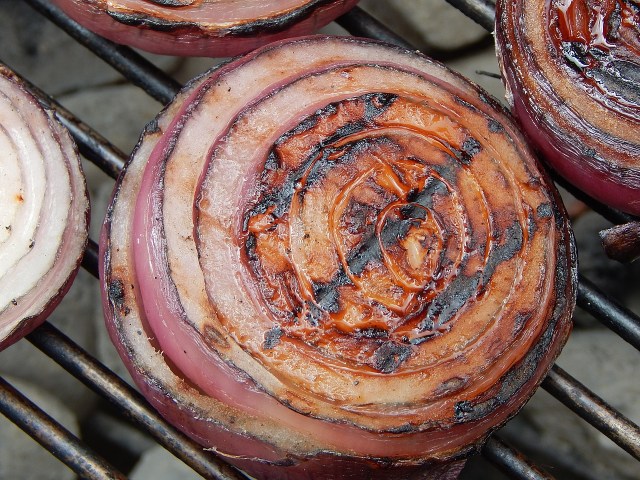
Once you master how to grow and keep onions, onion marmalade and relish take a little effort but store well. Get savory spread recipes at TwiceasTasty.com.

Twice as Tasty

Relish seems synonymous with hotdogs, hamburgers, and other meats, so it may surprise you to find it in my pantry. But this versatile spread is a cousin to chutney and often includes enough sugar to make it a distant relative of savory jams. If you’re trying to foster a love of pickles in family members, relishes can be a good place to start. Those who argue they don’t like relish have probably only ever eaten sugary cucumber relish and have no idea of the other flavors the condiment can hold.

Relish truly is a condiment, unlike pickles that can be laid on sandwiches or popped unadorned into your mouth. But that just expands its uses. Of course, it’s delicious spread on sandwiches or Black Bean Veggie Burgers and served on a party platter with freshly made cheeses and pita. But it’s also tasty alongside Sourdough Empanadas, mixed with Fresh Yogurt as a dip, and pureed and thinned with a little water to use as a glaze or dipping sauce for skewers of Pan-Fried Tofu or as a salad dressing for Basic Potato Salad.

Grilled Red Onion Relish

  • Servings: 7 half-pint jars
  • Difficulty: 2
  • Print
6 pounds red onions
2 red bell peppers
5 cups apple cider vinegar (5% acidity)
6 tablespoons granulated sugar
3 tablespoons molasses
2 tablespoons pickling or kosher salt
2 teaspoons turmeric
2 teaspoons smoked paprika
2 tablespoons yellow mustard seed
4 teaspoons coriander seed, crushed
2–3 dried chilies, minced
4 whole peppercorns, crushed

Peel the onions, reserving the skins for Apple–Red Onion Marmalade. Cut off the onion root ends and deseed the peppers, and then grill the onions and peppers. Let the vegetables cool enough to handle, and then dice; set aside. Combine all remaining ingredients in a large pot, and bring to a boil. Add the onion and pepper, return to a boil, and simmer for 30–40 minutes, until the onions are translucent but still have a firm texture. Remove from the heat.

Ladle into hot half-pint jars, leaving 1/4-inch headspace and trying to distribute the solids and any liquid evenly among the jars. Process in a boiling water bath for 10 minutes, plus your altitude adjustment. Makes about 7 half-pint jars.

Tips & Tricks
  • You can simply dice raw onion and pepper for this recipe, but grilling before preserving adds such a flavor boost it’s worth the time.
  • You can also skip the boiling water bath for this or any other savory spread designed for canning and simply store the jars in the fridge. If you’re giving them as refrigerated gifts, be sure write a note or add a gift tag that lets your lucky recipients know the jar is not shelf stable.
  • Lightly crushing the whole spices makes them easier to eat while maximizing flavor, and whole mustard seeds will soften yet pop in your mouth after the jars sit a couple of weeks. For a smoother relish with a lighter flavor, gather all of the whole spices into a spice bag and remove the bag from the relish just before processing.


Like what you’ve learned? To learn more in a Twice as Tasty workshop—in your own kitchen, among friends, and with my personal help—click here. If you’re not yet a Twice as Tasty subscriber, get this newsletter and weekly post notifications delivered straight to your inbox by clicking here.

Tried & True

These tools and supplies may help you make the recipes in this post:

  • This zester makes thin strips that hold their shape well through the canning process. They also look pretty in cocktails.
  • A digital thermometer that registers a high maximum temperature easily checks that your hot, gooey marmalade will set when cool. A dial thermometer can also work; just be sure it tops out somewhere above 212°F.
  • Your marmalade will splatter as it cooks down. Stirring often is the most helpful, but if you have to step away for a moment or find the stirring can’t keep pace with the popping bubbles, slap on a splatter shield like this one.

This post may contain affiliate links that help support this site. For more information, see the disclosure policy. Thank you for supporting Twice as Tasty.

Grilled Peppers

You could spend a small fortune buying jars of oily, roasted red peppers. Or you could grill your own. Get roasted red pepper recipes at TwiceasTasty.com.
Every year, we stuff at least 40 pepper plants into a hoop house, including bell peppers, Gypsy peppers, Poblanos, and several types of chilies. We go big because peppers can go in and on almost anything: salsas, salads, dips, sauces, breakfast eggs, lunch sandwiches, dinner pastas—the list is endless.

The challenge is in waiting for the peppers to ripen to bright yellows, oranges, reds, and purples and then capturing their peak flavor. My favorite variations use the grill to add a little char for fresh eating, such as for Corn, Bean, and Pepper Salsa and Shish Kebabs with Garlic–Soy Marinade, or a lot of smokiness before long-term storage, such as for Smoked Chilies and Home-Smoked Chili Paste. My latest trick falls somewhere in the middle: roasting peppers on the grill and then freezing them in a dice to throw in winter dishes or as a puree to use as a spread or sauce.
Learn to grill peppers and make Red Bell Pepper Puree

Smoked Beets

One of my favorite kitchen tools sits outside and doubles as grill and low-tech smoker. Get smoked beet recipes at TwiceasTasty.com.
One of my favorite kitchen tools doesn’t live in my kitchen: It sits outside the front door, looking weathered and well used. It’s both, whether the summer heat has made me abandon the oven or we’re digging it out of a snowbank for a winter meal. I’m talking about an old charcoal Weber kettle grill, handed down and repaired so many times it’s probably had nine lives.

For years it was just a grill, regularly loaded with fish, shellfish, and many kinds of vegetables and fruits. Then we discovered it made an easy, low-tech cold smoker for cheese. Add a few more briquettes, and we’re smoking chilies, beets, nuts, and more.

I got excited about smoking beets after falling for a vegetarian Rueben sandwich created by a local deli. But when I started harvesting my first beets a week ago, we’d already gobbled up the winter’s stash of sauerkraut. Fortunately, smoked beets are delicious with fresh greens and sourdough bread.
Learn to make Roasted and Smoked Beets and Smoked-Beet Sandwiches

Summer Vegetables

Summer means filling bellies not just with the freshest produce possible but also with preserved vegetables the rest of the year. Learn more at TwiceasTasty.com.
If your garden isn’t in full swing yet, it’s about to be. Even here in Montana, with our long winters and short growing season, spring produce is beginning to wind down: Lettuces and spinach will soon be bolting, the asparagus crop has tapered off, and the strawberry bed has been picked nearly clean. In their place, summer produce is ready to burst forth, launching itself into the annual race to grow faster than I can harvest and process.

If you’ve been following along on Instagram, you’ve seen how I deal with spring’s vegetable bounty: #dailysalad. But with a large garden, summer vegetables need a different approach. The next few weeks are not just about filling bellies with the freshest produce possible but also about preserving those vegetables so that they can fill bellies the rest of the year. Here’s how I’ll be spending the next few weeks.
Read more about enjoying summer vegetables year-round

Herb Marinades

Some of my favorite food memories linger from travels, with dishes I repeat at home. Get Moroccan recipes at TwiceasTasty.com.
Some of my favorite travel memories linger from my time in Morocco. I had the good fortune to have Peace Corps connections that introduced me to volunteers in both tiny towns and large cities. I stayed in their houses, visited their host families and haunts, and ate dinner in the homes of their Moroccan friends. I could never repeat or improve on the experience.

But the food: some of that I can and do repeat, even though it’s never quite the same. For example, every time I ate chermoula in Morocco, the flavor was unique. The basic version is essentially a pesto featuring cilantro and parsley, but my favorite versions included a little fresh ginger and extra spices, and I replicate it as well as I can. I mostly ate it in a tagine while in Morocco, but I’ve since learn to love it as a grilling marinade, accompanied, of course, by couscous.
Learn to make Grilled Shrimp with Chermoula and Cinnamon Couscous