
Lemon Tahini Sauce or Dressing

Brightening tahini with lemon makes it surprisingly versatile. Use it as a drizzle-worthy sauce, a pourable salad dressing, or a yogurt or herb-laden dip. Learn more at TwiceasTasty.com.
The first thing I thought when snapping and choosing photos for this week’s Twice as Tasty column for the Flathead Beacon was that everyone would think I’d squirted yellow American mustard on falafel. The impression couldn’t be further from the truth. The bright yellow sauce that I share in this week’s column does get its color from turmeric, but the flavor is entirely the bright citrus tang of lemon, the pungent bite of garlic, and the earthy, slightly bitter taste of tahini.

Given its layers of flavor, Lemon Tahini Sauce is surprisingly versatile. In my recipe, I give options for making it into a thicker drizzle-worthy sauce or a thinner pourable salad dressing. Leave the minced garlic chunky or puree the mixture until smooth. Add yogurt or fresh herbs to make it a dip, and swap in lime juice as a flavor variation.

Learn to make Lemon Tahini Sauce or Dressing

Late Tomatoes

Late tomatoes never match midsummer fruit, but I treasure them as the season’s final flush. Get tomato recipes at TwiceasTasty.com.
Tomatoes are the last true summer crop that I grab from the garden. The shift comes as swiftly as the fall back to standard time: one deep temperature swing makes every green fruit still on the vine inedible. Each fall, I follow weather forecasts, gamble on their accuracy, and try to pluck every fully formed tomato before the first killing frost.

Even if I succeed, the reward isn’t the perfectly red, juicy treats I’ve been feasting on all summer. It’s boxes of hard, underripe tomatoes. Some I’ll eat or preserve while green, but most sit for weeks beside my desk, where I watch them gradually ripen.

These tomatoes never match the bright, sweet bite of sun-kissed midsummer fruit, but I treasure them as the season’s final flush. Rather than eating them out of hand, I’ve found that letting them cook slowly, like in this savory pie, maximizes their maturing flavor.
Learn to make Late-Season Tomato Pie and Herb and Cheese Pie Crust

Quiche

Quiche is a bit more work than frittata, but it has its upsides too. Get quiche and frittata recipes at TwiceasTasty.com.
When I prepared to share this recipe, I was surprised to realize it would be my first quiche on the blog. It’s one of my favorite springtime dinners: the hens are back to a full laying schedule no matter how cold it was over winter, spring greens and herbs are ripe for the picking, and asparagus is growing by inches every day.

Quiche is a bit more work than frittata, because you have to make and roll out a crust. It also takes longer to cook, because you’re letting the eggs slowly set up in the oven. But it has its upsides too. Because the eggs cook slowly, they come out more like custard, whereas frittata has a tendency to set up more like hard-scrambled eggs and can burn on the bottom of you aren’t careful. The pastry helps to hold everything in place, which can make it easier to enjoy leftovers for a quick breakfast or pack them for lunch. And then there’s the pastry itself: if you’re making one crust, it’s the perfect excuse to double the recipe and bake a crumble-top pie. If you can’t justify a whole pie to yourself, the trimmed edges of the quiche crust can be rerolled into one of my favorite childhood snacks.
Learn to make Spring Vegetable Quiche and a bonus snack

Garlic and Chives

Make the official transition from winter to spring with Roasted Garlic Soup and Savory Herb Scones. Get spring recipes at TwiceasTasty.com.
The official transition from winter to spring has arrived. At my house, that means both waiting for snow to melt and reveal my garden’s buried herbs and digging deeper into the freezer and dry-storage boxes to use up what’s left from last year’s harvest. So this week’s recipe pairing seemed apt: a light soup using the last stored garlic to offset still chilly evenings and savory scones using frozen herbs—or if you’re in a warmer zone than mine, the first spring cutting of herbs.

I start making garlic soup as soon as crisp fall nights arrive and continue throughout winter to the end of my stored stash in spring. It’s joined my arsenal of comforting soups, along with Hot and Sour Soup and 30-Minute Cherry Tomato Soup. I make these when I have a cold bug, because they help bring me back to health. I make these soups when I’m busy, because they’re easy and use ingredients I keep on hand. But mostly I make them because they taste so good.
Learn to make Roasted Garlic Soup and Savory Herb Scones

In the Pantry

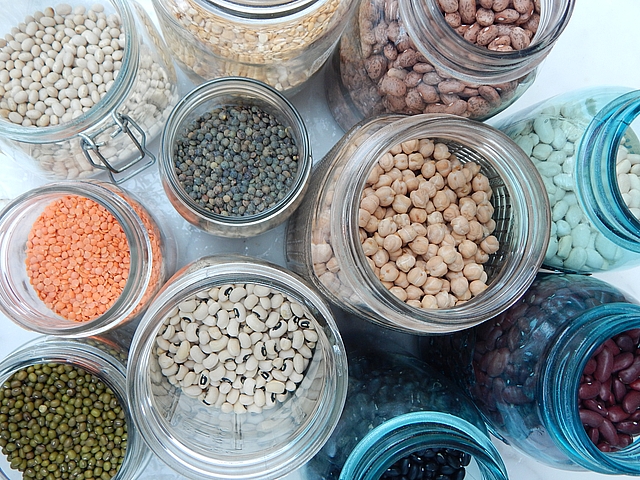
The secret to a well-stocked pantry is to keep small quantities of a large number of basic ingredients. Discover pantry essentials at TwiceasTasty.com.At 500 square feet, my house has a smaller kitchen and less food-storage space than most. Yet at any given moment, I can conjure a dozen of meals for a dozen people—I just need to find places for them to sit.

The secret to a well-stocked pantry is to keep small quantities of a large number of basic ingredients. Instead of buying prepackaged meals, sauces, and mixes, you can store fruits, vegetables, grains, dairy, proteins, and flavorings individually and mix them in endless variations. I dedicate at least half my pantry and most of my freezer and fridge space to such items. I fill the rest with homemade items that let me shortcut regularly used recipes, from stocks to pestos to condiments.

The advantages go beyond versatility. Stocking your pantry in this manner means your ingredients stay fresh, you can spend your money on quality items instead of large quantities that go stale before you finish them, and you’ll always open the fridge or cupboard and find something you want to eat.
Read more about improving your pantry

Sourdough Brioche

Buttery, rich, and sourdough? It may not be traditional, but brioche doesn’t get much better than this. Learn to make Sourdough Brioche Dough and Sourdough Buns.One of the beauties of making your own bread is that once you’ve mastered a dough recipe, you can often use it in many ways. As you saw last week, a ball of Sourdough Pizza Dough can take many shapes: pizza pies, calzones, empanadas, and even breadsticks. Brioche is just as versatile and delicious.

Sourdough brioche may seem as much of an oxymoron as bread master Peter Reinhart’s whole-wheat brioche. But I see it as adding just another layer of flavor to an egg- and butter-rich dough. Once you’ve learned the basic recipe, you can use it to make any number of breads with various flours, sweetness levels, and shapes. I’ve just begun my brioche dough adventure, working it into buns and sweet rolls, but Reinhart recommends using it in everything from bread pudding to toast points to savory tarts. I see more Twice as Tasty brioche-style recipes on the horizon—starting with Sourdough Cinnamon Rolls next week.
Learn to make Sourdough Brioche Dough and Sourdough Buns

Spinach

Two traditions surround the American feast at the heart of Thanksgiving: an excessive amount of food and its subsequent leftovers. Some are easily consumed—who would turn down a slice of pie for breakfast? But others threaten to hang around in the fridge until even the dog turns up her nose.

Fortunately, many uses for holiday leftovers reach beyond microwaved reruns and turkey sandwiches. Leftover roasted vegetables are ideal for Roasted Squash Soup and cut your prep time to about 30 minutes. Extra pumpkin puree can be turned into quick bread. But some of my favorite post-holiday meals come from the most challenging leftovers: spinach and cranberries.
Learn to make Warm Spinach–Cranberry Salad and Potato–Mushroom–Spinach Curry

Slow Cooker Fruit Butters

The garden I play in came with an established orchard—primarily apple trees. With little effort on our part, we always seem to end the growing season with far more boxes of apples than we need. After we’ve eaten our fill, I always store a box or two of whole, unblemished apples for eating out of hand. Then I make as much applesauce as my canning shelves can hold. By November, I’m salvaging the fruit in the remaining boxes to create apple butter.

Fruit butters capture all of the flavor of your chosen fruit. Often seen as finicky, they’re traditionally prone to burning and need endless stirring during their lengthy cooking time. I avoided them for years but then discovered a slow cooker variation. I fell for the hands-off, burnproof technique that let me dump a bunch of fruit into my Crock-Pot, leave it to cook for hours, and return to find a perfect blend ready for the canning kettle.
Learn to make Any-Fruit Butter and Slow Cooker Apple Butter

Preparing for Holidays

All last month, I was undecided about which recipes and ideas to share in November. I was traveling in several regions and climates, wearing everything from four layers of long johns and raingear to tank tops and summer dresses. And meals featured the fresh strawberries I associate with spring, the Dungeness crab of fall and winter, and everything between.

Shortly after I returned home to Montana, Mother Nature decided the blog’s November theme for me. After just a couple of days in my own kitchen, snow began to fall and winter was suddenly upon us. Instead of digging the final carrots and potatoes and cleaning up garden beds, I was curled up by the woodstove, reading food books and thinking about the coming holiday season. For me, that means planning to gather with friends and family, making lists of gifts to create, and of course, deciding what we’ll eat.
Read more about preparing for holiday gatherings and meals