
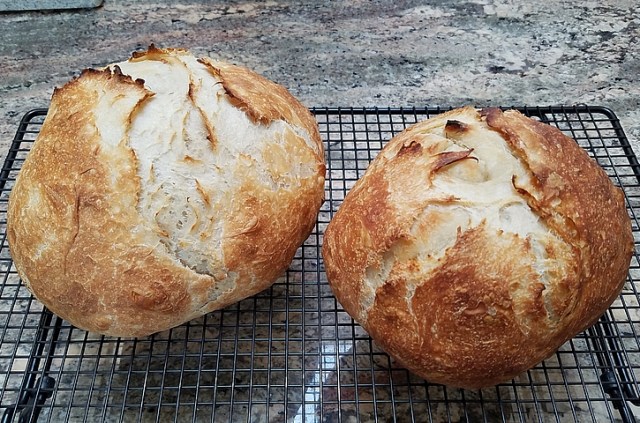
There are just a few days left of the 2nd Annual Sourdough Giveaway. If you haven’t yet requested your starter, the giveaway goes through January 31, 2019. You’ll be joining several new sourdough bakers. This post features some of the creations they’ve shared. I also share how I prepared the packets of sourdough starter I’ve been giving away. Dehydrating starter using this technique not only lets you share starter over long distances but also lets you save some starter if you’re concerned about losing your primary culture or don’t plan on baking for several months.
Learn to dehydrate sourdough starter
Sourdough Rye Bread

I was on a mission to make a tangy rye bread long before I started working with sourdough. It all began when I arrived in St. Petersburg, Russia, on one of the coldest days on record. I’d just come from Norway, where I’d fallen in love with gjetost, a whey-based goat cheese that’s the color of caramel, has the richness of fudge, and melts on your tongue. Before leaving the country, I splurged on a log so large you can’t find it in the States. It was usually served with dry crispbread in Norway. Once I was settled in Russia, I discovered my favorite pairing for the cheese: Russian black bread.
The rye bread I ate in Russian bore little resemblance to what’s typically labeled “Russian rye” in America: no instant coffee, no cocoa powder, no caraway, no corn syrup. It was simply flour, water, and salt, all leavened with a sponge or starter. In other words, a sourdough bread. The problem was getting a recipe. Bread was subsidized when I was in Russia; a rye loaf cost 33p (about $1), and no one I met in the city was making it at home. The bakers where I bought my bread clearly thought I was a crazy American when I asked for the recipe: they started spouting ratios I could barely understand that seemed to start with about 50 pounds of flour.
Learn to make Sourdough Rye Bread and Gorgeous Grilled Cheese
Sourdough Naan
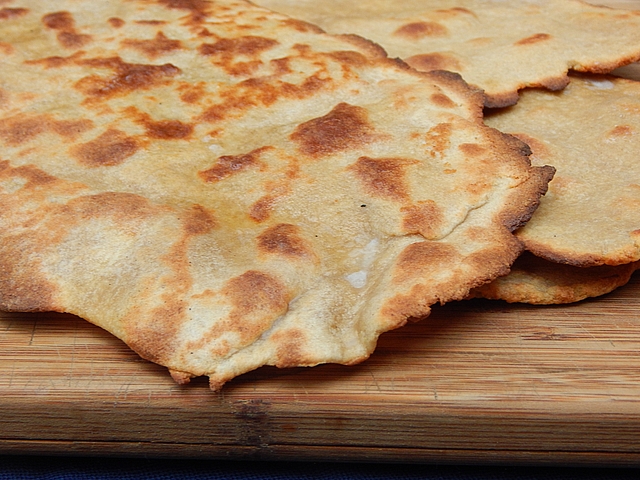
I bake sourdough because it’s delicious. But many people discover its tangy flavor because they have problems digesting other breads. Studies have found that sourdough—particularly homemade, long-ferment sourdough—is not only easier to digest but may have bonus health benefits. It makes sense if you think about it: You feed your sourdough starter flour. It eats it, turning it into more wild yeast and healthy bacteria. When you use it to make a bread, the longer the dough sits, the more it predigests the flour for you. As it does this, the sourdough bacteria release micronutrients, neutralize phytic acid, and stabilize blood sugar levels. And this all makes the bread twice as tasty.
The upshot is that if you have a gluten sensitivity but have not been diagnosed with full-blown celiac disease, you may be able to eat homemade sourdough breads. I’m not a doctor or nutritionist, so you should discuss this with yours, but there’s disagreement on whether gluten-free products, particularly commercially processed ones, are better than their homemade, wheat-based counterparts if you don’t have immune reactions to gluten.
Learn to make Low-Gluten Sourdough Naan and Spiced Red Lentil Dip
Sourdough English Muffins

If you’ve been following along on Facebook or Instagram, you know I’ve spent weeks perfecting this Sourdough English Muffin recipe. Once I started researching recipes, I discovered people’s images of English muffins—including which ingredients to use and how they should be cooked—vary widely. I tested everything from extremely wet batters to baked muffins to rolls folded like Sourdough Brioche. After many practice batches, I developed the recipe I’m sharing here. It’s as close as I can get to the traditional English muffin process in my home kitchen while maintaining my favorite aspects of baking with sourdough: long ferment times, little handling, and smashing flavor and texture.
Despite its name, the English muffin’s closest kin is the crumpet; that’s probably why some English muffin recipes call for doughs so wet that they need to be cooked within a ring. The original creators baked the muffins on an open griddle; many modern recipes rely entirely on or finish in the oven to ensure the dough cooks through. I’m not sure who decided English muffins would be the perfect base for eggs Benedict, but we can all agree they pair beautifully with hollandaise.
Learn to make Sourdough English Muffins and Small-Batch Hollandaise
2nd Annual Sourdough Giveaway
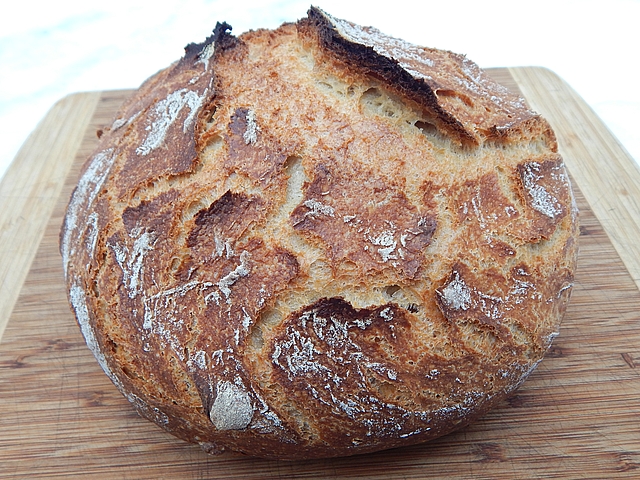
Happy 2019 from Twice as Tasty! January is Sourdough Month here on the blog, and last year’s Sourdough Giveaway Experiment was so successful that I’m making it an annual event.
Keep reading to get in on the 2nd Annual Sourdough Giveaway
Winding Down Year 3

Twice as Tasty grew mightily this past year, online and off. As 2018 winds down, indulge me in looking back at a third year of Twice as Tasty—or skip down the page to read about the year to come.
The blog grew by one new post every week this year. The Recipe Index now lists more than 200 recipes, and I’ve created 30 pages related to techniques for preparing, storing, and eating well year-round. The number of email subscribers, WordPress and Facebook followers, and companion Facebook group members continues to grow, with every day bringing in more people to learn about good food.
It’s hard to believe Twice as Tasty workshops have been running for just shy of 2 years: There are now 25 topics to choose from, and I’m always creating new ones as people say, “I’ve always wanted to learn how to make….” Even more people have brought me into their kitchen to create homemade appetizers and dinners through Twice as Tasty Live.
Read more about what to expect in 2019
Winter Warmers

It may sound odd to have childhood memories of hot cocktails, but the scents of warm spiced rum and wine mingle with those of a freshly cut tree in my mind. My dad in particular is a fan of hot buttered rum, and for years my mom’s homemade mix was a holiday staple. Mulled wine was another family tradition, but I associate it with New Year’s Day, when my sister and I would go with my mom to a puzzle party. Several tables of complicated jigsaw puzzles would fill the living room, but the boxes showing the finished picture were always hidden away. We would spend hours linking together pieces, often the only kids amid a roomful of adults. The scent of warm spices hit you the moment the hostess opened the front door.
Now that I’m old enough to enjoy not just the smell but also the taste of winter warmers, I’ve adapted the family recipes to suit my tastes: less sugar and more spice. Don’t hesitate to adapt these recipes yet again until you decide they’re filled with everything nice. Learn to make Hot Buttered Rum and Gløgg
Peanut Butter

Call it tradition, call it an excuse to eat sweets, but December calls most of us to bake cookies. My family’s cookie routine starts just after Thanksgiving, when we prepare Vanilla Bean Cookies and Chocolate Rum Balls so that they can “ripen” in time for Christmas. Many other cookies follow, with old favorites and new flavors filling the holiday platter when the family finally gathers.
Many holiday cookies only appear once a year, but I always add some all-occasion cookies to the plate. I tackled peanut butter cookies this year. These cookies have been around for close to a century, with most sources attributing the classic crosshatched pattern to a 1930s Pillsbury cookbook. But many recipes specifically avoid natural peanut butters and instead pile extra sweeteners onto commercial peanut butters already heavy on the sugar and hydrogenated oils. Recipes I’ve tried that call for freshly ground peanut butter turn out more peanut slab than cookie. By testing and tweaking basic cookie ratios, I came up with a version that can be enjoyed year-round and dressed up for special occasions.
Learn to make Freshly Ground Peanut Butter Cookies and Peanut–Ganache Thumbprint Cookies
Reusable Produce and Gift Bags

No matter how you celebrate, the year’s end brings a giving mood. In my family, handmade gifts have always dominated. The Christmas tree nearly topples over from the weight of handmade ornaments. Someone is always sporting a handknitted sweater or mittens after presents are unwrapped. Pantries fill with home-canned jars as quickly as trays empty of homemade cookies.
My Twice as Tasty gift to you this year is not only handmade but useful and reusable: cloth produce and bulk food bags. They’re so easy to make you’ll quickly have a stash, so you can even use them as gift bags for your homemade treats and other presents. For each one you give away, you dispense with gift paper, ribbons, and tape and instead wrap your gift in a fabric bag that can be reused or regifted.
Read more about making reusable cloth bags
Eggs

For this month’s recipes on cooking from the pantry, I use the word “pantry” loosely: it encompasses foods you keep on hand in your cupboards, your freezer, your refrigerator, and perhaps even boxes under your bed. With these basic ingredients, you can pull together dishes with little notice or effort, whether for breakfast, dinner—or now dessert.
Baked custard is a childhood favorite. My grandmother made it as an afterschool snack for me and my sister—and apparently for my mom, because I have it on an old recipe card in her first cursive writing. Custard needs such simple ingredients that even though you can make it from the cheapest milk and eggs on the shelf, local farm-fresh ingredients will take it to another level—one you can taste and see, thanks to a golden yolk. Rice pudding, a more filling variation on the custard theme, has the added benefit of using up leftovers.
Learn to make Golden Baked Custard and Baked Rice Pudding
